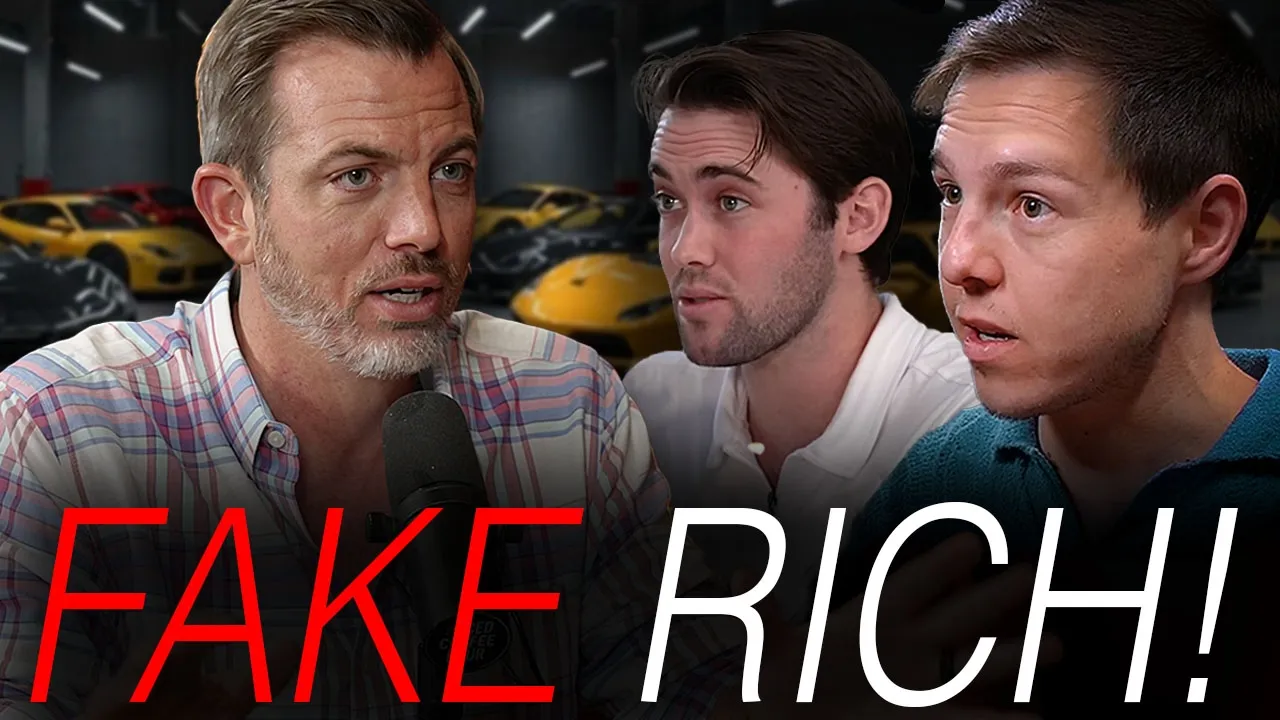
“Most People Are Broke!” Lamborghini Salesman Reveals Who ACTUALLY Buys Their Cars! | Ed Bolian
The Iced Coffee Hour
1,555 views • yesterday Save 108 min 7 min read
Video Summary
Ed Bolian, the car enthusiast behind VinWiki, reveals his controversial strategy for wealth creation: buying the "worst examples of the coolest cars on earth." By targeting neglected, high-mileage, or branded-title exotics, he avoids the depreciation that plagues perfect show cars, allowing his collection to generate massive equity over time. He advocates for a disciplined, long-term approach to car ownership that treats vehicles as assets rather than mere status symbols.
Bolian warns that the modern car market is increasingly driven by "dumb money" and speculative bubbles, noting that even rare supercars are seeing price surges disconnected from macroeconomic reality. He emphasizes that the cheapest way to own a car is not to pay the lowest price, but to buy a vehicle that will appreciate, provided the owner can stomach the mechanical risks and maintenance costs of neglected machines.
Short Highlights
- The cheapest way to own an exotic car is to buy a neglected, high-mileage example that has already hit the bottom of its depreciation curve.
- A car's value is driven by the nostalgia of the generation that grew up with it on their bedroom posters 15 to 20 years prior.
- Proper rare cars, such as Ford GTs and V12 Lamborghinis, remain bulletproof investments compared to mass-produced luxury vehicles.
- Professional inspections are the most effective tool to negotiate prices and avoid catastrophic mechanical failures.
- The "subscription" model for car features is the next major industry trend, potentially making vehicle ownership more expensive than the car payments themselves.
- New car buyers should prioritize vehicles with warranties, as modern luxury engines often face expensive, inevitable failures.
Key Details
The Philosophy of Buying Bad Cars [00:01]
- Bolian argues that buying the worst examples of the coolest cars provides the best opportunity for value appreciation.
- He notes that perfect, low-mileage cars often result in net losses due to depreciation, whereas "project" cars have already bottomed out.
- "I have found that buying the worst examples of the coolest cars on earth tends to give me the opportunity to let them go up in value."
The Bugatti Veyron Strategy [02:30]
- Bolian purchased a Bugatti Veyron Grand Sport that had a colorful history, including ownership by Birdman and Floyd Mayweather.
- He intentionally bought the car during a market dip caused by an oversupply of inventory, allowing him to secure a significant deal.
- "The reason that it was especially cheap in that moment relative to the coupes... was they had gone down about a million dollars."
Maintenance Realities [04:20]
- Driving a car regularly is the best way to validate its mechanical needs and prevent the deterioration caused by sitting idle.
- He spent $50,000 to $60,000 on reconditioning his Bugatti, opting for aftermarket solutions like cheaper tires to keep it reliable.
- "The best thing that you can actually do is drive it."
The Ford GT Market [06:00]
- Ford GTs are unique because they are maintainable, iconic, and lack the "logical departure" cars that tempt owners to sell.
- Unlike Ferraris, which have seen explosive, short-term price jumps, Ford GTs appreciate incrementally, keeping owners disciplined.
- "Ford GT guys don't have that because they have never just doubled in value in a short amount of time."
Institutional Demand [09:00]
- Family offices representing over $100 million are increasingly allocating funds to car portfolios for younger generations.
- This "dumb money" influx has driven up prices for modern supercars, as these buyers often purchase based on curated shopping lists.
- "We're seeing an explosion of value... clearly, people are building collections."
Current Collection [11:00]
- Bolian owns a 2012 Bugatti Veyron Grand Sport, two Lamborghini Murcielago LP640s, and a 1998 Diablo SV.
- He considers the Murcielago his favorite car, having predicted its value growth for over a decade.
- "I would say that's my favorite car. And I've been telling everybody that they're going to go up in value for 12 years now."
Business Entity Protection [12:00]
- Using personal accounts for side hustles is a major risk; forming an LLC is essential to separate personal assets from business liabilities.
- Proper business structure is necessary to handle the risks associated with buying and flipping exotic cars.
- "The moment something goes wrong, there is nothing separating your business from your personal savings."
The Tax Advantage of Trades [14:00]
- Trading cars through dealerships can allow owners to defer taxes by not realizing gains on paper.
- This strategy helps maintain equity within a car portfolio without triggering immediate tax hits.
- "You don't necessarily need to realize the gain as long as they're... same transactions, especially inside of a dealership."
Insurance and Costs [16:00]
- Collector car policies are significantly cheaper than standard insurance and are recommended for high-value portfolios.
- Bolian spends $15,000 to $20,000 annually on insurance, noting that he can only crash one car at a time.
- "Of all the things to save money on, I would strongly recommend not insurance."
Looking Rich for Cheap [17:00]
- The cheapest way to look wealthy is to buy cars that have already depreciated but have a strong, interesting story.
- Avoiding brand-new luxury cars is key, as they suffer from rapid, predictable depreciation.
- "The cheapest way to own a car is to have the equity position reflect something positive when you're done with it."
The Social Utility of Cars [18:00]
- Car culture provides a powerful social tool to combat loneliness, regardless of the car's objective value or status.
- Even cheap, modified cars allow owners to build friendships and communities within their socioeconomic bracket.
- "You are going to make friends for less money than almost any hobby in the world."
Getting Partners Interested [20:00]
- The best way to get a partner to appreciate expensive cars is to let them drive them in a safe, low-stress environment.
- Most negative perceptions of exotic cars stem from fear of damaging them; hands-on experience often resolves this.
- "The reason they don't like them is that they think that if they engage with them, that they'll ruin them for you."
Identifying Future Collectibles [22:00]
- The primary indicator of future value is the buying power of the generation that idolized the car on posters 15-20 years prior.
- Bolian believes modern hypercars like the P1, 918, and LaFerrari have limitless upside for the next generation of collectors.
- "The biggest criteria is always the buying power of the people who thought it was the coolest thing in the world when they were late teenagers."
Loan Criteria [24:00]
- Ideal car loan applicants have credit scores over 740 and at least 20% down, with a loan-to-value ratio between 60% and 80%.
- Banks generally avoid financing branded-title cars, which makes them cheaper but harder to acquire for those needing credit.
- "The interest rates right now are a little bit higher. You're probably going to pay six and a half to eight and a half percent."
Manufacturer Understatements [30:00]
- Ferrari and Pagani have historically understated production numbers to maintain exclusivity and value.
- Bolian notes that there are significantly more Ferrari Enzos in existence than the officially stated 399.
- "It's very well-documented. I built an app for it."
Future of the Industry [35:00]
- The industry is moving toward a subscription revenue model where features like speed, heating, and remote start require monthly payments.
- Bolian expects a future of "pure coach building" where the underlying tech is standardized and value is driven by body and interior design.
- "I think we're going in the subscription revenue model where do you want your car to drive more than 80 miles an hour? That'll be $10 a month."