Private Credit Freezes as Investors Want Their Money Back | Ed Dowd
Kitco NEWS
9,483 views • 3 months ago Save 27 min 8 min read
Video Summary
Ed Dow, a former BlackRock money manager, discusses the current economic climate, predicting a coming credit crunch and a potential rise in gold prices to $10,000. He highlights signs of strain in the private credit market, including withdrawals and slowing inflows, and notes that major fixed-income investors like PIMCO have warned of a credit default cycle.
Dow also points to a weakening real economy, with consumers struggling due to inflation and rising oil prices, leading to increased delinquencies and foreclosures. He expresses concern over the AI bubble, the concentration of market cap in a few tech companies, and the potential for a significant market drawdown. He advises investors to hold cash and long-dated Treasuries, while cautioning against stocks.
Short Highlights
- Ed Dow forecasts a credit crunch and a potential surge in gold prices to $10,000.
- He identifies signs of weakness in the private credit market and the broader economy.
- Dow warns about the AI bubble and the concentration of tech stocks in the S&P 500.
- He advises holding cash and long-dated Treasuries, while being cautious about stocks.
Key Details
Credit Crunch and Private Markets [0:49]
- The bond market is reacting to oil and inflation, with the 10-year yield touching a two-month high.
- Ed Dow, a former BlackRock manager, anticipates a credit crunch and a rise in gold prices to $10,000.
- He notes that the mainstream is focused on the AI bubble, but signs of strain are emerging in credit markets.
"But we're starting to see signs. Uh, the credit markets are starting to question the profitability of AI and PIMCO uh one of the largest fixed income investors a couple months ago said that we're at the beginning of the credit default cycle."
Signs of a Credit Event [2:13]
- Dow points to withdrawals and slowing inflows in the private credit market as indicators of a potential credit event.
- He highlights the rapid growth of private credit over the last two years, primarily serving non-depository financial institutions.
- The opacity, lack of transparency, and illiquidity of this sector are concerns, especially now that it's in a pause mode.
"So that that's all you need for a credit event to start to begin. We have a housing problem we can talk about later but let's just focus on private credit."
Real Economy Weakness [7:10]
- Dow states that the real economy is not performing well, with 80% of the population struggling, exacerbated by oil price shocks.
- Consumer credit defaults and auto delinquencies are rising, and home foreclosures are beginning to increase.
- He notes that home prices are overvalued, the real estate market is frozen, and new home sales are plummeting, with inventory levels similar to pre-2008 crisis.
"The real economy is obviously uh not doing well. We see the consumer 80% of 80% of the the population is struggling, especially with the the most recent oil price shock."
Housing Market Freeze [11:00]
- Existing home sellers are predominantly baby boomers, often with second homes.
- Dow suggests a NASDAQ correction could accelerate price cuts from boomers.
- He describes the current market as frozen due to a lack of economic activity, with prices expected to creep lower.
"So right now it's just a frozen market and that that's just a lack of economic activity."
AI Bubble and Market Concentration [17:20]
- Dow draws parallels between the current AI concentration and past bubbles like the dot-com era.
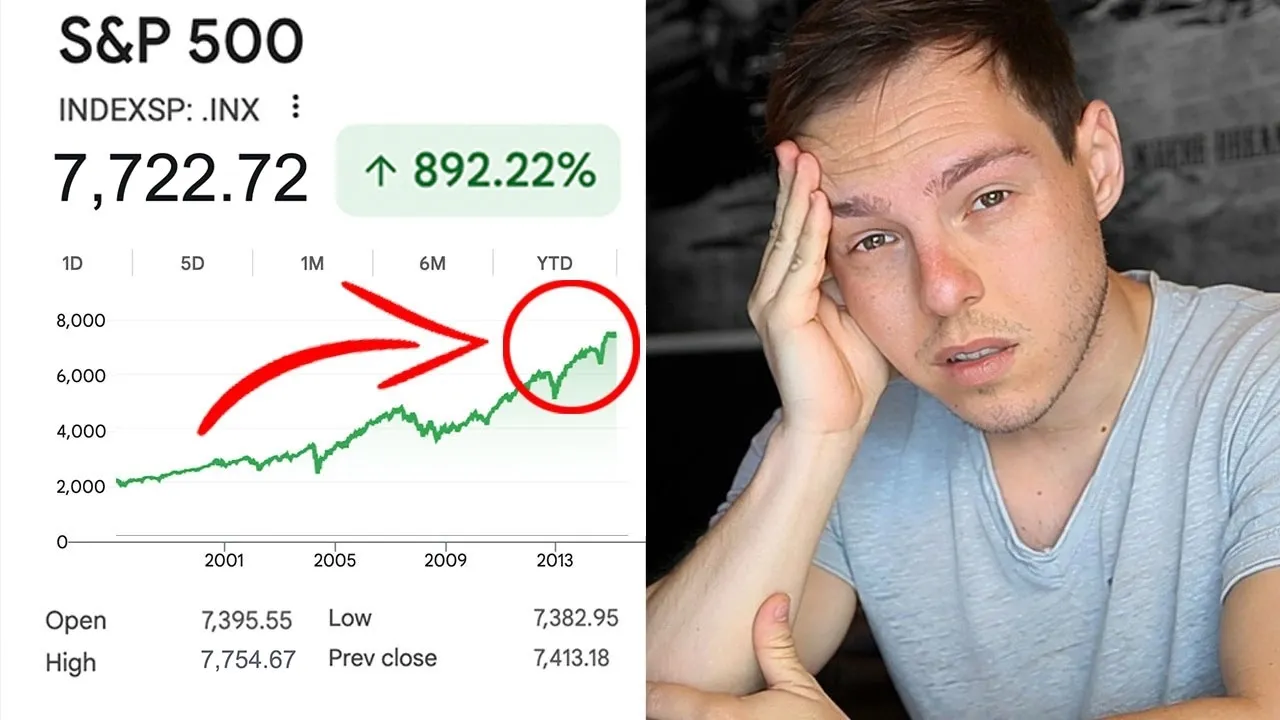
- He notes that AI and AI-adjacent companies constitute 45% of the S&P 500's market cap.
- With current valuations, projected 10-year forward returns for the S&P 500 are near zero, implying a significant drawdown.
"The market cap of the S&P 500 is 45% AI and AI adjacent. And I've seen this story before. I saw it in the dotcom bubble."
AI Profitability Concerns [21:00]
- Dow discusses concerns about AI profitability, citing the "Kimmy" model and enterprises pausing spending.
- He mentions Alex Karp of Palantir's comments on enterprises being unhappy with high AI costs and IP usage by AI companies.
- Power constraints are also a factor, limiting the ability to power data centers.
"There's there's this Kimmy model that qu calls into question the profitability of the whole space that that has started already, but now that's that's alarming to a lot of new new folks."
Semiconductor Market Volatility [25:00]
- Dow notes that semiconductor stocks had already peaked before "Kimmy" emerged, citing Micron's parabolic rise and subsequent fall.
- He points to the Korean stock market, heavily weighted in semiconductors, being down significantly.
- He suggests that peak margins for commodity producers like Micron often signal the end of a cycle.
"But I've seen the semiconductor hyperbolic moves before. And when you have peak margins on a commodity producer like Micron, that's usually uh the end."
Private Credit Risks and Structure [32:00]
- Dow explains how private credit funds are being packaged into securities for insurers and pension funds, reminiscent of the 2008 crisis.
- He describes the private credit market as a "black hole" due to a lack of transparency and public quotes.
- The ultimate losers in a private credit crisis are likely to be investors in endowments, pension funds, insurers, and high-net-worth individuals.
"So now the the the latest thing we're seeing is they're trying to wrap up uh these current private credit funds into loans to sell to insurance companies with an insurance rapper."
Global Slowdown and Dollar Strength [42:00]
- Dow predicts the US dollar will strengthen in a global slowdown due to a scramble for dollar liquidity.
- He has a negative thesis on China's economy, particularly its real estate crisis, which he believes will have global repercussions.
- A strengthening dollar is seen as negative for risk assets.
"Watch the US dollar uh in a global slowdown. uh the US dollar will strengthen because uh there'll be a scramble for dollar liquidity."
Inflation, Deflation, and Fed Policy [45:00]
- Dow's sequence involves an oil-driven inflation shock, followed by demand destruction, recession, and a deflation scare.
- He believes the Fed will eventually cut rates once the global slowdown manifests, despite current hawkish rhetoric.
- Holding rates steady is seen as de facto tightening, exacerbating credit market issues.
"So it's it's kind of a it's kind of a whipsaw. It's like whip inflation up and then we go down."
Protecting Assets and Investment Strategy [52:00]
- For average consumers, Dow advises making oneself indispensable to employers to protect income during a potential recession.
- Asset-rich individuals should raise cash to capitalize on future opportunities.
- He advocates for holding cash and long-dated Treasuries, while avoiding stocks, citing potential drawdowns.
"If you're uh if if you're just dialing it in, uh expect to get a pink slip. So, protect yourself, remain employable, work overtime, just make yourself as valuable as you can so you have at least your income uh protected through the recession."
Gold's Path to $10,000 [56:00]
- Gold had a parabolic run into January, potentially discounting geopolitical events, but Dow believes this is not the end.
- Short-term pressures on gold can occur during risk-off trades or when countries sell gold for liquidity, as seen with Turkey.
- He expects central banks to eventually print money, leading to reflation and benefiting gold.
"If there's a riskoff trade, uh generally speaking, uh gold may get hit some more, but that's you want to buy that uh that sell off because we know what's going to happen."
Silver and Portfolio Allocation [1:02:00]
- Silver is expected to rise long-term but is more volatile and susceptible to economic slowdowns than gold.
- Dow recommends that gold and silver constitute only 5-10% of a portfolio and be held long-term.
- He advises younger individuals to stack silver and older individuals to consider selling if liquidity is needed.
"Silver long-term is fine. It, you know, it will go up, but it's very volatile. And I also want to warn people that is an industrial metal."
Investment Portfolio and Treasuries [1:04:00]
- Dow confirms his portfolio consists of significant cash, some gold, and long-dated Treasuries, with no stocks.
- He believes the S&P 500 is in its final gasps and anticipates a 40-50% drawdown.
- He is bullish on long-dated Treasuries, expecting yields to fall due to inflation shocks leading to demand destruction and economic slowdown.
"No stocks. I mean, look, I I eat what I cook. Um I've been early to that call."
Advice for Retail Investors [1:06:00]
- Dow advises retail investors to hold cash, either in government money market funds or T-bills.
- He suggests rebalancing portfolios from equities to cash, moving towards a 60/40 split if currently heavily invested in stocks.
- He believes this cash will eventually be deployed into opportunities.
"So cash cash is uh either government money market funds or tea bills."