America Is Losing the AI Race to China (And We're Doing It to Ourselves)
Tom Bilyeu
1,871 views • yesterday Save 32 min 5 min read
Video Summary
America is rapidly losing its edge in the global AI race, not due to a lack of innovation, but because of a self-inflicted crisis of infrastructure and national identity. While China is aggressively building a power-abundant future and mandating AI education, the United States is paralyzed by bureaucratic gridlock, soaring energy costs, and a growing public hostility toward the technology. This reckless, debt-fueled expansion has created a disconnect where billions of dollars in AI hardware sit unused in warehouses, while the average American faces rising inflation and a crumbling power grid.
The stakes are existential: falling behind in AI means losing control over the defining competition of the century. To reverse this decline, the U.S. must abandon its path toward managed stagnation, strip away the regulatory nightmares hindering energy production, and reignite a national commitment to merit and growth. Success requires more than just capital; it demands a fundamental shift in how the nation views its own potential and the infrastructure required to power it.
Short Highlights
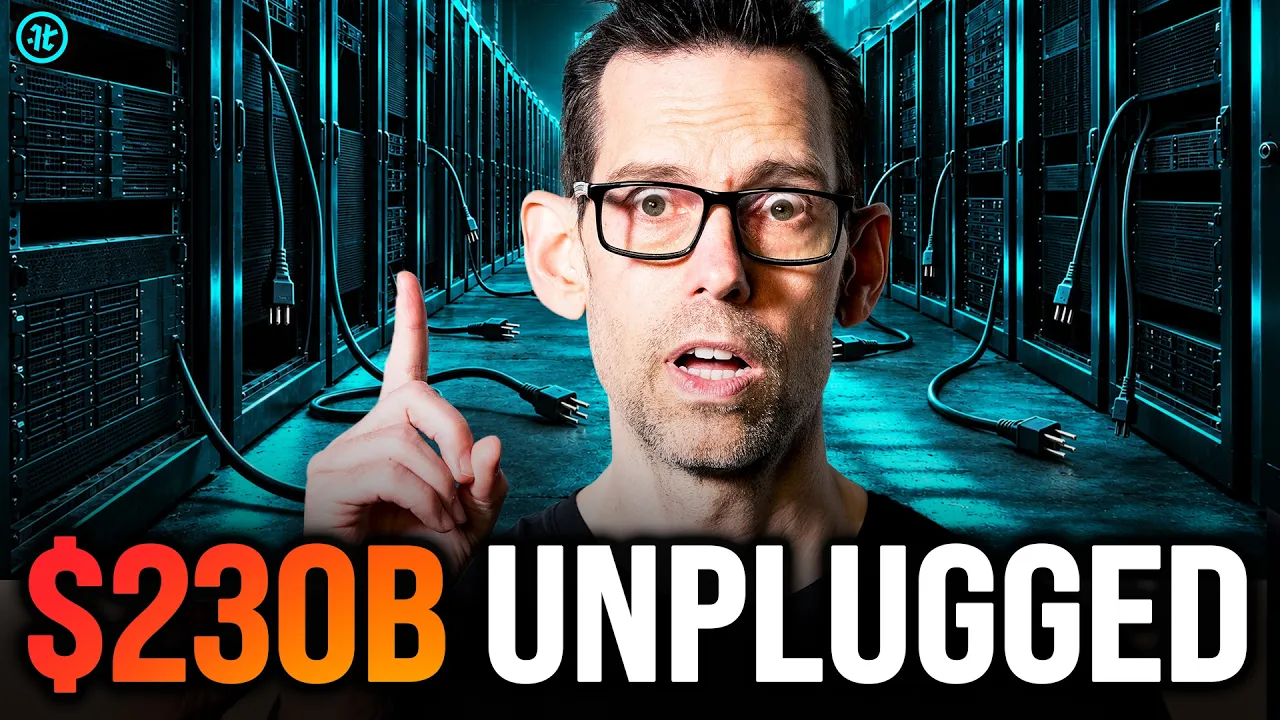
The U.S. is falling behind in the AI race due to several critical factors: * Public hostility: 74% of Americans are worried about AI, with 71% opposing local data centers. * Energy crisis: Data centers are driving up electricity costs and straining a grid that faces frequent, massive power shortfalls. * Regulatory paralysis: Environmental reviews and litigation can delay energy projects for years, with permitting often taking longer than building the Hoover Dam. * Strategic misalignment: While China mandates AI education and builds massive power capacity, the U.S. relies on debt-fueled spending and lacks a unified strategy. * Talent gap: China now employs 41% of elite AI researchers, while the U.S. share has dropped to 34%. * Inefficient capital allocation: Big Tech firms have over $230 billion in AI chips sitting unused in warehouses due to a lack of available power to run them. * Cultural erosion: A shift toward critical theory and skepticism of meritocracy has weakened the national drive required to win a technological revolution.
Key Details
The AI Approval Gap [00:01:05]
- American approval of AI sits at just 26%, lower than the approval rating for ICE.
- In a 2026 Gallup survey, 93% of Chinese respondents believed AI would help their country, compared to only 36% of Americans.
-
In America, AI is increasingly seen as a threat that needs to be defeated. But in China, it's seen as a promising new technology that's going to give them an advantage, and it is.
The Debt-Fueled Flywheel [00:03:10]
- The U.S. has utilized its reserve currency status to borrow and consume beyond its production capacity.
- This reliance on debt has hollowed out the middle class and fueled an expansive welfare state.
-
This fueled the flywheel of inflation, robbed our children's future by burying them under debt, and sped up the expansion of the welfare state.
The Warehouse of Unused Chips [00:06:55]
- Big Tech companies are spending billions on AI hardware that currently sits idle.
- There is an estimated $230 billion worth of AI chips sitting in inventory across the industry.
-
Microsoft's own CEO, Satya Nadella, admitted last November that his problem isn't a shortage of chips, it's chips sitting in inventory that he can't plug in.
Inflationary Pressure on Consumers [00:08:10]
- Data center demand is directly increasing utility bills for millions of Americans.
- Electricity prices in Virginia have risen 11% in one year, partially due to data center expansion.
-
In the US, electricity prices rose 5.9% in a single year, faster than inflation overall.
The Infrastructure Deficit [00:11:45]
- The American Society of Civil Engineers gave U.S. energy infrastructure a D-plus rating.
- The Department of Energy warns that power plant retirements could lead to 800 hours of blackouts per year by 2030.
-
If that power isn't replaced in time, the Department of Energy warns blackouts could go from a few hours a year to more than 800 hours a year.
Regulatory Stagnation [00:13:10]
- Over 2,000 gigawatts of power projects are currently waiting in a connection queue.
- Average federal environmental reviews take 3.8 years, with litigation adding nearly 4 more years.
-
We no longer play to win. We've become so complacent, we no longer have a sense of urgency.
China's Massive Build-Out [00:15:30]
- China added 540 gigawatts of power capacity in 2025 alone.
- China is constructing nearly half of the world's new nuclear reactors.
-
Since 2021, China has added more power capacity than America has added in its entire history.
The Cost of Trying to Buy the Lead [00:17:10]
- U.S. tech giants are outspending Chinese firms on AI by roughly 6 to 1.
- Despite this massive investment, the performance gap between top American and Chinese models remains marginal.
-
America is spending 6x as much to stay only about seven months and a tiny percentage ahead?
The Shift in National Narrative [00:19:40]
- The adoption of critical theory in education has fostered skepticism toward merit and institutional trust.
- This cultural shift creates a population less willing to support the ambitious projects required to win the AI race.
-
When people don't believe in their country, they're not going to fight for it to win.
The Danger of Managed Decline [00:21:40]
- Europe serves as a cautionary tale of a region that prioritized regulation over energy and innovation.
- The IMF warns that if the AI boom stumbles, the U.S. economy faces a sharper decline than the rest of the world.
-
If we want to fix this and get back on track, we must reinvigorate all Americans with a belief in this country and themselves.