Rating Every Version of Windows
Linus Tech Tips
1,099,069 views • 2 months ago Save 24 min 4 min read
Video Summary
Microsoft’s 40-year history with Windows is a volatile saga of innovation, desperate pivots, and aggressive user-hostility. While early versions laid the groundwork for modern computing, the OS has evolved from a productivity tool into a data-harvesting engine, leaving users to navigate a landscape of forced upgrades, intrusive advertisements, and questionable AI integration.
The OS has seen massive highs, such as the stability of Windows XP and the refinement of Windows 7, contrasted by catastrophic failures like the touch-focused disaster of Windows 8 and the unstable bloat of Windows ME. Today, the platform faces a crisis of trust as Microsoft prioritizes shareholder value over user control, pushing many to consider alternatives like Linux or macOS.
Short Highlights
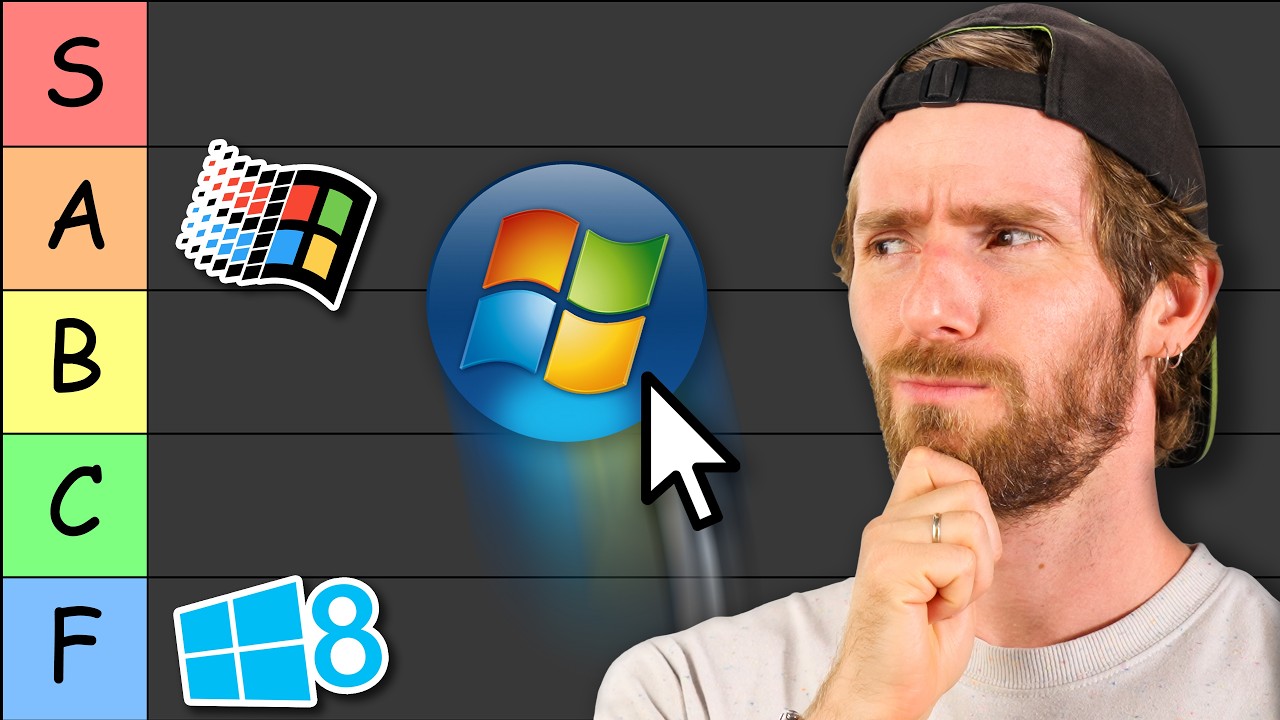
- Windows XP and Windows 7 are the undisputed S-tier champions, representing the peak of stability and user-focused design.
- Windows 95 and Windows 98 SE earn B-tier status for establishing essential modern interface paradigms despite early stability issues.
- Windows Vista and 8.1 receive B-tier grades as refined, though often underappreciated or flawed, iterations of their predecessors.
- Windows 3.1, 10, and 1.01/2.0 are relegated to C-tier for being functional but either dated or plagued by invasive telemetry and dark patterns.
- Windows ME and Windows 8 are the absolute bottom, earning F-tier for being unstable, unnecessary, or unmitigated disasters.
- Windows 11 is currently rated D, suffering from broken search functionality and the forced implementation of poorly thought-out AI tools.
Related Video Summary
- I Wrote Task Manager — 30 Years Later, the Secrets You Never Knew
- Microsoft’s New AI Copilot Update Just Changed The Way You Will Use Computers Forever
- Mustafa Suleyman: The AGI Race Is Fake, Building Safe Superintelligence & the Agentic Economy | #216
- Airport Lounge Crowds, Confusion Frustrate Frequent Flyers
Key Details
Windows 1.01 and 2.0 [0:35]
- Introduced foundational elements like top-bar controls, Notepad, and Paint.
- The EGA color scheme was customizable but the OS is largely useless by modern standards.
it's got to get some credit for getting the party started
Windows 3.1 [1:27]
- Added support for TrueType fonts, multimedia improvements, and iconic games like Minesweeper.
- It remained built on top of DOS but made computing significantly more accessible.
windows 3.1 is my first windows and i have many fond memories playing games like chips challenge and stargos
Windows 95 [2:42]
- Introduced the Start menu, taskbar, Recycle Bin, and Plug and Play functionality.
- The launch was a massive spectacle, though the OS was initially unstable and lacked USB support.
in spite of its warts 95 is the first windows that you could plunk a modern user in front of and they'd probably be able to somewhat use it
Windows 98 and 98 SE [3:58]
- Integrated internet features deeply into the OS and introduced the Windows Driver Model.
- 98 SE is considered the pinnacle of the 9x era due to improved stability and hardware support.
as the pinnacle of windows 9x i've got to give 98 especially 98 se an a
Windows ME [5:10]
- A rushed attempt to bridge the gap between consumer and NT-based systems.
- Widely regarded as an unstable, unreliable cash grab that failed to deliver.
it was an unstable unreliable unnecessary cash grab dumpster fire
Windows XP [5:58]
- The first true unification of consumer and NT architecture, featuring a redesigned Start menu and ClearType.
- Despite longevity issues leading to malware vulnerabilities, it remains a gold standard for performance and ease of use.
xp did away once and for all with dos under the hood
Windows Vista and 7 [7:38]
- Vista introduced critical security features like UAC but suffered from poor hardware compatibility and public perception.
- Windows 7 successfully refined Vista’s concepts into a beloved, high-performance OS.
windows 7 took the unappreciated windows vista and refined it into one of microsoft's most beloved products
Windows 8, 8.1, 10, and 11 [9:12]
- Windows 8 was a disaster due to its touch-first UI, while 8.1 fixed many usability issues.
- Windows 10 and 11 represent a shift toward telemetry and AI-driven features that prioritize data harvesting over user control.
windows 11 really could be the straw that breaks this camel's back