The Best Relationship Advice I’d Give My 27-Year-Old Daughter
Mel Robbins
20,930 views • 15 hours ago Save 45 min 9 min read
Video Summary
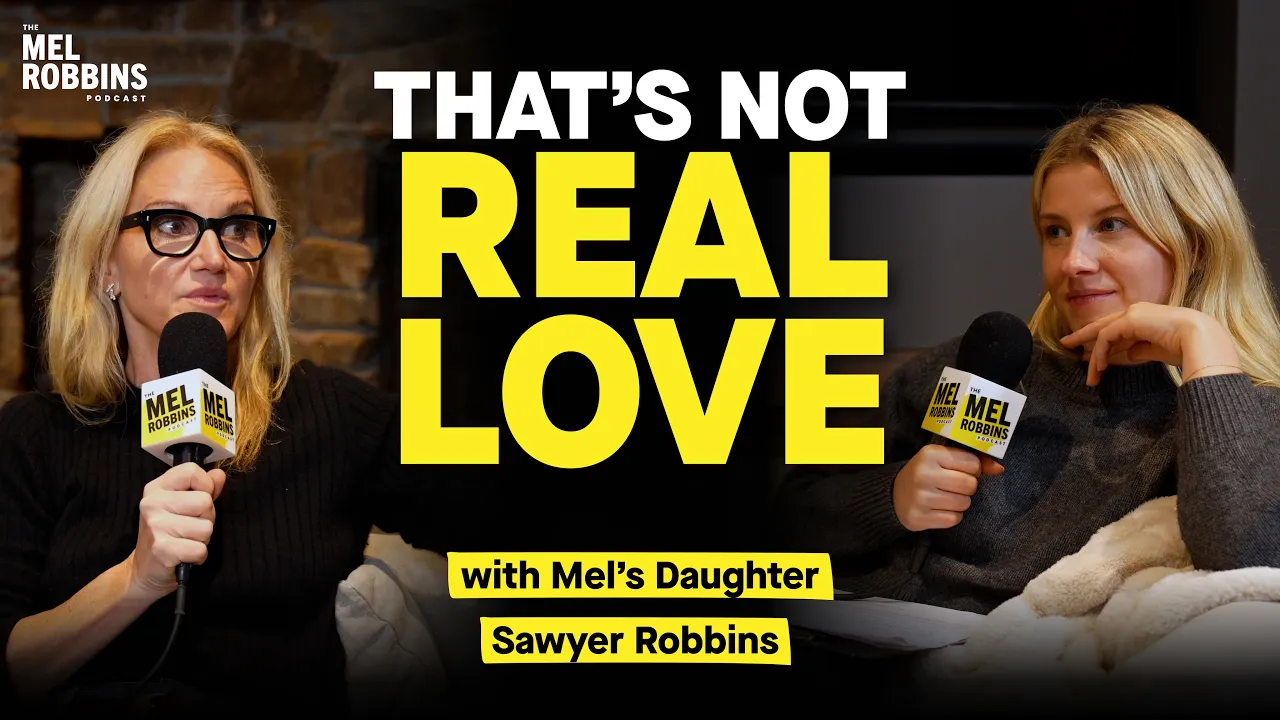
Mel Robbins and her daughter, Sawyer, dive into the complexities of love, dating, and relationships, tackling questions submitted by listeners and friends. Mel emphasizes that knowing if someone is the right fit involves a deep inner knowing, a willingness to not sacrifice your dreams or values, and the ability to accept your partner for who they are.
They also explore the crucial importance of taking time to be single to address personal patterns and avoid repeating mistakes in future relationships. Mel shares her own regret of never being single from age 13 to meeting her husband, highlighting how it delayed her personal healing. The conversation underscores that true connection and growth in a relationship stem from open communication and mutual support, rather than trying to be right or change the other person.
Short Highlights
- Three key indicators reveal if someone is the right person for you: ** A deep inner knowing that something isn't right. ** You don't have to give up dreams or compromise values. ** You can accept them for who they are, not who you want them to be.
- The necessity of being single to heal and break relationship patterns.
- Ambition in relationships: balancing personal dreams with a partner's goals.
- Navigating career decisions and financial power in a partnership.
- Supporting a partner through job struggles without taking over.
- Encouraging a partner to step outside their comfort zone requires acceptance.
- Resolving disagreements on fundamental issues like changing a last name.
Related Video Summary
- The Dating Advice Making Us Worse at Love | Relationship Expert Amy Chan
- Gurudev Sri Sri Ravi Shankar | This Past Weekend w/ Theo Von #677
- Women Wanting 100 Sexual Partners Because Men Do: “Women that think like men are bad."
- 30 Years of Marriage: 3 Things About Relationships I Wish Someone Told Me Sooner
Key Details
The Core of Knowing Your Partner [0:01:00]
- Mel Robbins outlines three critical signs to discern if a partner is the right fit.
- The first sign is an intuitive "deep, just awful dread" when something feels off, even if the person is wonderful.
- This dread signals a misalignment, possibly due to personal unhealthiness or the wrong timing, rather than the partner being inherently wrong.
"And the truth is, I probably could have had a really beautiful marriage and life with either one of them, but I was not in a place where I was healthy enough to be in a relationship."
Sacrificing Dreams or Values [0:04:30]
- The second indicator, based on research by relationship experts the Gottmans, is the need to give up something deeply important to you.
- If a relationship requires you to abandon your dreams or go against your core values, it is unlikely to succeed long-term.
- This compromise can lead to resentment towards the partner for prioritizing them over your life vision.
"And their relationship is very conclusive that it will not work if you have to give up on your dreams or you have to go against your values in order to be with this person."
Accepting Your Partner's Core [0:06:00]
- The third crucial factor is the ability to accept your partner for who they are, without a constant desire to change them.
- Many relationship conflicts stem from bickering over traits that are unlikely to change, which is unfair to both individuals.
- Mel distinguishes between minor annoyances and fundamental personality traits, emphasizing that trying to change someone's core being is detrimental.
"And it is an act of violence against somebody else and an act of violence against yourself to be in a relationship where you are constantly criticizing and nitpicking something about this person that's always been there."
Skills vs. Fundamental Traits [0:09:00]
- Sawyer clarifies the difference between skills/habits that can be learned and fundamental personality traits.
- Skills like picking up after oneself are teachable, but core traits such as kindness, curiosity, and ambition are harder to instill.
- Mel stresses the importance of identifying whether a partner's shortcomings are fixable habits or ingrained aspects of their personality.
"So there are skills that people can learn. And there's also habits that people can learn to be in a healthy relationship."
The 'Home Base' Feeling [0:12:00]
- Mel advises seeking a partner who feels like "home base"—someone who provides an exhale, a smile, and a hug, especially during life's difficulties.
- This feeling of comfort and safety is paramount, as life is long and challenging, and it's easy to be with someone when things are good.
- The ability to feel at ease with your partner after a stressful day is a key indicator of a strong connection.
"You want to be with somebody who is an exhale, a smile, and a hug."
The Value of Being Single [0:15:00]
- Mel strongly advocates for periods of being single to avoid "overlapping" relationships and to address personal issues.
- She regrets never being single from age 13 to meeting her husband, believing it delayed her healing by at least 15 years.
- Being single allows for self-regulation and personal growth, rather than using relationships as a distraction from deeper problems.
"You need to be single. Because you have been using relationships as a way to regulate yourself instead of dealing with the issues and patterns in your life that are making you unhappy."
Breaking Relationship Patterns [0:18:00]
- Repeating relationship patterns is common if one doesn't take time to be single and analyze past relationships.
- Mel explains that subconsciously choosing partners who fit a negative pattern will lead to its recreation unless addressed.
- Working with a therapist is recommended to identify and break these cycles, which often connect to childhood experiences.
"If you don't take a period of time to be single and to take a look at the patterns in the last two or three relationships you've been in, you will repeat the pattern with the new person over and over and over again."
Ambition and Partnership [0:23:00]
- The conversation shifts to balancing a partner's ambition with one's own needs in a relationship.
- Mel acknowledges that there are periods where personal ambition must take precedence, and it's important to have your own drive, not solely defined by your relationship status.
- She advises listeners to identify their own ambitions and contributions beyond being a partner or parent.
"And if you're in a relationship with somebody who has massive ambitions, you should take time to figure out what are your ambitions."
Navigating Career-Driven Decisions [0:25:00]
- Mel addresses the reality that the higher earner often drives major decisions in a relationship.
- She stresses the importance of women earning their own money for power, freedom, and choices.
- When a partner's career dictates decisions, couples must communicate and decide whether to support the move or find a "yes and" solution.
"The person who typically makes more money drives the decisions."
Supporting a Partner Through Job Struggles [0:29:00]
- Mel advises supporting a partner struggling with job loss by offering belief and optimism, not pressure.
- The person already feels bad, so adding more pressure exacerbates their distress.
- She emphasizes trusting the timing of their life and encouraging them to find something they are meant to do.
"The person that's looking for a job already feels like shit about it. They are already beating themselves up. They already feel bad. Do not make them feel bad."
Encouraging Growth Outside the Comfort Zone [0:33:00]
- Mel distinguishes between "10-gallon people" who need significant growth and "pint-sized people" who need less.
- It's crucial to accept your partner's capacity for risk and growth and celebrate their "pint-sized" efforts, even if they seem small to you.
- Trying to force someone beyond their natural capacity can shut them down and prevent future risks.
"And learning that you need to first accept the person that's in front of you and understand and I love this analogy I've been sharing it a lot that Oprah Winfrey learned from Pastor T.D. Jenks that there are 10-gallon people and there are pint-sized people."
Name Change Stalemate [0:35:00]
- When facing a disagreement, like changing a last name, Mel advises going a layer deeper to understand the underlying meaning for each person.
- She shares her own experience of initially keeping her name due to hassle but later wanting to be a unit with her family.
- Understanding the emotional significance behind the request is key to finding a resolution.
"If you are in a stalemate with your partner on something, go a layer deeper. Help me understand why this matters so much to you."
Rebuilding Confidence After Breakups [0:38:00]
- Mel suggests that if you feel nobody is choosing you, you must start choosing yourself through daily habits.
- This involves engaging in activities that make you feel good, such as physical activities or learning new skills.
- Changing your physicality can shift your mentality, spirituality, and emotions, empowering you to feel better about yourself.
"And that is a wind chime that you're probably hearing in the background. And that's a wind chime, by the way, that was given to me when our dog Amigo died."
The Hard Truth About Breakups [0:43:00]
- Mel states that a breakup's hardest part is tolerating the three months that follow, not the breakup itself.
- It's a grieving process for the future that was imagined, and the body and mind need time to unlearn life with the former partner.
- Filling this period with a new relationship or returning to an ex will reset the healing process.
"And the number one piece of advice is honor that it's a big change and that it's going to take time."
Connection Over Being Right [0:47:00]
- Mel's ultimate takeaway is that communication and connection are paramount in relationships, more so than being right.
- She emphasizes that true connection involves understanding the deeper reasons behind a partner's actions or desires.
- Prioritizing connection over winning an argument fosters a meaningful, supportive, and lasting relationship.
"You can be right or you can be connected, but you can't be both."