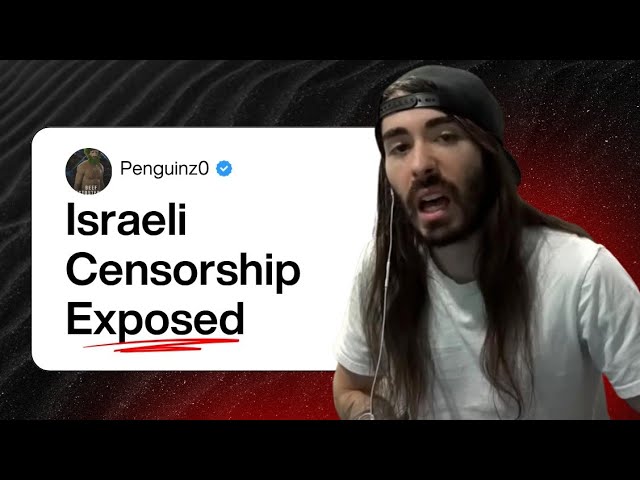
@penguinz0 SLAMS Netanyahu's Censorship Plans
Capital Dawah
14 views • 11 months ago Save 2 min 6 min read
Video Summary
The speaker discusses a statement made by Benjamin Netanyahu regarding plans to influence public opinion and counter criticism against Israel. This strategy involves using influencers and social media platforms like TikTok and X, and appears to prioritize controlling narratives over free speech, drawing parallels between this approach and "woke" ideologies. The speaker expresses disbelief at the openness of these plans and the apparent lack of public outcry.
The transcript also touches upon a perceived Freudian slip by Ted Cruz, where he allegedly said "stop attacking pedophiles" instead of "stop defending pedophiles," when discussing crime statistics. The speaker questions the context and implications of such a statement, suggesting it's unusual and opens the door for speculation, especially in light of past controversies. This is contrasted with a politician's stated primary goal of defending Israel's interests, which the speaker deems questionable in the context of serving a domestic constituency.
Ultimately, the speaker conveys a sense of bewilderment and frustration with what they perceive as a shift in political discourse and priorities. They highlight the potential for foreign influence on domestic platforms and question the motivations and actions of politicians when their stated goals appear to conflict with the interests of the nation they represent.
Short Highlights
- Benjamin Netanyahu is reportedly outlining strategies to combat negative public perception of Israel, utilizing influencers and social media platforms.
- The speaker criticizes this approach as a form of censorship and a manipulation of free speech, likening it to "woke" ideologies.
- A potential Freudian slip by Ted Cruz, mentioning "stop attacking pedophiles" in a discussion about crime, is highlighted and questioned for its context and implications.
- The speaker questions the ethical implications of a politician prioritizing the interests of a foreign nation over their domestic constituents.
- The use of financial resources from governments and "N.O.S." is mentioned as a tactic to influence public opinion and support.
Key Details
Netanyahu's Strategy and Social Media Influence [00:00]
- Benjamin Netanyahu has openly stated plans to address public opinion turning against Israel, suggesting a strategy to influence this narrative.
- This strategy involves leveraging influencers and social media platforms, specifically mentioning TikTok and X (formerly Twitter), as key tools.
- The speaker characterizes this as a "galaxy brain chess maneuver" to control narratives, labeling those who don't support Israel as "Nazis."
- It's suggested that money from governments and other sources is used to fund these efforts to "fight back" and secure support bases in the United States.
- Influencers are reportedly paid to promote a favorable view of Israel, acting as "loyal little lap dogs" to support the agenda.
This section details a purported plan by Benjamin Netanyahu to counter criticism against Israel by employing influencers and social media platforms, which the speaker views as an act of censorship and manipulation. The strategy aims to shape public discourse and maintain support through paid advocacy.
Basically, if you're not eating out of this guy's guch and supporting Israel on everything, you're a Nazi.
Censorship and Foreign Influence [00:22]
- The speaker explicitly labels Netanyahu's strategy as censorship, contradicting the principles of free speech.
- Netanyahu's public statements on controlling algorithms and influencing social media content are presented as evidence of his agenda.
- The speaker finds it concerning that a foreign nation appears to exert significant influence over domestic platforms and discourse.
- The intention is to pressure social media platforms and their leaders, such as Elon Musk, to alter content accessibility based on foreign interests.
This part of the transcript focuses on the perceived censorship and foreign influence stemming from Netanyahu's alleged plans, highlighting concerns about a foreign government's ability to dictate content and shape online narratives within another nation.
Super weird, by the way, how a foreign nation seems to have so much pull over things happening in our homeland.
Ted Cruz's Statement and Political Gaffes [04:00]
- The speaker brings up a previous video where Ted Cruz allegedly made a slip of the tongue, saying "stop attacking pedophiles" when discussing bipartisan agreement on crime.
- This is contrasted with his supposed intention to say "stop defending pedophiles," although the speaker notes this doesn't align with the crime statistics he was referencing (robbery, homicide, rape).
- The speaker acknowledges that it could be an embarrassing flub but questions why it wasn't corrected or addressed, especially since it deviates from the topic of crime.
- The statement is considered "absurd" and "preposterous," leading to public reactions and interpretations of the politician's intent.
- The speaker questions why pedophiles were brought up in the first place and notes that such statements are often made fun of, similar to other politicians' verbal missteps.
This section scrutinizes a specific verbal gaffe attributed to Ted Cruz, questioning its context, intent, and the public's reaction to it, while also touching upon the broader issue of politicians making unusual or questionable statements.
I just don't understand how we've reached this point where you can't even like point out the absurdity of something so preposterous like a politician saying stop attacking pedophiles.
Politician's Allegiance and Treason [06:36]
- The speaker questions a politician's stated primary motivation for entering Congress being to defend the interests of Israel, 13 years prior.
- This is framed as potentially treasonous, as the politician is ostensibly meant to represent domestic interests rather than those of a foreign nation.
- The speaker draws a parallel to the controversy surrounding Israel paying influencers for PR, suggesting this direct statement of allegiance to a foreign entity is far more significant.
- It is argued that an American politician should prioritize the interests of the nation they represent, and that prioritizing a foreign nation's interests is fundamentally wrong.
- The speaker expresses bewilderment at how such actions are supported and questions the politician's commitment to their constituents, especially when they are reportedly absent during domestic crises.
This final section delves into the ethical and legal implications of a politician explicitly stating their primary purpose is to serve a foreign nation, contrasting it with their duty to their own constituents and raising serious questions about their allegiance and potential treason.
So, you are an American politician whose sole purpose for being here is to defend the interests of a foreign nation here domestically. I just don't know how that's not treasonous.