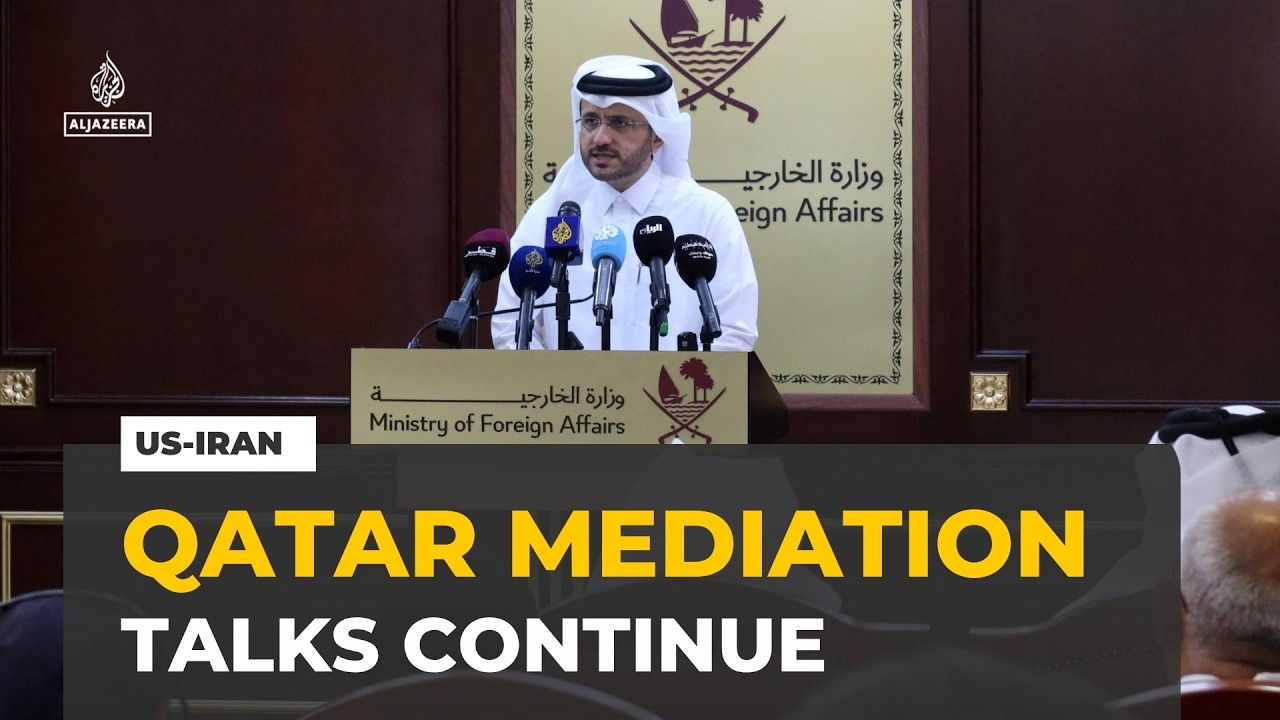
Qatar says efforts under way to find diplomatic solution
Al Jazeera English
17,331 views • 1 month ago Save 17 min 4 min read
Video Summary
As regional tensions reach a boiling point, Qatar is aggressively pursuing back-channel diplomacy to prevent a catastrophic escalation in the Strait of Hormuz and secure a lasting ceasefire in Gaza. While mediators work to bridge the gap between conflicting parties, the state of Qatar has explicitly condemned Israeli violations in Gaza as a flagrant breach of international law, demanding that Israel fulfill its commitments to the agreed-upon roadmap to end the suffering of the Palestinian people.
Despite the intense diplomatic activity, the path forward remains precarious. Qatar, coordinating closely with regional partners like Oman and Egypt, is circulating draft agreements to restore freedom of navigation and reignite stalled talks. Officials maintain that while no formal agreement is currently in place, the primary objective remains a diplomatic resolution that prevents the Strait of Hormuz from being used as a tool for political extortion.
Short Highlights
- Qatar is actively circulating draft agreements to restore freedom of navigation in the Strait of Hormuz.
- Mediators from Qatar, Egypt, and Turkey have publicly denounced ongoing Israeli violations against health facilities and civilians in Gaza.
- Qatar demands that Israel withdraw from occupied lands in accordance with international law and adhere to the established peace roadmap.
- Diplomatic efforts are currently focused on short-term resolutions to avoid major regional escalation.
- No direct in-person talks between the U.S. and Iran are currently scheduled, though regional coordination remains intense.
- Qatar explicitly rejects any unilateral changes to the status quo in the Strait of Hormuz, including potential service charges for transit.
- Regional partners are coordinating closely to prevent the Strait from becoming a tool for political extortion.
- Qatar confirms that all parties are currently working in tandem to avoid a rapid descent into conflict.
- The state of Qatar maintains that it cannot accept any timeline-based pressure, focusing instead on achieving a comprehensive, consensus-based agreement.
Related Video Summary
- 'Ms. Rachel Is a National TREASURE!' Antisemite Of The Year Debate | With Ana Kasparian
- ‘DENYING Aid For Hamas’ Crimes!’ IDF Attacks Gaza Days Into Truce | With Norman Finkelstein
- Elijah Magnier: U.S. Capitulates On Iran War Objectives as Trump Falls Into Strategic Trap
- US and Iran signal progress in talks as Trump pauses strikes
Key Details
Regional Coordination and Diplomacy [0:00]
- Qatar is actively coordinating with GCC countries to address regional developments, specifically focusing on stability and freedom of navigation.
- The Prime Minister has engaged in a flurry of high-level phone calls with international and regional leaders, including Russia, Saudi Arabia, and Germany.
-
The importance of continuing the efforts in order to pave the way for building the trust and reaching solutions accepted by all parties.
Gaza Ceasefire and Humanitarian Crisis [2:20]
- Qatar is pressuring Israel to abide by the second phase of the ceasefire agreement to alleviate the suffering of the Palestinian people.
- Mediators issued a joint statement condemning Israeli attacks on health facilities and civilians as violations of international and humanitarian law.
-
This is a flagrant violation to the international law and the humanitarian law.
Israeli Obstruction and Accountability [4:30]
- Qatar explicitly blames Israel for the current stalemate, citing a pattern of procrastination and the obstruction of the peace roadmap.
- Officials emphasized that Israel is responsible for the escalation that threatens to derail the second phase of the peace plan.
-
Israel must commit to its pledges. And as we can see, there is a lot of things on the table. And it's clear who is obstructing the implementation of the agreement.
Mediation Efforts in the Gulf [7:30]
- Qatar is working in tandem with Oman and other regional partners to facilitate communication and exchange drafts between the U.S. and Iran.
- The focus is on finding a short-term diplomatic resolution to avoid major regional conflict while maintaining the status quo in the Strait of Hormuz.
-
We are coordinating very closely with the Omanis to facilitate the talks between both sides and exchanging ideas and exchanging drafts between both sides.
Status of the Strait of Hormuz [10:30]
- Qatar maintains a firm stance that the Strait must not be used for political extortion or as leverage against international players.
- Any financial management or service charges regarding the Strait must be agreed upon through regional consensus rather than unilateral action.
-
Our focus right now is on resuming freedom of navigation in the Strait of Hormuz. We cannot accept any change to the status quo there.
Withdrawal and Future Outlook [12:30]
- Qatar reiterated the necessity for an Israeli withdrawal from occupied territories, stating that security concerns do not justify continued occupation.
- The state of Qatar remains committed to its role as a mediator, though it refuses to set a specific timeline for reaching a final agreement.
-
We think Israel should withdraw from all land that it occupies in adherence to international law. This occupation cannot be justified by any current or past security situations.