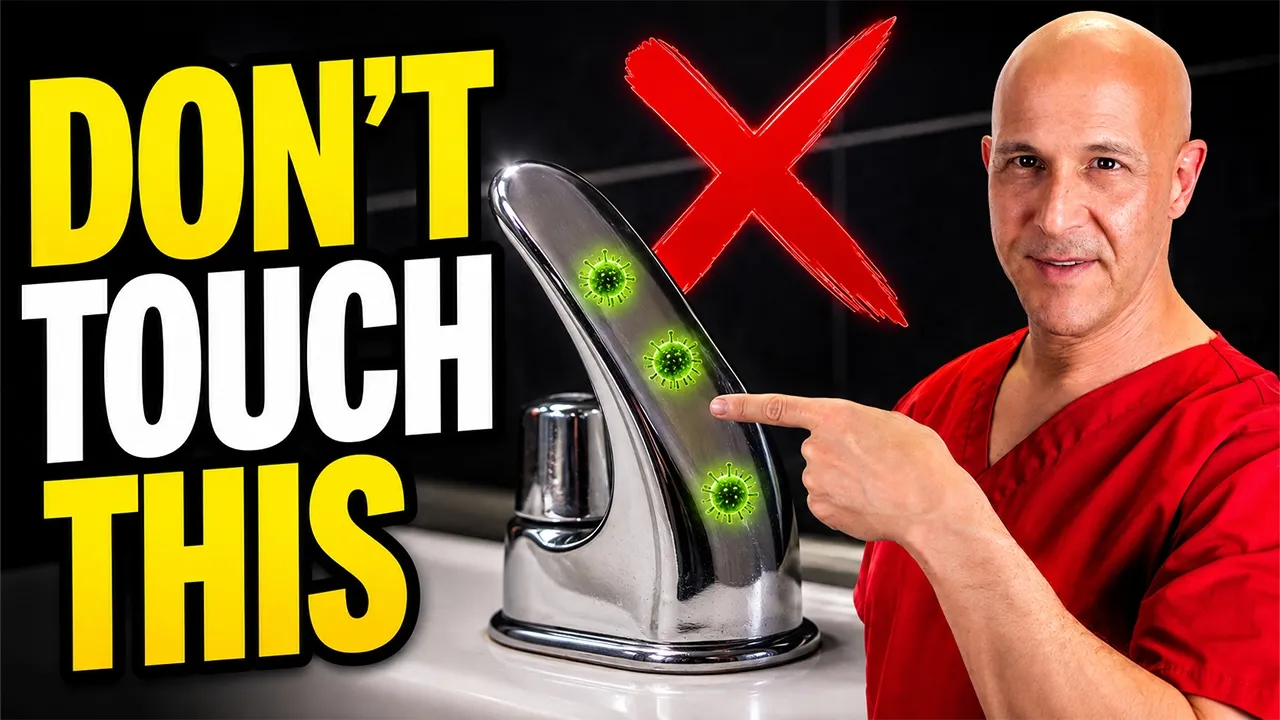
Don’t Touch This After Washing Your Hands—It Could Make You Sick | Dr. Mandell
motivationaldoc
18,311 views • 1 month ago Save 3 min 3 min read
Video Summary
The biggest mistake in handwashing isn't scrubbing, but what happens after you rinse. Even after a thorough 20-second wash, people often recontaminate their hands by touching the same faucet handles they used with dirty hands, or by immediately touching their eyes, nose, or mouth. This common oversight allows germs from contagious illnesses like colds, flu, and COVID-19 to easily re-enter the body.
Public restrooms and shared spaces present a heightened risk, with surfaces like door handles, elevator buttons, and shopping cart handles acting as germ hotspots. Even personal items like cell phones, which travel everywhere, can quickly undo hand hygiene efforts. Experts emphasize that complete hand hygiene also involves drying hands thoroughly, as germs transfer more easily from wet skin, and regularly cleaning frequently touched items and surfaces, especially when someone in the household is sick.
Short Highlights
- The biggest mistake in handwashing is recontamination after cleaning.
- Recontamination occurs by touching dirty faucet handles, door handles, and other high-touch surfaces with freshly washed hands.
- Germs can re-enter the body through the eyes, nose, and mouth.
- Personal items like cell phones are major sources of recontamination.
- Proper hand hygiene includes thorough drying and cleaning frequently touched surfaces.
Key Details
The Faucet Fumble [0:29]
- Most people focus on soap and scrubbing for 20 seconds, which loosens dirt and lifts germs.
- The mistake happens after rinsing: touching the same faucet handle with clean hands.
- This reintroduces germs from unwashed hands or others who touched the handle.
"You have just touched the exact surface your unwashed hands touched moments earlier."
High-Touch Germ Hotspots [1:14]
- Door handles, elevator buttons, gas pump handles, and self-checkout screens are frequently touched.
- Public restrooms pose a risk, as many people may not wash properly or at all.
- Using a paper towel to turn off faucets and open doors can reduce exposure.
"It is a small habit that can reduce unnecessary exposure."
The Germ Transfer Pathways [1:43]
- Within seconds, people touch their eyes, nose, mouth, or bite nails, allowing germs entry.
- Eyes, nose, and mouth are primary entry points for viruses like cold, flu, and COVID-19.
- Every unnecessary transfer gives germs another opportunity to reach the face or spread.
"Your eyes, nose, and mouth are important pathways because many of these germs, that's how they enter the body."
Beyond Handwashing: Drying and Cleaning [4:09]
- Germs transfer more easily from wet skin; thorough drying is crucial.
- Use clean towels, disposable paper towels, or hand dryers.
- Replace damp hand towels regularly, especially when someone is sick.
- Clean faucet handles, doorknobs, and other high-touch surfaces more frequently when illness is present.
"Your hand washing is not truly finished until your hands are dry."