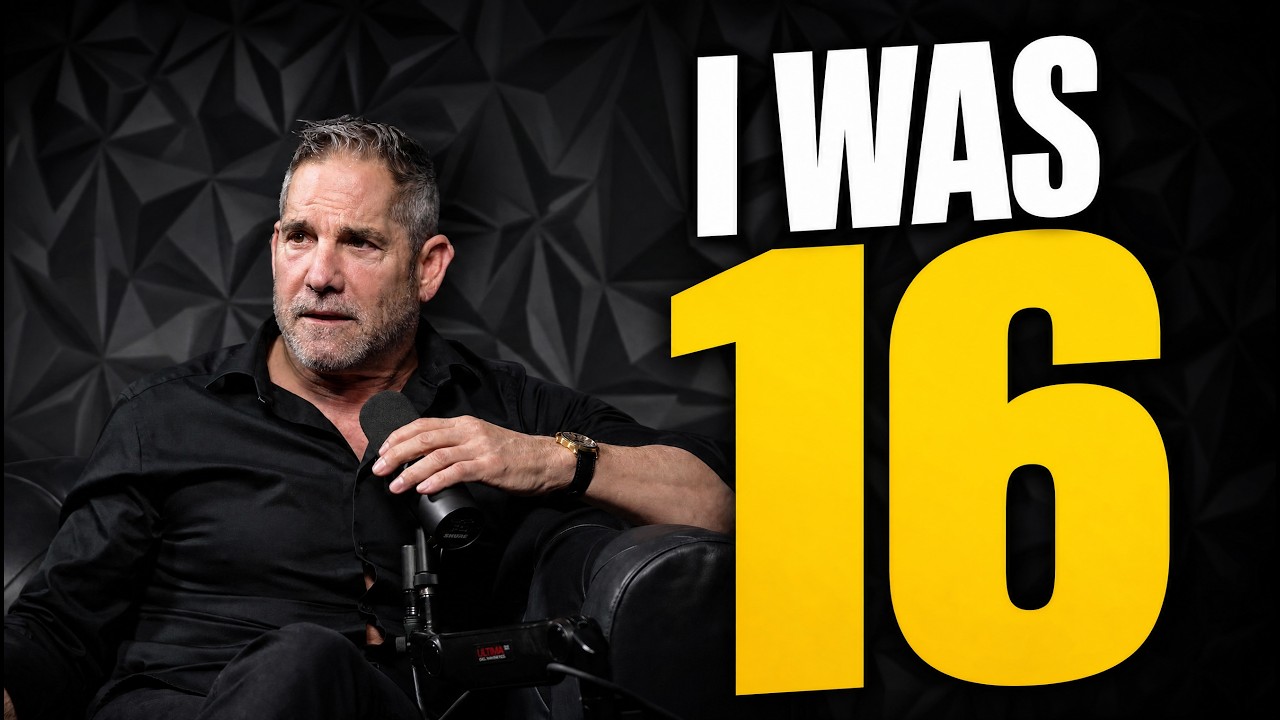
I Knew I Shouldn't Do It. I Did It Anyway.
Grant Cardone
115 views • 22 hours ago Save 4 min 4 min read
Video Summary
A man recounts the devastating impact of drug addiction, which began at 16 with marijuana introduced by his twin brother. He emphasizes that "nobody beats drugs," citing examples like Michael Jackson, Prince, and Elvis. The addiction, starting with pills and escalating over nine years, significantly set back his life, costing him decades of progress. He warns against the misconception that drugs enhance creativity, stating that true creativity requires commitment, not external substances.
He highlights the deceptive nature of drug use, where initial euphoria inevitably leads to a subsequent collapse. The speaker directly addresses young people, urging them to avoid drugs, as no one starts with the intention of becoming an addict, yet the outcome is consistently detrimental. He contrasts the perceived allure of drug use, even in modern forms like vapes, with the harsh reality of addiction's long-term consequences.
Short Highlights
- "Nobody beats drugs" – addiction's ultimate toll.
- Addiction began at 16 with marijuana, introduced by his twin brother.
- Drugs are a significant setback, not an enhancement for creativity.
- Initial euphoria from drugs is always followed by a collapse.
- No one starts using drugs intending to become an addict.
- Modern drug forms like vapes are still dangerous.
- Addiction cost him decades of progress.
Key Details
The Inescapable Grip of Addiction [00:00:00]
- The speaker issues a stark warning: "nobody beats drugs."
- He lists Michael Jackson, Prince, and Elvis as examples of those who did not overcome addiction.
- The core message is that no one begins using drugs with the intention of becoming an addict.
"nobody starts using drugs thinking they're going to be a drug addict"
Growing Up as Twins [00:00:36]
- The speaker discusses growing up as one of five siblings, being the youngest twin alongside his brother, Gary.
- He describes their close bond, stating they were inseparable until college.
- A childhood surgery on Gary's elbow led to a divergence in their paths, with the speaker playing baseball and Gary unable to.
"because you always have a friend with you like like you always have another terminal to bounce stuff off of"
The Introduction to Drugs [00:01:37]
- The speaker reveals his twin brother introduced him to marijuana.
- At 16, he was at a friend's house where his brother and others were smoking weed.
- Despite knowing he shouldn't, intense peer pressure led him to try it.
"the peer pressure was like it was like a thousand pounds i could feel it on me"
Escalation and Family Ignorance [00:02:19]
- Within a year of trying marijuana, the speaker became a drug addict, escalating to using pills from his mother's cabinet.
- He notes that drug use was prevalent then and likely worse today.
- His mother likely knew about his addiction for nine years but didn't confront it, possibly due to not knowing how or being an enabler.
"she had to know dude she had to know bro like she knew"
The True Cost of Addiction [00:03:36]
- The speaker emphasizes that drugs were a "terrible thing" that set him back significantly, estimating a 29-year delay in his life progress.
- He reflects on the moment of trying marijuana again, wishing he could handle it differently.
- He contrasts the difficulty of separating from his twin brother with the need to escape addiction.
"it set me back it didn't set me back nine years it probably set me back 29 years"
A Message to the Youth [00:04:30]
- Addressing 16-year-olds, he reiterates that "nobody beats drugs" and warns against the misconception that drugs enhance creativity.
- He argues that if one needs substances to unlock creativity, they are not truly in control of it.
- The speaker stresses that commitment, not drugs or alcohol, is needed for a clear path forward.
"you don't need drugs to be an artist you don't need yeah it's just a setback dude"
The Euphoria and Collapse Cycle [00:05:56]
- The speaker explains the cycle of drug use: an initial feeling of euphoria is always followed by a collapse or "crash."
- This applies to all drugs, including amphetamines and downers, and even alcohol.
- He warns that the temporary good feeling is deceptive, as a negative consequence inevitably follows.
"with every feel good there's this collapse yeah that follows it"