Iran BREAKS Trump, US Troops EVACUATE Bases as Gulf States PANIC | Patrick Henningsen
Danny Haiphong
156,600 views • 1 month ago Save 52 min 10 min read
Video Summary
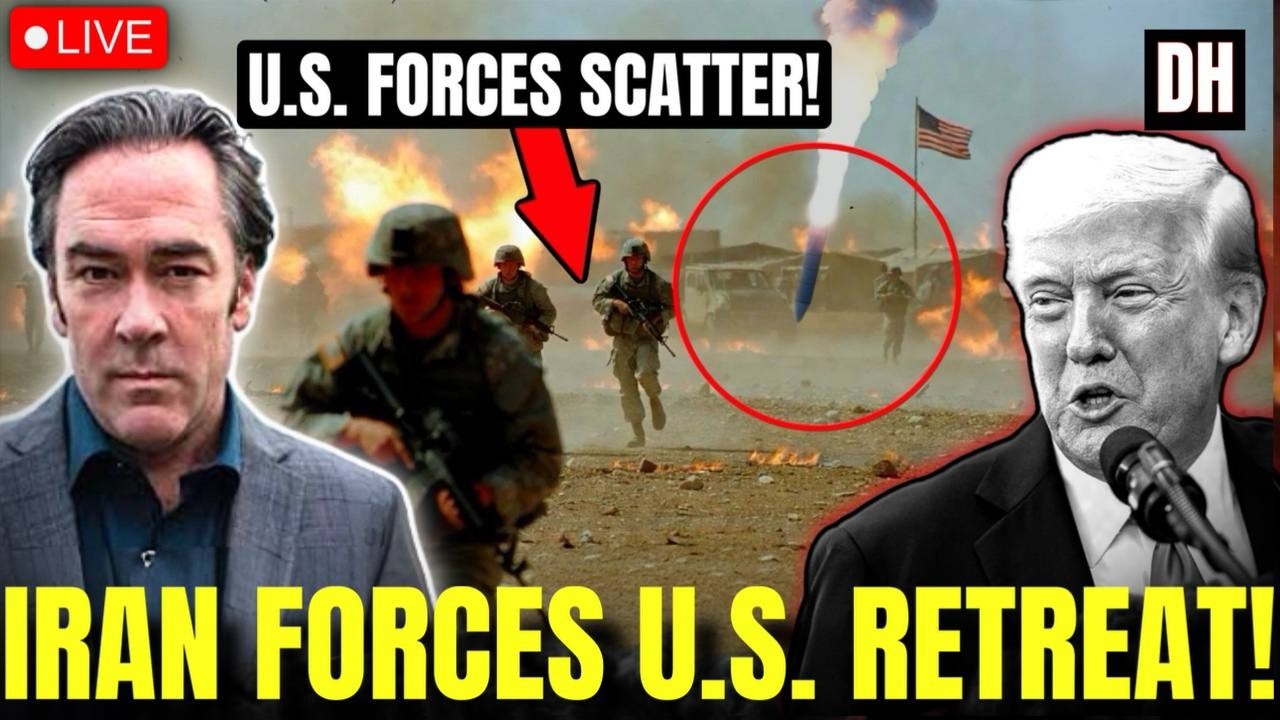
The United States is reportedly shifting its military posture in the Middle East, repositioning troops away from Kuwait and Bahrain due to Iranian strikes. This move comes amid conflicting signals from the Trump administration regarding negotiations with Iran, which Tehran denies. Iran continues to assert control over the Strait of Hormuz, recently firing missiles toward a tanker. Analysts suggest the U.S. is buying time to rearm for a potential limited campaign against Iran, while also facing a weakening hand in the region.
The expiration of a memorandum of understanding regarding fees on shipping through the Strait of Hormuz is set to expire, potentially allowing Iran to charge fees and further control the vital waterway. This development poses a significant blow to the Trump administration's strategy, which aims to degrade Iran's military and infrastructure, particularly concerning the Strait. The U.S. and Israel have historically used negotiations as a cover for attacks, a tactic Iran is now reportedly aware of, diminishing the element of surprise.
Short Highlights
- U.S. military repositioning troops in the Middle East away from Kuwait and Bahrain.
- Iran denies negotiating with the U.S. and maintains control over the Strait of Hormuz.
- U.S. strategy involves buying time to rearm for a potential limited campaign against Iran.
- Expiration of MOU on Strait of Hormuz fees could allow Iran to charge shipping.
- U.S. and Israel accused of using negotiations as cover for attacks.
- Gulf states reportedly frustrated with U.S. strategy toward Iran.
- U.S. retains significant leverage over Gulf states despite weakening regional position.
- Iran's long-term strategy aims to deny U.S. naval access to the Persian Gulf via the Strait of Hormuz.
- U.S. military stocks depleted by previous conflicts and support for Israel.
- Iran is in a stronger position for a war of attrition.
- Saudi tankers rerouting around Africa due to fears of retaliation from Yemen.
- False flag operations suspected in recent provocations in Egypt and Saudi Arabia.
Related Video Summary
Key Details
U.S. Military Posture Shift in Middle East [0:00]
- Financial Times reports U.S. military repositioning troops away from Kuwait and Bahrain.
- This shift is partly due to Iranian strikes and a need to move forces further afield to Jordan, Israel, and beyond.
- Donald Trump declined to comment on troop movements when questioned.
"Sir, there's a report that you're moving U.S. troops out of Bahrain and Kuwait. Are troops being moved out of the Middle East? Mr. President, why?"
Iran's Stance and Strait of Hormuz Control [0:46]
- Iran denies reports of ongoing negotiations with the United States.
- Iran continues to enforce control over the Strait of Hormuz.
- Cruise missiles were fired toward a tanker attempting to pass through the Omani corridor.
"And Iran is still very much enforcing its control over the Strait of Hormuz, firing cruise missiles, anti-ship cruise missiles toward a tanker last night..."
Conflicting Messages and U.S. Strategy [1:30]
- The situation has shifted from potential large-scale strikes to a message of apparent retreat.
- Some insiders suggest Trump was warned off an attack due to a lack of U.S. and Israeli defensive capabilities.
- The pattern suggests the U.S. is trying to buy time to rearm for a limited campaign.
"We've gone from World War Two level like strikes that the United States was supposed to launch with Israel over the weekend now to what appears to be a very confused message of retreat."
Iran's Growing Regional Influence [2:55]
- Iran's hand in the region is weakening with each successive strike against U.S. bases.
- The U.S. cannot afford to let Iran declare victory if threats are not met.
- The U.S. needs to rearm for a potential 10-14 day campaign.
"Certainly the hand that they have to play in the region is weaker and weaker with every successive Iranian strike against U.S. bases in the region."
Memorandum of Understanding Expiration [4:00]
- A 60-day deadline for a memorandum of understanding (MOU) is approaching.
- This MOU involved Iran's moratorium on charging fees for shipping through the Strait of Hormuz.
- Its expiration means Iran could charge fees, further solidifying control over the Strait.
"What also is important is the 60 day deadline of the MOU, the first memorandum understanding, is going to come due now."
U.S. Strategy of Degradation [5:30]
- The U.S. has a long-term strategy to weaken Iran's military and infrastructure, particularly regarding the Strait of Hormuz.
- This strategy is often masked by intermittent negotiation attempts.
- The U.S. and Israel have a history of using negotiations as cover for attacks or assassinations.
"The U.S. have a long term strategy that is to weaken, to degrade Iran's military and infrastructure and specifically as it pertains to the managing of the Strait of Hormuz."
Iranian Awareness and Zero Trust [6:50]
- Iranians are aware of the U.S. and Israel using negotiations as a cover for attacks.
- This awareness reduces the element of surprise for the U.S. and Israel.
- Iran has zero expectation that the U.S. will honor any agreements.
"So the I think the Iranians are fully aware of this. So they're not able to sort of the element of surprise that the U.S. and Israel had previously is very underhanded, by the way..."
Unacceptable Outcomes for the U.S. [8:00]
- A peace deal with Iran is unlikely as it would be seen as total capitulation by the U.S.
- Any scenario where Iran retains control over the Strait of Hormuz is unacceptable to the U.S.
- The U.S. will rearm and reload if unable to prevent Iranian control of the Strait.
"So if the U.S. can't prevent that, then they'll back off and engage in fake negotiations and they'll put on a facade."
Israel's Strategic Position [9:30]
- Israel needs sufficient defense capabilities for a potential two-week barrage.
- Iran is aware of the political situations in the U.S. and Israel and avoids actions that could aid Netanyahu in elections.
- During the last escalation, Israel sat it out while the U.S. took the hits.
"And Israel has to have enough to defend itself for at least a two-week barrage."
Expanding Conflict and U.S. Leverage [11:00]
- The conflict has expanded to include Iraq, the Red Sea, Yemen, and Ukraine.
- The U.S. uses its leverage over Saudi Arabia and Gulf states due to their reliance on the dollar system.
- Despite diminishing military base utility, the U.S. retains significant leverage.
"The conflict has clearly expanded in the last week with Iraq, with the Red Sea, with Yemen, also with Ukraine joining in to hit an Iranian ship in the Caspian Sea, extending that blockade to the north as well as to the south."
Trump's Inability to Exit [12:30]
- Donald Trump is deeply entrenched in the conflict and cannot easily disengage.
- No peace treaties are expected during this administration.
- Fake negotiations and announcements will continue, but no genuine peace deal is anticipated.
"Donald Trump can't get out of this. There's going to be no group hug with the Iranians. It's not going to happen. There's no treaty, no peace treaties coming..."
Gulf States' Frustration and U.S. Control [14:30]
- Gulf states are reportedly frustrated with the U.S.'s inconsistent strategy toward Iran.
- They fear prolonged conflict and retaliation.
- The U.S. exerts total control over Gulf regimes, which serve at the pleasure of Western powers.
"The Gulf states are supposedly played a big role in curbing Trump's lust for massive strikes on Iran. It says, according to the Wall Street Journal, that they're growing frustrated the Gulf states are with what they see as inconsistent strategy by the U.S. toward Iran."
Potential for Regime Change in Gulf States [16:00]
- Western powers could easily engineer regime change in Gulf monarchies.
- This could involve installing a military dictator or a figure more amenable to U.S. and Israeli interests.
- The model of Egypt's Sisi is cited as a way to suppress nationalism and ensure normalization with Israel.
"All you'd have to do is a military coup. Very straightforward. Extremely easy. And maybe find a cousin or, you know, some other royal or a general and a field marshal, and that's it."
U.S. Military Weakness and Desperation [19:00]
- The U.S. has experienced a historic and humiliating military loss in the region.
- Military stocks are depleted due to past conflicts and support for Israel.
- Pentagon officials are resorting to desperate measures, seeking "creative options" to punish Iran.
"This is like a historic loss for the United States militarily, which is absolutely humiliating, historic loss for America."
Disruption of China's Belt and Road Initiative [21:30]
- The U.S. is committed to disrupting the China-Iran-India middle corridor and the broader Belt and Road Network.
- Previous U.S. and Israeli operations have significantly impacted Chinese investments in Libya and Sudan.
- This long-term strategy to prevent peer competitors from emerging continues.
"The United States will not allow a Russia-Iranian-Indian middle corridor. They just won't, they'll, this has provided a good excuse for them to disrupt that."
Iran's Strong Position in War of Attrition [24:00]
- Iran is in a much stronger position for a war of attrition against the U.S.
- Successfully blocking U.S. military access to the Persian Gulf would be a global game-changer.
- The situation with Iran mirrors Russia's strong position in Ukraine.
"But if it's a war of attrition, Iran is in a much stronger position. Everyone can agree with that."
Saudi Tankers Rerouting and False Flags [26:30]
- Saudi tankers are sailing around Africa to avoid the Bab-el-Mandeb Strait due to fears of Yemeni retaliation.
- This decision is driven by pressure from the U.S. rather than economic sense.
- Recent incidents in Egypt and Saudi Arabia are suspected to be false flag operations.
"Saudi tankers appear to be now sailing around the African continent rather than using the Bala Bendev Straits."
Trump's Lies and Market Manipulation [30:00]
- Trump repeatedly lies about negotiations with Iran, potentially for personal or insider financial gain.
- Geopolitical situations are being created to reap short-term profits in the markets.
- Trump's image as a powerful CEO is a constructed narrative, with world leaders often laughing at the U.S.
"And whether he himself is personally financially benefiting from it, that's anyone's argument. But I would say absolutely, those in his inner circle, his family, his Wall Street coterie, he's got plenty of Wall Street operatives in his cabinet..."
Pakistan's Role as Mediator [36:00]
- Pakistan is playing a constructive role as a mediator in negotiations.
- However, the Pakistani government is subject to U.S. pressure and leverage.
- There are concerns about the government's independence and potential to disrupt negotiations.
"Do I trust the government and think that they're always playing above board? I don't think so. So the U.S. exerts a lot of pressure and leverage over this government in Pakistan."
Turkmenistan and Potential U.S. Operations [38:30]
- The U.S. and Israel have exploited Afghan refugees within Iran to conduct attacks.
- Turkmenistan, bordering Iran, has been used as a staging ground for U.S. operations in the past.
- The influence of Moscow over former Soviet countries like Tajikistan is a factor to consider.
"And the U.S. and Israel exploited that, used it to attack Iran from inside. And so Turkmenistan is also bordering Iran."
Iran's Nuclear Program and Straw Man Arguments [40:00]
- The U.S. uses the argument of preventing Iran from obtaining nuclear weapons as a justification for its actions.
- Iran was not pursuing nuclear weapons, making this a straw man argument.
- The U.S. and Israel have committed war crimes under the guise of preventing a nuclear Iran.
"Iran will never have a nuclear weapon. There's that strong straw man argument again. We're preventing Iran from gaining a nuclear weapon."