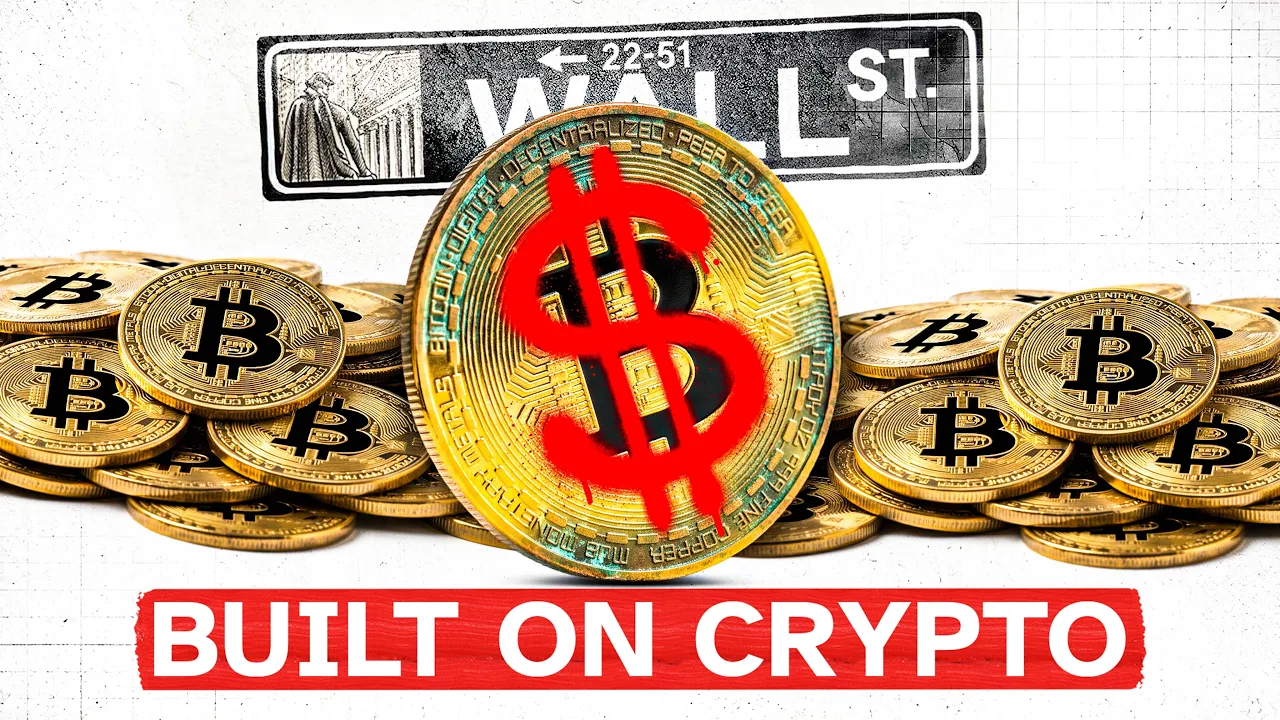
🔴 Gold Tops $4K as World Prepares to Go Off Dollar Standard - Ep 1045
Peter Schiff
49,624 views • 11 months ago Save 47 min 13 min read
Video Summary
Gold prices have surged dramatically, with spot gold surpassing $4,000 for the first time, marking a 54% increase year-to-date. This unprecedented rise, the most significant since the 1970s, is seen as a critical warning signal about the global monetary system. The speaker argues that the current situation is as significant, if not more so, than the events of the 1970s when the US detached from the gold standard.
The historical context of the 1970s is crucial, as the Nixon administration's decision to end the gold standard effectively devalued the US dollar, leading to stagflation and a decline in living standards. The transcript posits that the current trend represents a global shift away from the dollar standard, triggered by events like international sanctions, unsustainable fiscal and monetary policies, and a growing distrust in the US dollar's stability.
This impending dollar crisis, characterized by potential sovereign debt issues and runaway inflation, is mirrored by gold's performance, which acts as a "canary in the monetary coal mine." The speaker criticizes those who dismiss gold's surge, emphasizing that its rise is a leading indicator of systemic problems, much like the subprime mortgage crisis foreshadowed the 2008 financial collapse. The advice is to diversify into real assets like gold and silver to protect against this impending devaluation.
Short Highlights
- Spot gold has surpassed $4,000 for the first time, experiencing a 54% year-to-date increase.
- This surge is compared to the significant events of the 1970s when the US moved off the gold standard.
- The current situation is interpreted as the world moving off the "dollar standard," driven by a loss of confidence in US fiscal and monetary policies.
- Events like international sanctions and unsustainable debt levels are accelerating the shift away from the dollar.
- Gold is presented as a leading indicator and a hedge against an impending dollar crisis, sovereign debt crisis, and significant inflation.
Related Video Summary
- Peter Schiff: This Crisis Won't Be Like 2008, It Will Be a U.S. Sovereign Debt Crisis
- Federal Reserve meeting begins as pressure mounts for interest rate cuts
- Fed Under Attack; What's Next For Stocks, Bitcoin, Gold As Bull Market 'Ends' | Gareth Soloway
- Dollar Crisis — The World Is Dumping Dollars and Buying Gold
Key Details
The Unprecedented Rise of Gold [00:56]
- December gold futures traded above $4,000 for the first time ever, with spot gold surpassing this mark.
- The year-to-date price increase for gold is 54%, a figure not seen since the 1970s.
- Silver also saw a significant rise, trading above $49.50 at its intraday high.
- This level of gold performance is considered as significant as what occurred in the 1970s.
The dramatic surge in gold prices, exceeding $4,000, is a historic event, marking a 54% increase year-to-date and comparable only to the 1970s. This performance is seen as a strong indicator of significant economic shifts.
Look, obviously, you know, gold could go back below 4,000. I mean, that's not some kind of line that that can't be crossed. And it's hard to say whether or not we're going to have a pullback from here. I mean, certainly the market is due for a pullback. I mean, we've come a long way. In fact, year to date, the price of gold is up um 54%.
The Historical Context: The 1970s and the End of the Gold Standard [04:50]
- In 1971, Nixon took the US off the gold standard, a move intended to be temporary but lasting over 50 years.
- Before 1971, central banks holding US dollars could exchange them for gold at a fixed rate of $35 per ounce.
- Federal Reserve notes were essentially receipts for gold.
- Even before 1933, US citizens could redeem Federal Reserve notes for gold at $20 per ounce.
- After 1933, while Americans couldn't own gold, foreigners could still exchange dollars for gold, but at a devalued rate of $35 per ounce.
- The dollar was defined as a specific weight of gold, making Federal Reserve notes IOUs for dollars, which were convertible to gold.
- Silver certificates were also backed by silver, and silver coins were redeemable until the mid-1960s.
- The value of paper currency was derived from its backing in gold or silver.
The abandonment of the gold standard in 1971 fundamentally altered the global monetary system, transforming the US dollar from a currency backed by gold to one backed by nothing, leading to a significant devaluation. This historical event set the stage for future economic instability.
The Federal Reserve note was basically a receipt that paid the holder of that receipt an ounce of gold. You had $35. You could turn them in and you could get an ounce of gold.
The Devaluation of the Dollar Post-Gold Standard [10:08]
- After leaving the gold standard, the US dollar significantly devalued against other currencies and against gold.
- Prior to 1971, dollars were backed by gold; afterward, they were backed by nothing, diminishing their value.
- The US effectively defaulted on its promise to redeem Federal Reserve notes for gold, leading to a marked decrease in the dollar's worth.
- This devaluation contributed to price increases, such as oil rising from $3 to $35 per barrel, not due to Arab actions but to the shift from gold payment to paper payment.
- The real price of oil decreased when measured in gold, but the dollar price increased as compensation for the loss of gold value.
The shift away from the gold standard resulted in a substantial devaluation of the US dollar, impacting commodity prices and the overall value of the currency, demonstrating the significant consequences of reneging on monetary commitments.
After 1971, if you held dollars, you had a currency backed by nothing.
The World Continues on a Dollar Standard Despite Devaluation [13:54]
- Despite no longer being backed by gold, the US dollar remained the primary reserve currency globally.
- This continued use of the dollar, now devalued, led to stagflation in the 1970s and a decline in living standards.
- Women entered the workforce in the 1980s and 90s because one paycheck could no longer support a family.
- The current significant rise in gold is seen as an indication that something equally or more significant is happening now.
Even though the dollar lost its gold backing, it maintained its status as the global reserve currency, leading to economic hardship like stagflation and a reduced standard of living for many. The current gold rally suggests an even more profound shift is underway.
That's why we had the stagflation of the 1970s we had a major resetting of the cost of living the result of that you know women in the 1980s and 90s who never had to work had to go into the workforce because their husbands could no longer support them because they were no longer earning dollars that were backed by gold their salaries were now just paper and it lost a lot of value and so the cost of living went up and so one paycheck could no longer support the family and so you had a second bread winner that came into the labor force so they could pay the rent and put food on the table and keep the lights going but it was a big decline in our standard of living uh as a result of of what we did but what's happening now I think is an indication that something just as significant and maybe even more so is is happening.
The World is Going Off the Dollar Standard [18:51]
- The speaker believes the 2020s are characterized by the world moving off the dollar standard, similar to the 1970s move off the gold standard.
- International sanctions imposed on Russia for the Ukraine invasion served as a wake-up call for other nations, highlighting the risk of holding US dollars as reserves.
- This risk, the possibility of having reserves seized, incentivizes countries to divest from US dollars for sovereignty.
- Central bank buying of gold has been a primary driver of gold's price increase.
- Recently, investors have also begun buying silver, leading to its accelerated rise.
The current global economic climate, particularly the implications of international sanctions, is prompting nations to reconsider their reliance on the US dollar, leading to a potential shift away from the dollar standard and an increased demand for gold.
What I think is significant about the 2020s is that the world is going off the dollar standard.
The Undermining of the Dollar's Status [21:13]
- Central banks are divesting from dollars due to concerns about fiscal and monetary policy.
- The abolition of the debt ceiling and increased spending under a bipartisan agreement have raised global reflection on America's fiscal responsibility.
- The perception that neither political party is committed to fiscal responsibility signals an inability to address exploding debt.
- Donald Trump's actions and rhetoric towards the Federal Reserve have undermined its credibility and independence.
- The Fed's policy is seen as constrained by the inability to pay interest on the debt, leading to artificially low rates to avoid bankruptcy.
- This environment fosters inflation, further undermining the dollar's status.
- Trade wars and tariffs initiated by Donald Trump also served as a wake-up call for foreign nations, signaling a move away from dollar dependency.
A combination of unsustainable debt, eroded Federal Reserve credibility, and trade disputes is dismantling the dollar's global standing, pushing other nations to seek alternatives.
The world did some serious reflection to say that America will never get its house in order because if even the MAGA Republicans are unwilling to cut government spending, then who will? Certainly the Democrats aren't going to do it. So we don't have any party that believes in fiscal responsibility.
Gold as a Warning Signal [26:44]
- The media is discussing gold's rise to $4,000, but most fail to grasp its significance.
- This is compared to the subprime mortgage crisis in 2007, where the initial collapse was dismissed as contained, but ultimately led to a larger financial crisis.
- Gold's current surge is a harbinger of a dollar crisis and a sovereign debt crisis.
- Observers like Larry Kudlow dismiss gold's rise, attributing it to factors other than a loss of confidence in the dollar or inflation fears, as these are not yet fully reflected in other markets.
- The speaker argues that gold is the leading indicator, sensing these threats first, much like subprime mortgages were the initial weakness.
Gold's significant price increase is interpreted as a crucial warning sign of an impending dollar crisis and sovereign debt issues, mirroring historical events where initial dismissals of warning signals led to larger crises.
And I think that what gold is, you know, basically warning, what what this move portends is a crisis. Just like the subprime collapse was a harbinger of a financial crisis, gold soaring the way it is is a harbinger of a dollar crisis, of a sovereign debt crisis.
The Diminishing Significance of Gold in Media Coverage [32:00]
- An increasing number of Wall Street figures are now recommending gold investments, a shift from past skepticism.
- A decade ago, recommending gold was met with criticism, accusations of fear-mongering, and claims of being a "gold salesman."
- Today, Bitcoin recommendations are met with less scrutiny, despite much larger forecasts.
- The media's consistent interjection of Bitcoin into gold discussions diminishes gold's significance.
- The argument that gold has no intrinsic value is contrasted with the acceptance of Bitcoin, which also lacks tangible intrinsic value.
The perception of gold has shifted from being a fringe investment to a more accepted asset, yet the media's attempts to equate or contrast it with Bitcoin often overshadow gold's critical message as an economic indicator.
They were accusing me of being irresponsible and reckless in promoting gold. They said I was fear-mongering, that the only reason I was saying people should buy gold was because I'm a gold salesman and I got to sell gold.
Gold as the Canary in the Monetary Coal Mine [36:36]
- Gold is described as the "canary in the monetary coal mine," a signal of impending danger in the financial system.
- The rise in gold prices, especially to $4,000, is a warning that should be heeded, not rationalized away.
- Critics argue that if it were a true crisis, other markets like commodities or bonds would also reflect the problem, and the dollar would weaken significantly.
- The speaker counters that gold is the most sensitive and forward-looking indicator, detecting threats before they manifest in other markets.
Gold's surge is a critical warning signal for the financial system, and its sensitivity allows it to detect threats to the US dollar and creditworthiness before broader market indicators.
Well, in this case, it's like the miners are all looking at this canary and they're trying to figure out why he died and they're like, well, you know, maybe he had a heart attack. Maybe he was just old and he just died of natural causes, right? No. get the hell out.
The Impending Dollar Collapse and the Need for Real Assets [48:49]
- The dollar is expected to become "just another currency" with significantly reduced purchasing power, akin to the depreciation seen in the 1970s, but potentially more severe.
- The current situation is framed as the world moving off the dollar standard, unlike the 1970s, which was the US moving off the gold standard.
- Unlike the 1970s, where solutions like high interest rates and tax reforms were possible, the current debt levels make such remedies potentially fatal to the economy.
- The proposed cure of raising interest rates to combat inflation would bankrupt the US due to its massive debt.
- The current economic system, built on consumption financed by debt, is imploding.
- Americans have become dependent on foreign producers and lenders, and this system is unsustainable.
- Buying gold and silver, along with dividend-paying foreign stocks and commodities, is advised as a means of protection.
- US stocks and bonds are to be avoided due to their inherent risks.
The future points towards a significant collapse of the US dollar, far exceeding the depreciation of the 1970s, with limited apparent solutions due to overwhelming debt, necessitating a move to real assets for protection.
The dollar is just going to be another currency. And it's just going to be another currency that buys a lot less than it buys today. There's going to be a major depreciation, at least as big, if not bigger, than the depreciation we saw in the 1970s.
The Unsolvable Dilemma of Debt and Inflation [52:47]
- The Federal Reserve is in a bind, likely needing to cut rates into rising inflation, falling further behind the curve.
- The solutions that ended the 1970s crisis, such as 20% interest rates and substantial tax reform, are no longer viable due to current debt-to-GDP ratios.
- Raising interest rates sufficiently to combat inflation would lead to a debt crisis, as the US cannot afford higher rates without bankrupting itself.
- The economic system's reliance on consumption, debt, and interest rates means this entire structure is at risk of collapse.
- Even tariffs, proposed as a solution by some, only address symptoms and not the root causes of the economic problems.
The current economic predicament is an unsolvable dilemma where fighting inflation with higher interest rates would trigger a catastrophic debt crisis, underscoring the systemic failure of the current economic model.
The cure would kill us. That's how sick we are. If we have to raise interest rates high enough to fight inflation, we we kill ourselves with the debt crisis because we can't afford to pay the higher rates of interest and the whole economy implodes and then the tax base implodes and then the deficits skyrocket.