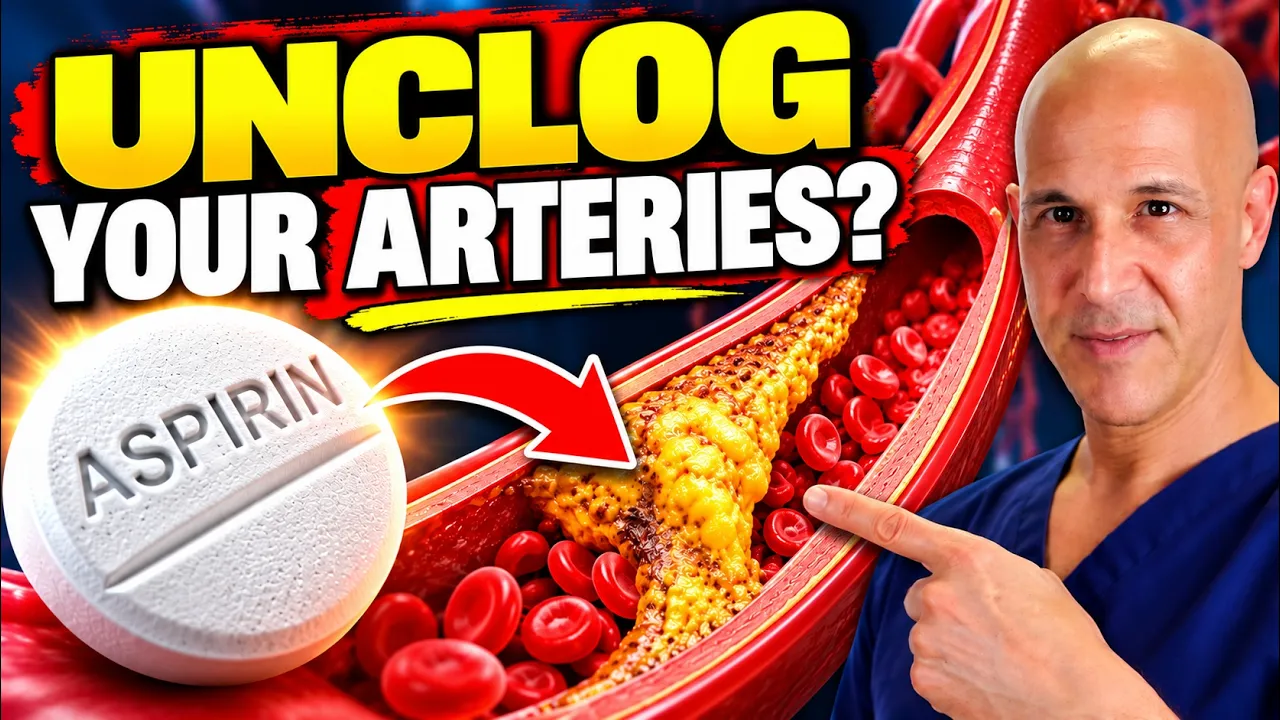
Does Aspirin Really Unclog Your Arteries? Here's What Most People Don't Know! Dr. Mandell
motivationaldoc
39,295 views • yesterday Save 3 min 3 min read
Video Summary
Aspirin is often hailed as a miracle for heart health, but its role in clearing arteries is far more nuanced than a simple daily pill. By inhibiting the enzyme cyclooxygenase, it prevents the production of thromboxane, effectively acting as a 'traffic controller' that stops platelets from clumping and forming dangerous clots. While it remains a critical intervention for those who have already suffered cardiac events, medical guidelines have shifted significantly, warning that the risk of internal bleeding may outweigh the benefits for many healthy individuals.
Modern cardiovascular care emphasizes personalization over universal prevention. With elevated lipoprotein A (LP little a) emerging as a major hereditary risk factor, doctors are increasingly tailoring aspirin regimens to specific patient profiles rather than broad populations. Ultimately, the most effective defense against arterial plaque remains a foundation of lifestyle management, including diet and exercise, which aspirin can only supplement under strict professional guidance.
Short Highlights
- Aspirin works by inhibiting cyclooxygenase, which reduces thromboxane production and prevents platelets from clumping into arterial clots.
- Low-dose 'baby aspirin' (81 mg) is typically used for cardiovascular maintenance, while 325 mg is recommended for suspected heart attacks.
- Guidelines have shifted from universal primary prevention to a personalized approach due to the significant risk of gastrointestinal bleeding and ulcers.
- Aspirin is most effective for secondary prevention in patients with a history of heart disease or stroke.
- Lifestyle factors such as diet, exercise, and managing blood sugar remain the primary foundation for preventing artery-clogging conditions.
Key Details
The Mechanism of Aspirin [00:01:10]
- Aspirin functions as a non-steroidal anti-inflammatory drug (NSAID) that inhibits the enzyme cyclooxygenase.
- By blocking this enzyme, the body produces less thromboxane, a chemical that causes platelets to stick together.
Aspirin acts like a traffic controller, ensuring that blood flows smoothly and preventing these plaques from causing complete blockages.
Guidelines and Risks [00:02:40]
- Medical organizations have updated recommendations to caution against universal aspirin use due to bleeding risks.
- Patients with histories of gastrointestinal bleeding or ulcers must consult a doctor before beginning a regimen.
For people without a history of heart disease, the risks, such as bleeding, may outweigh the benefits.
Emergency Usage and LP(a) [00:03:55]
- Chewing 325 mg of aspirin is a recommended first step during a suspected heart attack to speed up absorption.
- Doctors may prescribe aspirin for patients with high levels of lipoprotein A, a hereditary risk factor for plaque buildup.
Aspirin works by inhibiting platelets, which can help prevent further cladding in the arteries.
The Foundation of Heart Health [00:04:45]
- Lifestyle changes, including a balanced diet and regular physical activity, are essential for preventing arterial blockages.
- Managing conditions like pre-diabetes and diabetes is critical to reducing long-term cardiovascular risk.
Maintaining a heart-healthy lifestyle is paramount.