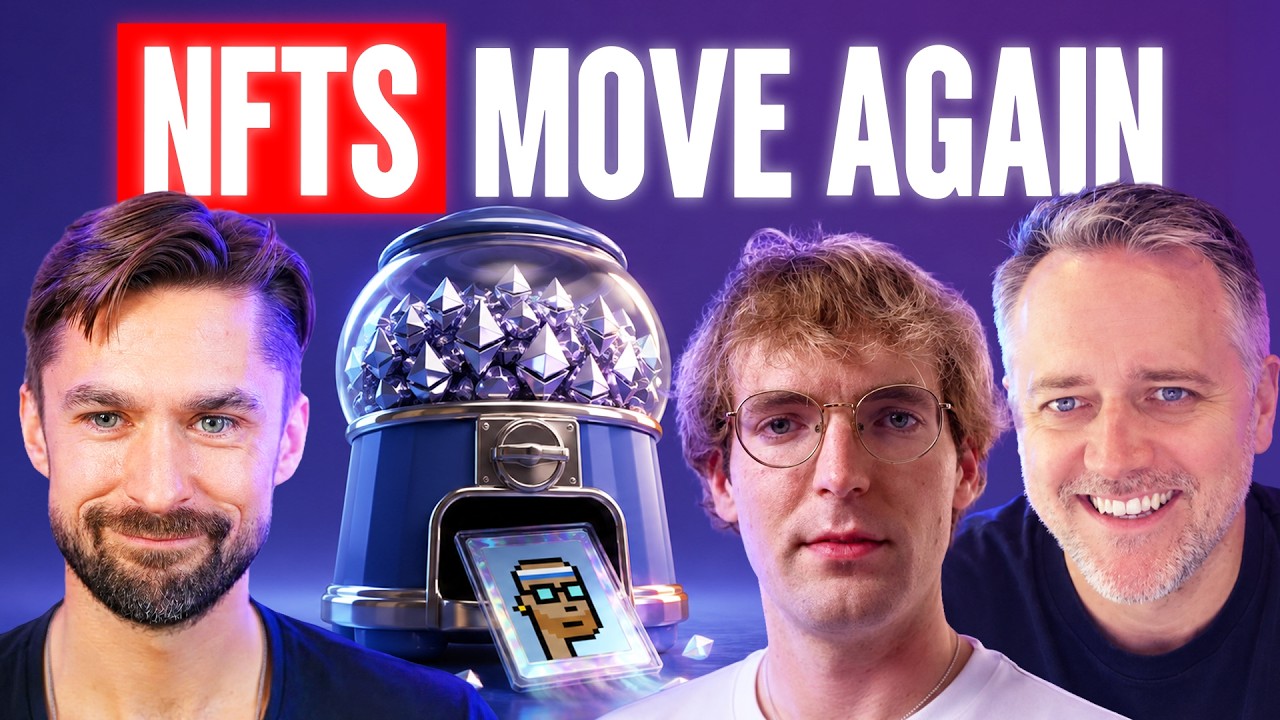
FWA Is Rebuilding the NFT Market
Bankless
5,724 views • 10 days ago Save 46 min 9 min read
Video Summary
Fake World Assets (FWA) is an innovative NFT purchasing protocol that injects gamified fun and liquidity into the digital collectibles market. FWA allows users to purchase NFTs randomly from a pool, with depositors setting asset prices backed by ETH. This mechanism mirrors the excitement of opening a pack of trading cards, offering a "gotcha" experience with the potential for high-value rewards. The protocol aims for decentralization and longevity, utilizing Chainlink for random number generation and operating on-chain to ensure transparency.
Beyond its consumer-facing appeal, FWA functions as a crucial liquidity infrastructure for NFTs, addressing the market's historical inefficiencies where many collections struggle to find buyers. By providing a guaranteed buyback mechanism, FWA incentivizes participation and offers a novel way to sell NFTs, even those with low liquidity. The platform also fosters innovation, enabling developers to build on top of its protocol, creating new games and applications, and is exploring custom pools for specific collections and the integration of tokenized real-world assets, signaling a potential future for NFTs as a gateway to diverse asset classes.
Short Highlights
- FWA is an NFT purchasing protocol where users buy assets randomly from a pool backed by ETH.
- Depositors set prices for NFTs, which are backed by ETH, and can sell them back into the pool.
- The protocol aims to replicate the "gotcha" thrill of trading card packs, offering a speculative gaming aspect.
- FWA addresses NFT market inefficiencies by providing a liquidity engine and a buyback mechanism.
- It serves as a platform for developers to build applications and for launching new NFT collections.
- The FWA token is earned through participation and its value is tied to platform usage and fees.
- Future developments include custom pools and the integration of tokenized real-world assets.
Key Details
Introduction to Fake World Assets [0:38]
- Adam, known as Rynotic on Twitter, introduces Fake World Assets (FWA), an NFT purchasing protocol.
- Eric Conner, an FWA enthusiast, joins the conversation, highlighting the energy in crypto markets.
"Yeah. So for anyone who's listening who doesn't know, it is a NFT purchasing protocol where basically there is a pool of assets that are priced by the depositors, and they are backed by a certain amount of ETH."
The FWA Protocol Mechanics [1:37]
- FWA allows users to purchase NFTs randomly from a pool backed by ETH.
- Depositors price assets, and users can keep or sell NFTs back into the pool at 90% of the depositors' bid.
- The protocol is designed to be permissionless, decentralized, and perpetual, with random numbers generated by Chainlink.
"The random numbers are pulled by Chainlink. It's kind of standard for anyone who's listening, but it's great."
Philosophy and Consumer Behavior [3:01]
- The appeal of FWA lies in replicating the dopamine hit of opening trading card packs, like Pokemon cards.
- It offers a digital alternative to physical collectibles, removing the complexities of shipping and authentication.
"So the consumer behavior that we're going for is like the whole gotcha thing. So like you buy a Pokemon card pack, you get a handful of Pokemon cards. One of them is valuable."
Pricing NFTs with Depositor Backing [5:14]
- FWA's pricing mechanism is inspired by Uniswap V2 pools, where liquidity providers set asset values.
- Since many NFT prices are not on-chain, depositors set their own prices, backing them with ETH.
- This constraint has become a feature, allowing for price discovery in an illiquid market.
"And so it makes sense for someone to say, this is the price. And to prove that, I'm going to back it by that amount of money."
Incentives for Depositing NFTs [7:04]
- Depositors earn a small amount of ETH from each purchase from the pool.
- On average, if priced fairly, depositors earn back the ETH they listed their NFTs at.
- A 10% haircut on sell-backs incentivizes purchasers to keep the NFT.
"And on average, because the price to pull is the average of all of the NFTs in the pool, you will earn the amount of ETH that you paired it with."
Token Emissions and Network Bootstrap [9:33]
- For the initial two weeks, the FWA token was only obtainable through participation, not direct purchase.
- This incentivized deposits and built the network, addressing the "cold start" problem.
"And so you actually couldn't buy the token for the first two weeks. The only way was by participating, which I found super novel and interesting."
FWA as a Liquidity Engine [11:00]
- Eric highlights FWA's role as a liquidity infrastructure for NFTs, addressing market inefficiencies.
- It allows users to potentially get bids on NFTs that might otherwise be unsellable on traditional marketplaces.
"So I think first and foremost, most fun I've had on chain in years, probably since the original NFT wave."
Overcoming NFT Market Inefficiencies [12:07]
- Many NFT collections have gone to zero due to a lack of liquidity and buyers.
- FWA provides a mechanism where almost any NFT from whitelisted collections can be put up for sale and potentially bid on.
"There's a lot of inefficiencies in the NFT marketplaces. So I think that's one of the biggest things people don't realize why there's been such a long bear market in NFTs is, like, so many collections essentially went to zero."
Building on the FWA Protocol [14:01]
- FWA is seen as a protocol that developers can build upon, fostering innovation.
- Examples include "Gasha Battles," which pits users' NFT pulls against each other.
"FWA is, like, a protocol people can build on top of. Like, I've personally built something called Gasha Battles, which, like, pits five people's pulls against each other."
Pricing Mechanisms and Risks [16:30]
- The challenge of pricing NFTs is discussed, with a rare Punk backed by 300 ETH as an example.
- Underpricing increases the chance of purchase, while overpricing makes it harder to sell.
- A 10% haircut on buybacks incentivizes purchasers to keep the NFT.
"So you have to be very smart about your pricing. Now, since that's the rarest ones, the lowest odds of being pulled, it probably should be a long time until that's pulled."
Real-World Assets on FWA [18:25]
- The possibility of tokenized real-world assets, like Pokemon cards and potentially Rolex watches or house deeds, being integrated into FWA is explored.
- This introduces a trust layer, with protocols like Collector Crypt playing a role.
"I think we're going to see a proliferation of ironically real world assets on fake world assets. On fake world assets."
Future Growth Vectors and Features [20:20]
- Adam discusses adding new features and tweaking the protocol, aiming for a hands-off approach long-term.
- Launching new NFT collections directly into the FWA pool is a key area of development.
"And we're going to keep adding new features, keep tweaking it. I think Eric touched on the FWA launch mechanism."
FWA Launch Mechanism: Flair [24:08]
- Flair is introduced as a mechanism for launching new NFTs through the FWA protocol.
- It addresses challenges for artists, such as the need to back NFTs with ETH and fair distribution.
"Flair launches our net new NFTs that are launched through the platform. And so we saw it first with a Jack butcher launched a collection called, um, rappers."
Artist Monetization and Distribution via Flair [27:00]
- Artists earn fees from their NFTs while they are in the FWA pool.
- Flair aims to provide better distribution than traditional minting processes, reducing gas wars and scams.
"The artist makes money by the fees that it accrues while it was in the pool."
The FWA Token and Value Accrual [31:32]
- The FWA token was initially distributed through participation, not direct purchase, to incentivize early adopters.
- Protocol fees are used to buy FWA, with portions distributed to purchasers, depositors, and burned.
"And so the best way to do that is to not let them buy. Like don't let people buying that aren't buying."
Composability and Cross-Chain Potential [41:45]
- The composability of Ethereum is highlighted, with tools like Emblem Vault allowing NFTs from other chains to be brought to FWA.
- There's a hot take that real-world assets will become the most valuable assets on FWA within two years.
"I have a hot take that in like two years, most of the most valuable assets on fake world assets are going to be real world assets."
Future of FWA and NFT Launches [47:25]
- Adam discusses short-term roadmap items, including auditing changes for the Flair launch.
- The idea of FWA holders being able to remove undesirable NFTs from the main pool is explored.
"I just got the contract back for the four launch stuff. So I kind of got to come to the auditor, go through and make the changes that need to."
Standardized NFT Launches [50:00]
- FWA is seen as a potential standardized launchpad for NFTs, similar to how token launches were standardized.
- This orderly market structure could increase palatability and understanding in the market.
"It does, it feels like one of the things that, that Pump did is it really homogenized and standardized the, the token launch process."
Real-World Asset Integration and Custom Pools [40:00]
- The potential for tokenized stocks and other financial instruments within custom FWA pools is discussed.
- This could enable gamified experiences for trading stocks or other assets.
"Or like there's leverage stock tokens in there. It's like when you start thinking about what could actually go in here."
Conclusion and Future Outlook [53:00]
- Adam expresses gratitude for building on-chain and acknowledges the need for such protocols.
- Both Adam and Eric anticipate more conversations as energy returns to the crypto sphere.
"Awesome. Thank you for building full cool stuff on chain. I think there's definitely a missing need for that these days."