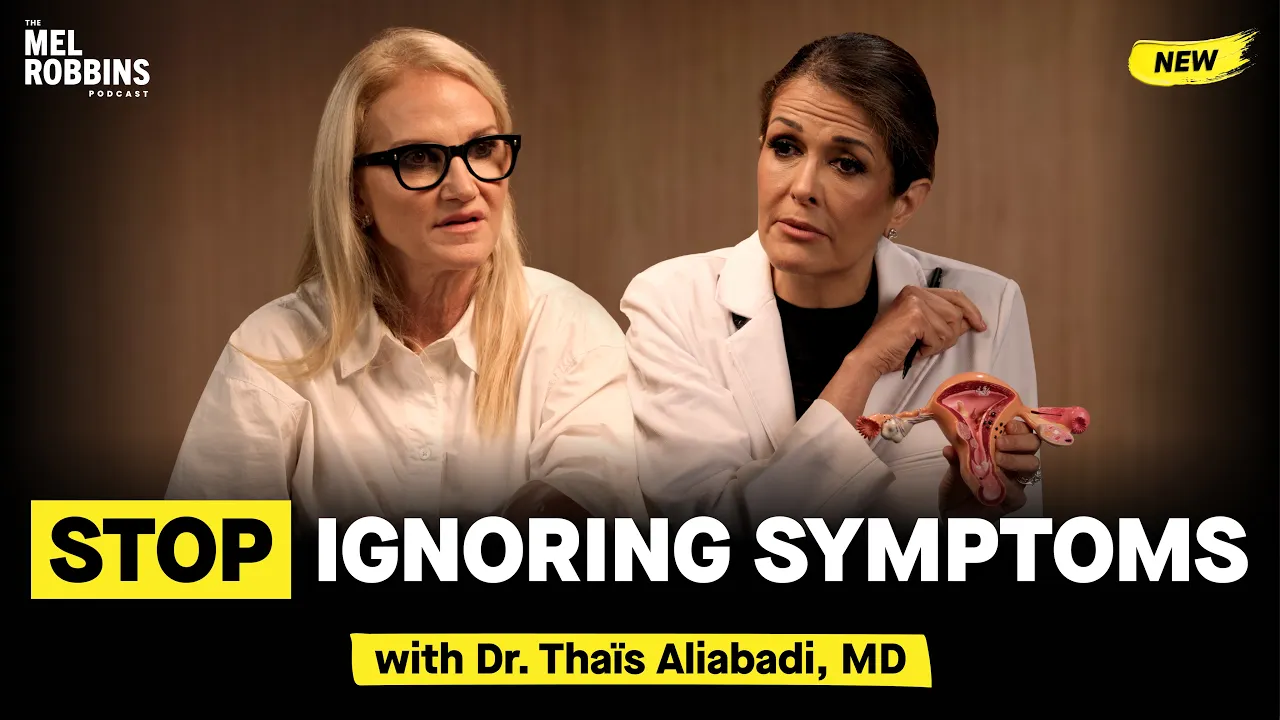
If You Have Acne, Weight Gain, Anxiety, Painful Periods, or Hair Loss, Listen to This
Mel Robbins
110,624 views • 5 days ago Save 35 min 8 min read
Video Summary
In a healthcare system that frequently dismisses women's health concerns, Dr. Thais Ali Abadi champions self-advocacy and accurate diagnosis for conditions like PCOS, endometriosis, and PMDD. She reveals that many women are misdiagnosed or left undiagnosed for years, leading to severe consequences such as infertility and chronic pain. Dr. Abadi highlights that conditions like PCOS, now termed PMOS, affect 15% of women and are often misidentified due to a lack of understanding of diagnostic criteria, particularly concerning insulin resistance and hormonal imbalances.
Furthermore, she sheds light on endometriosis, a condition affecting potentially over 20% of women, which often takes nearly a decade to diagnose despite its debilitating symptoms. Dr. Abadi also addresses PMDD, a severe form of PMS impacting 3-5% of women, emphasizing that it's a neurological response to normal hormonal fluctuations rather than an abnormality in hormone levels. She urges women to become their own health advocates, seek multiple opinions, and demand proper care to combat dismissal and ensure accurate diagnoses.
Short Highlights
- Women are frequently dismissed and misdiagnosed in the healthcare system, leading to conditions like infertility and chronic pain.
- PMOS (formerly PCOS) affects 15% of women, characterized by irregular periods, acne, weight gain, and mood issues, often linked to insulin resistance.
- Endometriosis affects an estimated 20% of women, causing severe pelvic pain and infertility, with diagnosis taking an average of 9-11 years.
- PMDD, a severe form of PMS, impacts 3-5% of women, causing extreme mood swings and depression linked to hormonal fluctuations.
- Fertility is significantly impacted by undiagnosed conditions like PMOS and endometriosis, with many women facing infertility due to delayed diagnosis.
- Becoming your own health advocate is crucial, involving seeking second and third opinions and educating yourself about your health.
- The standard of care for women's health is critically low, with many counties lacking gynecologists and patients facing unaffordable care.
Key Details
The Dismissed Woman's Office [0:00]
- Dr. Thais Ali Abadi uses the term "Office of Dismissed Woman" to describe her practice, highlighting the emotional toll of patients being ignored.
- Many women are told their symptoms are "in their head" or due to stress, anxiety, or poor sleep, rather than receiving a proper diagnosis.
- The majority of women are dismissed in the current healthcare system, with their pain minimized and underlying conditions left undiagnosed.
"I want you to know that majority of women get dismissed in the current healthcare system. Their pain is minimized. They're told it's in their head."
The Misdiagnosis Epidemic [0:55]
- Lack of diagnosis for conditions like PMOS and endometriosis leads to infertility, with women reaching 40 unable to have children.
- A 34-year-old patient with zero eggs and 20 years of dismissed endometriosis illustrates the devastating consequences of delayed diagnosis.
- The standard of care for women's health is described as "in the sewer system," with a call for global improvement.
"No one did their egg count. No one diagnosed their endo. No one diagnosed their PMOS. And now they're 40 and they cannot have any children because no one ever told them."
The Crisis in Gynecological Care [2:05]
- 50% of counties in America lack a gynecologist, forcing long waits and further delays in care.
- Even when a gynecologist is found, patients are often dismissed, cannot afford care, or face unaffordable prescriptions.
- This systemic failure contributes to women's illnesses, deaths, and reluctance to seek medical help.
"50% of counties in America don't have a gynecologist. 50%."
Understanding PMOS (PCOS) [3:00]
- PMOS, previously PCOS, stands for Polyendocrine Metabolic Ovarian Syndrome, a more accurate name than Polycystic Ovary Syndrome.
- It affects 15% of women, with 75% going undiagnosed, and is a leading cause of infertility alongside endometriosis.
- Symptoms include irregular periods, acne, facial/body hair, hair thinning, weight gain, moodiness, and anxiety.
"PMOS is the leading cause of infertility in women, together with endometriosis."
Diagnosing PMOS [3:45]
- Diagnosis requires meeting two out of three criteria: ovulatory dysfunction (irregular periods), polycystic ovaries on ultrasound or elevated AMH (egg count), and symptoms of high testosterone.
- Doctors often misinterpret ultrasounds or dismiss symptoms, failing to diagnose based on these criteria.
- Even without high testosterone levels in blood tests, a diagnosis is possible if other criteria are met.
"You need to meet two out of the three criteria for diagnosis."
The Metabolic Roots of PMOS [5:00]
- Insulin resistance is a key underlying condition in PMOS, where cells don't respond to insulin, causing sugar to remain in the blood.
- High insulin levels lead to fat storage (visceral fat) and inflammation, causing bloating, brain fog, and weight gain.
- Insulin also stimulates the ovaries to produce excess testosterone, which is toxic to egg follicles, blocking ovulation and leading to irregular periods.
"Their tissue, their cells are insulin resistant. The cells are not listening to the insulin."
PMOS and Mental Health [7:30]
- Hormonal imbalances and inflammation in PMOS significantly impact mental health, affecting the limbic system and prefrontal cortex.
- Symptoms include anxiety, depression, binge eating, cravings, motivation issues, and brain fog, often leading to misdiagnosis and treatment for psychiatric conditions.
- Addressing the underlying metabolic dysfunction is key to resolving these mental health symptoms.
"So now these patients have a limbic system on fire, anxiety, depression, PMS, PMDD, binge eating, craving, motivation issues, brain fog."
Treating PMOS [9:30]
- Treatment involves a healthy diet (limiting carbs, processed, and inflammatory foods), regular exercise (e.g., 15-minute walks after meals), and supplements like inositol.
- Metformin and GLP-1 medications (like Ozempic) are effective in improving insulin sensitivity, regulating hormones, and aiding weight loss and fertility.
- These treatments can help balance hormones, reduce testosterone, decrease inflammation, and restore ovulation.
"Diet, exercise, supplement anyone can do. And for patients who need to lose weight and they have, you know, their BMIs are high, I absolutely recommend doing a GLP-1 trial."
Understanding Endometriosis [11:00]
- Endometriosis affects an estimated 20% or more of women, with diagnosis taking 9-11 years on average.
- Common symptoms include painful periods, painful sex, chronic pelvic pain, and pain during bowel movements or urination.
- The condition involves endometrial-like cells growing outside the uterus, causing inflammation and pain.
"If I say, if you're listening to this podcast and you have pain and you're young and you don't know why your periods are painful, you need to think about endometriosis."
The Impact and Diagnosis of Endometriosis [12:00]
- Endometrial implants grow with estrogen, creating inflammatory environments that lower egg count and quality, block fallopian tubes, and cause adhesions.
- Chronic pain can lead to central sensitization, where the brain perceives pain at a higher volume.
- Diagnosis involves listening to the patient, pelvic ultrasounds (identifying "chocolate cysts"), and potentially the HER2 Resolve blood test.
"These implants cause an inflammatory environment in the pelvis, and that inflammation lowers your egg count, lowers your egg quality, causes scar formation, blocks your tubes, causes adhesions."
Treating Endometriosis [14:00]
- Treatment options include laparoscopic excision surgery (the gold standard), progesterone IUDs, and GnRH antagonists (like Orilissa or Myfembree) to suppress estrogen production.
- These treatments aim to reduce inflammation, pain, and the growth of endometrial implants.
- Early diagnosis and treatment are crucial to prevent long-term damage and infertility.
"The gold standard treatment, right, is to excise these laparoscopically."
Understanding PMDD [15:30]
- PMDD is a severe form of PMS affecting 3-5% of women, causing significant mood crashes, anxiety, depression, and irritability for 10-14 days before their period.
- It's a reaction to normal hormonal fluctuations, not abnormal hormone levels, and symptoms resolve after menstruation.
- Treatment often involves birth control pills like Yaz (to stop ovulation) or SSRIs, sometimes only during the symptomatic window.
"These are patients not because they have abnormal hormone levels. These patients, their brain reacts differently to the normal fluctuations of the hormones of the menstrual cycle."
Birth Control and Fertility Misconceptions [17:30]
- There is widespread misinformation that birth control pills cause infertility, which is false.
- Combination birth control pills can actually help PMOS by increasing sex hormone-binding globulin, improving acne, hair loss, and irregular periods.
- Coming off birth control may cause a temporary transition period, but it does not cause long-term infertility; undiagnosed underlying conditions are often the cause of post-pill fertility issues.
"Does the birth control pill cause infertility? No."
Egg Count and Infertility [19:00]
- Women naturally lose eggs with age, but inflammation from conditions like endometriosis and PMOS drastically accelerates this loss and degrades egg quality.
- PMOS patients often have a falsely high AMH (anti-Müllerian hormone) reading, indicating a high egg count, but the actual quality is low due to ovarian inflammation.
- A staggering 61% of PMOS patients in Dr. Abadi's practice also have endometriosis, both being leading causes of infertility.
"So just by being a woman and aging, you're destroying these eggs."
Parting Words: Advocate for Yourself [21:00]
- If dismissed by a doctor, seek a second or third opinion; you deserve the best care.
- Do not accept being told your symptoms are "normal," "in your head," or due to anxiety or stress.
- Educate yourself, empower yourself, and become your own health advocate, as no one cares about your health more than you do.
"If you get dismissed, go get a second opinion. If you still get dismissed, go get a third opinion."