A New Movement Is Coming…
Tucker Carlson Network
93,914 views • 2 months ago Save 6 min 4 min read
Video Summary
The current US political system, dominated by a two-party duopoly, actively suppresses third-party movements through deliberately erected barriers, ensuring politicians prioritize maintaining this structure. This entrenched system, despite appearing polarized, largely agrees on major policies, serving common donor interests and creating a "lockdown" on meaningful debate.
Meanwhile, extreme censorship is stifling discourse on critical global events, such as the wars in Russia and Iran. Citizens are often unaware of the full scope of US involvement, leading to potentially disastrous decisions based on misinformation. Examples include the suppression of the Bin Laden letter's context and the EU's criminalization of Russian state media, starkly contrasting with Cold War-era openness. This deliberate exclusion of alternative perspectives facilitates propaganda and prevents informed decision-making.
Short Highlights
- The US political system is designed to prevent third-party success, with laws consistently favoring the Democratic and Republican parties.
- Despite perceived polarization, the two major parties agree on most policy issues, serving the interests of the same donor classes.
- Censorship on major global conflicts, like the wars in Russia and Iran, prevents citizens from understanding the full picture and making informed decisions.
- Examples of censorship include the suppression of the Bin Laden letter's context and the EU's ban on Russian state media.
- The deliberate exclusion of alternative viewpoints facilitates propaganda and makes informed discourse impossible.
Key Details
The Two-Party Duopoly's Grip [0:00]
- The US system is intentionally fortified to make independent political existence nearly impossible.
- Politicians from both major parties share a common interest in preventing competition from third parties.
- "Every law that gets passed, every time there's election laws rewritten, every time it's in the direction of making it increasingly more difficult for any kind of independent party or movement or third party that wants to remain independent of all parties to have any meaningful success."
Global Multi-Party Systems vs. US Polarization [1:28]
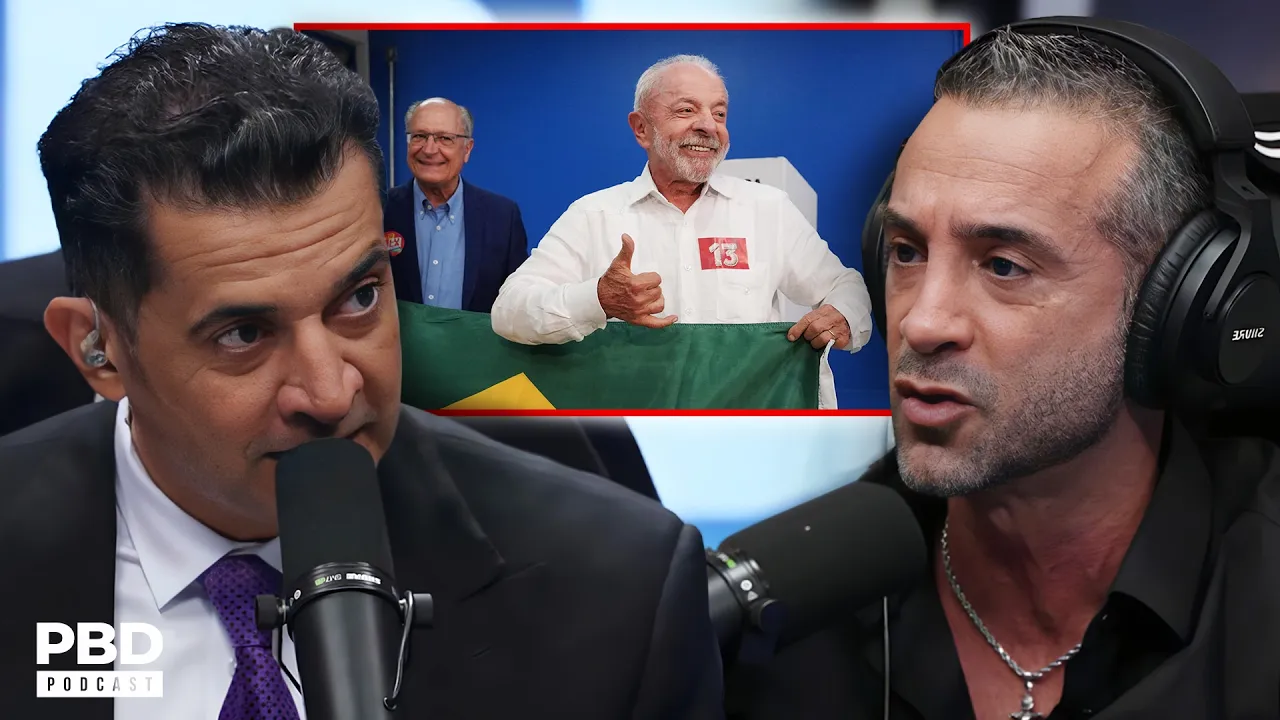
- Countries like Brazil have multi-party systems with many parties represented in Congress.
- Even democratic nations are experiencing polarization, fueled by a politics of fear where people support candidates primarily to oppose the alternative.
- This cultural norm strengthens the difficulty of breaking free from the established political structure.
The Appeal of Unlikely Figures [2:25]
- The rise of figures like Trump and Obama was possible because people desired unlikely candidates who seemed outside the establishment.
- This desire for non-establishment figures creates instability, which can lead to both negative and positive opportunities.
- "The figures that didn't look like they came from the establishment that they've come more and more to hate with good reason every year."
The Illusion of Difference [4:30]
- The myth of vast differences between the two parties is crucial for creating a false sense of freedom and choice.
- In reality, the parties agree on approximately 90% of major policy issues, serving the same donor classes and interests.
- "The reality is that the two political parties agree on 90%, at least, of major policy issues. The only time the media covers it is in those very few cases when they disagree."
Censorship and War Misinformation [7:00]
- Censorship regarding the wars in Russia and Iran hardens people to policy effects and hinders wise decision-making.
- Many are unaware of the extent of US/NATO involvement, believing Ukraine is solely winning against Russia.
- "The fact that we elected Donald Trump twice, for me, pretty much proves that anything is possible."
Suppressing Alternative Views [10:00]
- The EU enacted a law criminalizing the platforming of Russian state media after the invasion of Ukraine.
- This prevents EU citizens from hearing the Russian perspective on the conflict.
- "This is a level of censorship so extreme that it shocks me that people tolerate."