We've met 1,000 founders. There are only 6 types.
My First Million
1,058 views • 16 hours ago Save 29 min 8 min read
Video Summary
The concept of a "natural moneymaker" is explored, distinguishing them from traditional founders or CEOs by their innate, almost instinctual ability to identify and capitalize on financial opportunities with remarkable success rates. These individuals are characterized by a cold, logical, and unemotional approach to business, possessing a "great nose" for sniffing out both opportunity and deception.
Examples like trader Nick Kokonas, restaurateur Grant Achatz (partnered with Kokonas), and investor Carl Icahn illustrate this trait. Kokonas, after a lucrative trading career, created the acclaimed restaurant Alinea and continues to find arbitrage opportunities, such as in wine collections. Icahn famously demonstrated his ruthlessness by firing an entire company's staff within weeks of acquisition, prioritizing pure financial logic over sentiment. The discussion also touches on the "maximizer" tendency of natural moneymakers, who pursue even diminishing returns, and contrasts them with other archetypes like "missionaries" and "tricksters."
Short Highlights
- Natural Moneymakers vs. Founders/CEOs: Natural moneymakers are distinct from entrepreneurs or CEOs, possessing a colder, more logical, and rational approach to money and dealmaking.
- High Success Rate & "Great Nose": They have a high hit rate for success, often succeeding where others fail, and possess an instinctual ability to identify opportunities and avoid pitfalls.
- Unemotional Approach: They are unemotional about business decisions, prioritizing logic and data over passion or sentiment, exemplified by figures like Carl Icahn.
- Maximizers: Natural moneymakers are driven to maximize returns, pursuing even diminishing returns and not settling for "enough."
- Comfort with Complexity: They possess high IQs and are comfortable grasping and navigating complex topics and deals.
- Examples of Natural Moneymakers: Figures like trader Nick Kokonas, restaurateur Grant Achatz, and investor Carl Icahn exemplify this archetype.
- Other Archetypes: The discussion also briefly touches on other business archetypes like "missionaries," "tricksters," and "sniffers."
Related Video Summary
Key Details
The "Natural Moneymaker" Defined [00:00:00]
- A natural moneymaker is defined as someone involved in dealmaking and brokering, who tends to operate without public visibility.
- They have built multiple businesses across various fields, ranging from 100 million to billions in value.
- They are distinguished from great founders or CEOs by their colder, more logical, and rational approach to money.
"A natural moneymaker is a person who tends to be involved in dealmaking, brokering, and inserting themselves into situations."
High Hit Rate and Instinct [00:01:20]
- Natural moneymakers exhibit a high hit rate of success, contrasting with the typical "fail, fail, fail, succeed" pattern of most entrepreneurs.
- Their decision-making is driven by instinct rather than extensive explanation, possessing a "great nose" for opportunity and deception.
- They achieve success across multiple categories, even if not the best in any single skill.
"So naturally, instinctively figures out where money's going to be made and where money's going to be lost."
Unemotional Business Acumen [00:02:45]
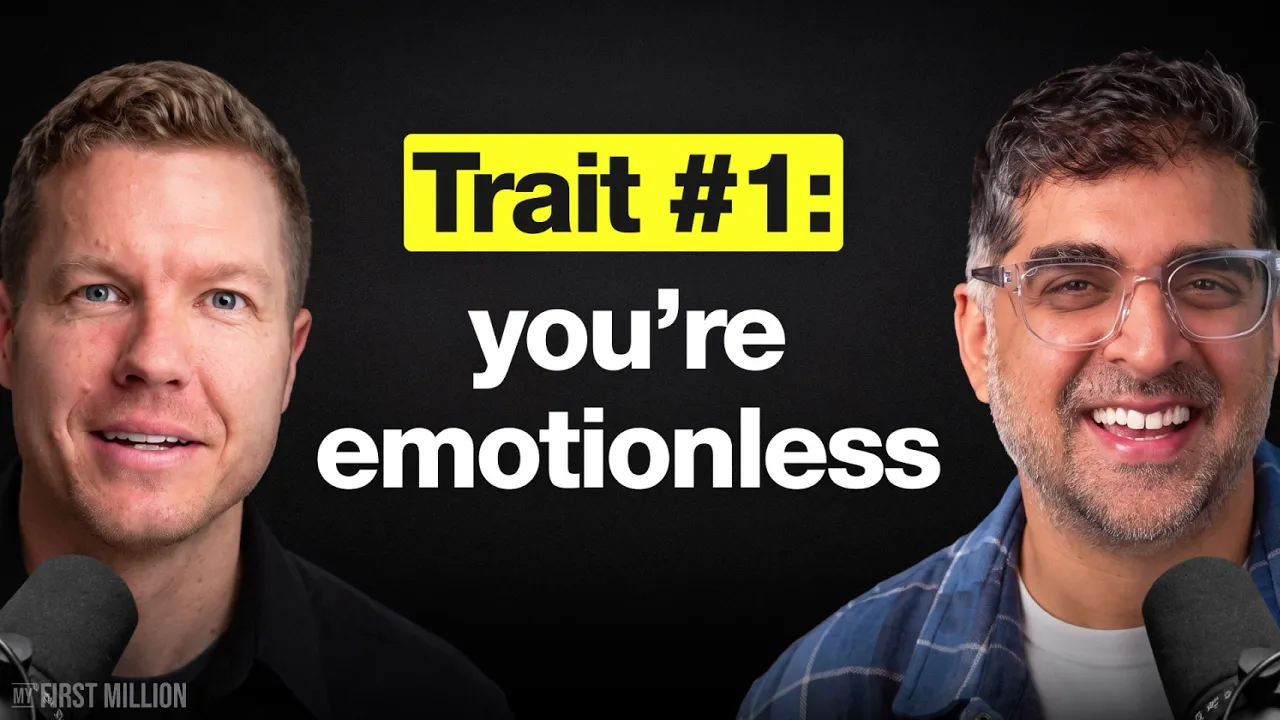
- A key attribute is being unemotional about business, using emotions for profit rather than being driven by passion.
- This contrasts with founders who often leverage passion for recruitment and success.
- Natural moneymakers are described as far more cold and logical about money.
"The first one is that they're unemotional about business."
Carl Icahn's Ruthless Efficiency [00:03:30]
- The story of Carl Icahn acquiring a shipping company illustrates the unemotional, rational approach.
- Icahn, within two weeks, fired 12 floors of employees he didn't understand, prioritizing cost-cutting.
- Months later, he found no negative impact from their absence, highlighting a focus on numbers over sentiment.
"I'm firing all of them today. We're just going to get rid of all of them today."
Nick Kokonas: From Trader to Restaurateur [00:05:00]
- Nick Kokonas, a philosophy and math graduate, became a high-stakes trader, making or losing hundreds of thousands daily.
- He made tens of millions as a trader, with one year yielding $100 million in profit from an arbitrage opportunity in ETFs.
- Kokonas identified a real-time pricing advantage by connecting exchange data, bypassing slower communication methods.
"He basically figured out that like, you know, ETFs were getting popular."
Kokonas's Restaurant Empire [00:07:30]
- After trading, Kokonas created Alinea, which became the number one restaurant in America and earned Michelin stars.
- He boldly declared their mission to create the best restaurant, aiming to make the Michelin guide look bad if they didn't receive three stars.
- Despite the notoriously difficult restaurant business, Alinea achieved $26 million in annual revenue with nearly 20% profit and pivoted successfully during COVID.
"We're going to create the greatest restaurant in America."
The Maximizer Mentality [00:10:00]
- Natural moneymakers are described as "maximizers," always seeking more, even with diminishing returns.
- They don't readily accept "enough" and continue to find opportunities, like Kokonas's current arbitrage in wine collections.
- This trait is also seen in a friend who buys defaulted credit card debt for a 14% return, viewing even small returns as worthwhile.
"Diminishing returns are still returns. They don't say that enough is enough."
Jay Gould: The Ultimate Maximizer [00:12:00]
- Jay Gould, a 19th-century businessman deemed by Rockefeller as the greatest business mind, exemplifies extreme maximization.
- Even while dying of tuberculosis and with family urging him to rest, he pursued a railroad deal, stating his need to "return to my first love, which is making money."
- This illustrates the relentless drive of natural moneymakers, for whom the pursuit of profit never truly stops.
"I have to return to my first love, which is making money."
Comfort with Complexity and "Nose" for Deals [00:14:00]
- Natural moneymakers are comfortable with complexity, often possessing very high IQs.
- They can quickly grasp intricate topics and see where value is locked within complicated deals.
- This contrasts with the average person's preference for simplicity.
"I have noticed that natural moneymakers have very, very, very high IQs and they can grasp very complex topics."
The "Conqueror" Gene [00:16:30]
- A key differentiator for natural moneymakers might be a "slight gene of like wanting to conquer" or a competitive streak.
- They often have a desire to be the best at making money from a young age.
- This drive, combined with high IQ, fuels their pursuit of financial success.
"I think that there's this slight gene of like wanting to conquer."
Syed Balki: A Prolific Investor [00:18:00]
- Syed Balki is presented as a prime example of a natural moneymaker.
- He started with a WordPress blog, then bought WordPress plugins, and has since invested in real estate and stocks.
- Balki's approach involves acquiring assets like gas stations, focusing on the returns and operational simplicity (e.g., triple net leases).
"But I can get good returns from this and I can just do this, this, this, and this, and this."
The "Principle, Not Interest" Strategy [00:20:00]
- A core principle for some natural moneymakers is to "only spend the second derivative" or live off investment returns, not income.
- This means investing primary income and only spending the gains generated from those investments.
- The strategy ensures the principal is never touched, providing long-term financial security.
"You are only spending not your income, but the investment returns off your income."
Happiness and Archetypes [00:22:00]
- Natural moneymakers are not necessarily misers; happiness levels vary, similar to any group.
- The "sport of business" can lead some to trade valuable hours for money they no longer need.
- Other archetypes discussed include the "missionary" (e.g., Brian Chesky), "extreme balancers" (e.g., Jesse Itzler), "tanks" (e.g., Frank Luntz), "tricksters" (e.g., Alex Tew), and "sniffers" (e.g., Austin Rief).
"I have not noticed a correlation between the people who are like this and people who are happy because you'd want to dismiss these people as like, oh, well, they're just like, um, all they care about is money."
The "Sniffer" Archetype [00:27:00]
- The "sniffer" is similar to a natural moneymaker but is less hands-on, excelling as an investor.
- They "sniff out deals" and opportunities, often identifying off-market trends or promising individuals early.
- Austin Rief and Vishal are cited as examples of sniffers who identified trends like stablecoins and Bitcoin before they were mainstream.
"And the sniffer is a little bit like the natural moneymaker, but they just sniff out deals."
Working With Nature [00:30:00]
- Ray Dalio's advice suggests working with one's natural wiring is more effective than fighting it.
- Understanding different archetypes and play styles can help individuals find paths suited to their nature.
- The goal is to identify attributes from various archetypes that can lead to fulfillment and happiness.
"Do you think you'll have more success fighting your nature or working with your nature?"