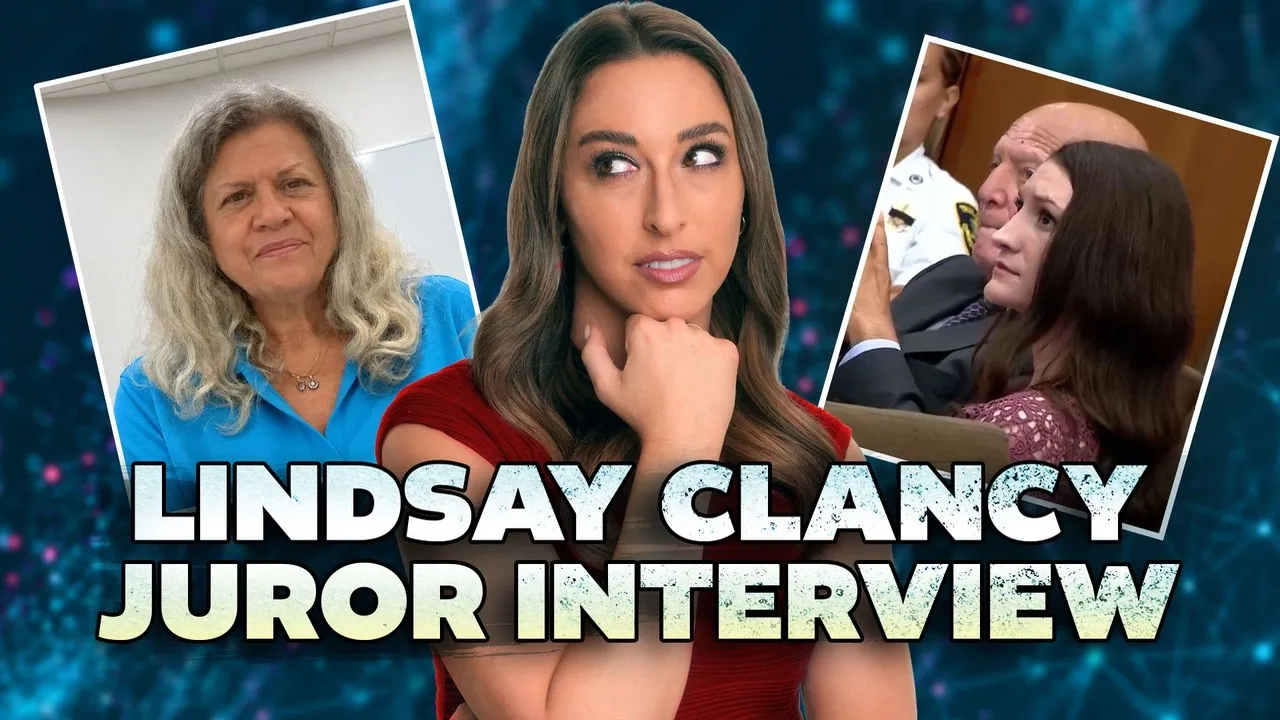
Juror 13 Speaks: Inside the Lindsay Clancy Jury Room
Crime Junkie
30,005 views • yesterday Save 38 min 9 min read
Video Summary
A juror in the Lindsay Clancy case breaks her silence, revealing the intense deliberations and the controversial decision to identify the holdout juror. The juror, Paula Devlin, expresses frustration with the "one" juror who she claims "wouldn't act on it" and "wouldn't follow the law," despite repeated attempts to understand his reasoning. Devlin regrets revealing the holdout juror was Black, an action that led to his identity being exposed and significantly disrupted his life.
Devlin also discusses the evidence that swayed the jury, including the prosecution's expert testimony, the 911 call, and Lindsay Clancy's journals, which showed a decline in her mental state. She criticizes the prosecution's case for its perceived weaknesses, particularly regarding the suicide attempt and the timeline. The juror emphasizes the difficulty of separating personal feelings from evidence, especially when dealing with the tragic deaths of children, and hopes the case will bring greater awareness to postpartum issues.
Short Highlights
- The jury was split 11-1, with one juror refusing to follow the law.
- A key piece of evidence that caused doubt was a video of Lindsay Clancy's interview with prosecution expert witnesses.
- Juror Paula Devlin regrets revealing the holdout juror was Black, which led to his identity being exposed.
- The defense's expert testimony was seen as more compelling than the prosecution's.
- The 911 call and Lindsay Clancy's journals were significant pieces of evidence.
- Jurors struggled to separate personal feelings from evidence in the case.
- The case highlights the need for greater awareness and support for postpartum issues.
Related Video Summary
Key Details
Juror's Unexpected Fallout [00:00:00]
- Juror Paula Devlin did not anticipate the backlash and criticism following the mistrial.
- The jury felt they were in a "bubble" during the trial and unaware of the public's intense interest.
- A soundbite taken out of context caused significant hate and conflict towards one juror, disrupting her life.
"And unfortunately, there was a soundbite that was taken out of context. And it caused a lot of hate conflict towards one of the jurors. And it completely upended her life, actually."
The "One" Juror's Doubt [00:01:10]
- The jury sent a note to the judge indicating an 11-1 split, believing one juror was not following the law.
- Jurors heard the holdout juror, Mike, express doubt and change his mind about the degree of murder.
- Mike would deny saying these things when confronted by other jurors.
"We had all heard Mike say that he had doubt. We had all heard him say that he changed when he saw a certain piece of evidence that he didn't think it was first degree murder anymore."
Difference of Opinion vs. Lack of Evidence [00:02:30]
- The jury distinguished between a difference of opinion and a lack of evidence to support a juror's theories.
- They repeatedly asked Mike to provide evidence for his stance, which he never did.
- Mike's theories were not even supported by the prosecution's arguments.
"But we kept asking for him to show us where there was evidence to support his theories. And he never showed us any evidence, there was no evidence."
The Pivotal Video [00:03:40]
- A video of an interview between prosecution expert witnesses and Lindsay Clancy was a key piece of evidence.
- After watching this video, Mike stated he had doubt and no longer believed it was first-degree murder.
- He expressed doubt about Lindsay's guilt but still believed she was guilty overall.
"And what was it in that video that he was referring to that you guys saw? I don't really know what specifically it was because he would never give us anything specific."
Revealing the Holdout Juror's Identity [00:04:45]
- Paula Devlin revealed the holdout juror was Black in an interview with Gail King on CBS Mornings.
- This revelation led to the unmasking of the juror's identity.
- Devlin regrets this decision, stating it was the only thing she regrets saying in any interview.
"In hindsight, it's probably out of every interview I've done. It's the only thing that I regret saying."
Dealing with Online Backlash [00:06:15]
- Devlin has largely avoided online comments and has not been significantly affected by them.
- She tries not to make decisions out of fear and has had friends shield her from negative comments.
- She felt it was important to be truthful but regrets the way the information about the juror came out.
"I really try to not make decisions out of fear. And I knew there was a lot of negative stuff coming towards the other jurors. And I didn't want that."
Confusion Over Support for the Holdout Juror [00:07:30]
- Devlin expressed disbelief and confusion over money being raised to support the holdout juror.
- She reiterated that he voiced doubt but refused to act on it or follow the law.
- She questions the public's ability to be so hateful online.
"I absolutely do not understand why there's any money. I just don't understand why there's money being raised to support him in any way, shape or form."
Deliberation Dynamics and Evidence [00:09:00]
- The initial split was 8-2-2 (leading towards not responsible, undecided, and strongly for guilty).
- The 911 call was re-listened to repeatedly due to claims Lindsay spoke during it, which jurors did not recall.
- Expert testimony from the defense was perceived as more compelling than the prosecution's.
"I think, I think that that may be a big piece. How did you guys in the room separate personal feelings from the evidence that was actually presented?"
The Tui Rodriguez Charge and Strategy [00:12:00]
- The jury asked for the Tui Rodriguez charge in writing to understand it better.
- They adopted a different approach upon returning to deliberations, listing evidence and doubts on a whiteboard.
- Mike refused to write his reasoning on the board, but another juror wrote it down for him.
"And then that's, didn't really change anything. So then we went the other direction and we asked Mike to write his stuff on the board so that we could look at all of the things that were making him lean towards his decision, but he didn't want to write on the board."
Key Evidence and Doubt [00:14:30]
- Lindsay Clancy's journals and the amount of medications she was on were significant.
- No witnesses could say anything negative about Lindsay's parenting or her as a person.
- The prosecution's case had holes, particularly concerning her suicide attempt and the timeframe.
"I think that her journal, her journals seem to carry some weight. The amount of medications that she kept getting switched around on, we read some of the reports from, we read a lot of reports from the places that she had been, doctor's reports, hospital reports."
The Role of Phones in Deliberations [00:17:00]
- Jurors were surprised they had access to their phones in the deliberation room.
- Only one juror, Mike, was seen actively using his phone.
- Devlin believes phones should be removed from deliberation rooms to prevent potential bias from news alerts.
"I thought about it because I think about that in general because of my job. So I, I mean, we never talked about our phones."
Public Perception vs. Jury's Task [00:18:30]
- Devlin was surprised by the online frenzy questioning whether Lindsay actually killed the children.
- The jury was told Lindsay admitted to killing her children and focused on her mental state, not on whether she did it.
- She hopes the case brings awareness to postpartum issues to prevent future tragedies.
"And, and that for everybody, not just focusing on the woman, but the whole family: like the husband has to understand what it is to be able to help their wife in the right way."
Defense Attorney's Shift in Strategy [00:21:00]
- Devlin noted defense attorney Kevin Reddington's recent argument that Lindsay never confessed and the evidence doesn't prove she did it.
- This contrasts with the trial's focus on postpartum psychosis as a defense.
- Devlin felt the prosecution's case lacked strength, with key points being picked apart by defense experts.
"I mean, there wasn't a lot of evidence to support the prosecution's case. You know, the, the key things that they had kind of rarely got picked apart by the defense's expert witnesses."
Holes in the Prosecution's Case [00:23:00]
- The prosecution's claims about Lindsay's suicide attempt and her speaking after falling out the window were challenged.
- Jurors examined photos of her wounds and listened repeatedly to the 911 recording to discern the sounds.
- The changing medications and lack of help from suicide hotlines suggested Lindsay was failed.
"Her suicide attempt, the timeframe, one thing them trying to say that she spoke after she went out the window, that was a big, that was a big thing."
The Weight of the Case and Hope for the Future [00:26:00]
- Devlin does not want another jury to endure the grueling trial.
- She believes Lindsay needs help, not prison, and that the case was not premeditated.
- The hope is that the tragedy can lead to better support for families struggling with postpartum issues.
"And none of us said she was not guilty. You know, we all think that she needs help. And whether it's not, I mean, whether she stays in a mental institution for the rest of her life or not, I have no idea."
Remembering the Children [00:28:30]
- Jurors kept pictures of the children in the jury room as a reminder.
- Devlin created a tangible reminder for herself by placing rocks from the beach in her kitchen window.
- She emphasizes that there is no positive outcome in this case, only the hope of remembering the children and preventing future tragedies.
"Because it was, I mean, it was a horrible, it's a horrible, there's no winning here, right? Like there's no, there's no positive outcome of this."
Future of the Case [00:30:00]
- The judge denied Reddington's motion for a required finding of not guilty.
- Further motions, including a motion to dismiss and an inquiry into juror records, are pending.
- The case may head back to trial, with potential charges and dates to be determined.
"The judge has already denied Reddington's motion of a required finding of not guilty, but the case will be back in court on November 2nd, where the other motions will be ruled on, like motion to dismiss, an inquiry into the holdout juror and juror records, and a possible gag order."