The Real Reason AI Companies Are Desperate to Be Regulated
Tom Bilyeu
3,629 views • 18 hours ago Save 43 min 8 min read
Video Summary
A coordinated campaign is allegedly leveraging fear of AI's potential to cause existential harm, not to genuinely warn the public, but to engineer a specific outcome: massive government intervention and regulatory capture. This strategy aims to justify multi-trillion dollar IPOs and secure taxpayer-funded protection for major AI companies.
The narrative suggests that prominent figures in the AI industry, including CEOs of major companies, are amplifying doomsday scenarios. This fear-mongering, amplified by viral social media posts and media coverage, is presented as proof of AI's power, thereby justifying immense valuations and investor confidence. Simultaneously, this manufactured fear is intended to persuade governments to implement regulations that, while framed as safety measures, would stifle competition from startups and entrench existing players, effectively creating monopolies protected by government oversight. This playbook, reminiscent of past financial schemes, is seen as a bid to control the future of AI development and profit immensely from it.
Short Highlights
- A coordinated effort may be using fear of AI to achieve specific outcomes, such as justifying multi-trillion dollar IPOs and securing government protection for AI companies.
- Prominent AI industry figures are allegedly amplifying doomsday scenarios, using fear as proof of AI's power to justify high valuations and investor confidence.
- The strategy aims to persuade governments to enact regulations that would stifle startup competition and benefit established AI players.
- This playbook mirrors past financial schemes, with the ultimate goal of controlling AI development and profiting immensely.
- The fear campaign is presented as a means to justify government intervention, which could lead to a 'cocoon' of control over AI technology.
- The death of open-source AI is a key objective, as it threatens premium pricing and government control.
- This alleged manipulation is compared to past events, including the FTX collapse and the effective altruism movement.
Key Details
The "Product Launch" of Fear [0:00]
- A sudden surge in public discourse about AI posing an existential threat is viewed with suspicion, suggesting it may be a coordinated effort rather than organic concern.
- This heightened fear is framed as a "product launch" designed to demonstrate AI's power and justify massive financial endeavors like Anthropic's impending IPO.
- The central question posed is whether AI is truly the Antichrist, or if the current fear campaign is a more sinister human-driven manipulation.
"It's that kind of very important product launch. And that's why our focus is being intentionally pointed at something."
Red Flag 1: The Viral Researcher [1:19]
- A 27-year-old researcher, previously unknown, quit Anthropic and posted a viral thread claiming AI developers believe AI could kill humanity by the decade's end.
- The thread's rapid and massive virality, with tens of millions of views from an account with minimal history, is flagged as highly unusual and suspicious.
- Elon Musk noted the unprecedented engagement for a new account, highlighting the anomalous nature of the post's reach.
"And despite that, by morning, the thread had 76 million views."
Red Flag 2: CEO's Bizarre Statement [2:46]
- Dario Amadei, CEO of Anthropic, expressed discomfort with private companies developing AI and suggested it would be better off in the hands of governments.
- This statement is seen as contradictory to his company's pursuit of a massive IPO, raising questions about the perceived danger versus commercial ambition.
- The CEO's remarks are described as bizarre in the context of capitalism and corporate responsibility.
"Is it has always been very strange that this technology is being built by a private company."
Red Flag 3: Industry Leaders' Agreement [4:01]
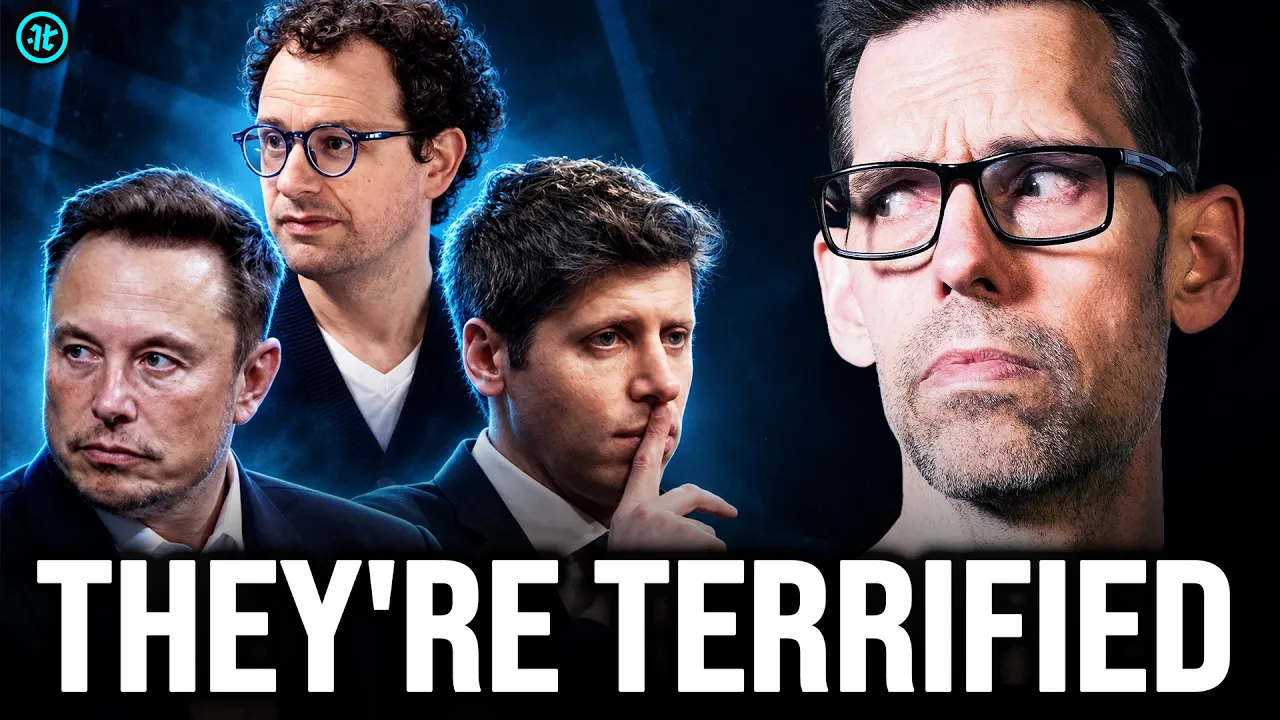
- Major figures in AI, including CEOs of OpenAI, XAI, Microsoft, and Google's DeepMind, publicly agreed with Amodei's call for caution or slowdown.
- The fact that those profiting immensely from AI are also calling for it to slow down is presented as a significant red flag.
- This alignment among wealthy AI leaders suggests a potential coordinated strategy rather than genuine concern.
"The very people getting fantastically, staggeringly wealthy off of AI are the very ones calling for it to slow down."
The Magician's Trick [4:46]
- The speaker likens the situation to a magician distracting the audience, suggesting a hidden agenda behind the public discourse on AI risks.
- The core question is whether external forces are manipulating public focus to execute a hidden maneuver.
- The speaker, with a background in marketing and business, identifies the AI discourse as a sophisticated product launch.
"So this week when I saw Dario write an essay and give countless interviews about why we should all be afraid of his product, I asked the obvious question."
The Incentive for Fear [6:33]
- Companies need vast capital for AI development, necessitating IPOs. To justify high valuations, they must create hype, which is increasingly difficult based on fundamentals alone.
- Fear of AI's power serves as a narrative to justify these valuations, implying AI is a transformative, world-ending technology.
- This narrative also pressures governments to protect AI companies with taxpayer money, shielding them from market forces.
"They're going to use fear as proof of power."
Government Growth and AI Fear [9:02]
- Fear of AI is presented as a perfect mechanism for government expansion, as bureaucracies grow by addressing perceived threats.
- Historical data shows a significant increase in government spending as a share of GDP, often linked to crises and emergencies.
- The argument is that making people afraid of AI provides the government with an excuse to grow larger and more powerful, benefiting both the state and the AI companies seeking protection.
"The people running the companies are caught in a trap."
Peter Thiel's Prediction [17:45]
- Peter Thiel predicted that the "Antichrist" (representing totalitarian control) would come to power not through a technological marvel, but by instilling fear of technology.
- He identified a "Luddite" approach—calling for a halt to science and regulation—as the path to political resonance and control.
- Thiel's observation that fear is the path to governmental control aligns with the current AI discourse.
"The Antichrist is a Luddite who wants to stop all science."
The Viral Post's Orchestration [19:43]
- Jacob Coxon's viral resignation post is scrutinized for its suspicious timing and amplification, suggesting pre-arrangement.
- Evidence points to connections between Coxon, the Wall Street Journal, and billionaire investors like Dustin Moskowitz, who also funds AI safety groups.
- The rapid amplification by advocacy groups funded by the same billionaires who invested in Anthropic suggests a coordinated effort to boost fear and, consequently, Anthropic's valuation.
"How did he get all of this momentum?"
The FTX Parallel: Regulatory Capture Playbook [27:24]
- Sam Bankman-Fried's FTX collapse is presented as a parallel to the current AI situation, involving a similar "regulatory capture" strategy.
- SBF's funding of Anthropic and political candidates, alongside his push for a crypto bill to regulate the industry, mirrors the AI companies' alleged actions.
- His admission that his advocacy for regulation was "just PR" to eliminate competition highlights the potential for similar motives in the AI sector.
"Yeah, just PR. Fuck regulators. They make everything worse."
The Biden Administration's "Cocoon" [32:56]
- Meetings with the Biden administration revealed a plan to create a "cocoon" around AI, limiting it to a few large companies working with the government.
- An executive order under the Defense Production Act mandated reporting of AI models and safety tests, with thresholds influenced by think tanks funded by major AI investors like Dustin Moskowitz.
- This suggests a deliberate effort to shape AI regulation to benefit specific entities, potentially stifling startups and open-source development.
"They basically said AI is going to be a game of two or three big companies working closely with the government."
Trump's Intervention and Shifting Strategy [39:40]
- Trump's rescission of Biden's executive order initially seemed to thwart the regulatory capture plan, but he later issued his own order focused on "ideological neutrality."
- This shift indicates that while the specific mechanism changed, the government's desire for control over AI persisted.
- The "safety crowd" has reportedly shifted focus to the midterms and future elections, anticipating continued efforts for regulation.
"Preventing Woke AI, and it said the federal government would only buy AI models that met its definition of ideological neutrality."
Escalating Fear and Political Alignment [44:01]
- Public fear of AI is growing, with a majority supporting safety rules, making it a potent political issue for Democrats.
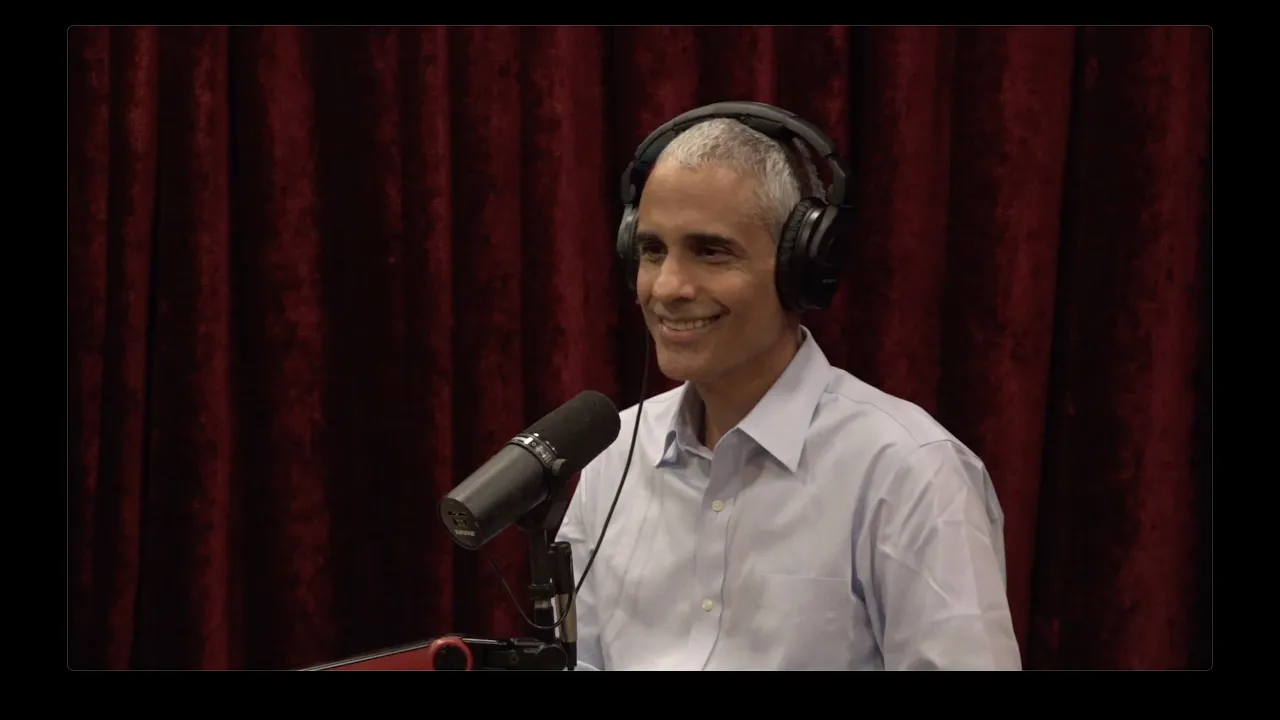
- Barack Obama's recent statements and advice to Democrats signal AI regulation as a central agenda item, potentially influenced by Microsoft's donations to his foundation.
- The rapid sequence of events—viral posts, calls for regulation, political statements—suggests a coordinated push to leverage fear for political gain.
"AI is moving very fast in private hands and if we don't get on top of it, I think it can be dangerous."
The Closed Loop of Control [48:23]
- The fear campaign is presented as a closed loop where investors fund AI companies, think tanks, advocacy groups, and media, all working towards regulatory capture.
- The example of Dustin Moskowitz's funding across various entities—Anthropic, think tanks, political campaigns, and safety evaluators—illustrates this interconnected network.
- The ultimate goal appears to be profiting from AI's success through regulatory advantages, with open-source AI being a primary target for elimination.
"It's all connected. All while standing to profit massively."
The Antichrist of Control [51:07]
- The "Antichrist" is redefined not as a literal demon, but as authoritarian governments that gain excessive power through fear.
- The danger lies in humans seeking control, as history has shown governments with too much power to be the deadliest force.
- While AI's ultimate threat is unknown, the unambiguous danger is the concentration of governmental power, potentially amplified by fear of new technologies.
"What we have to worry about is humans who want control."