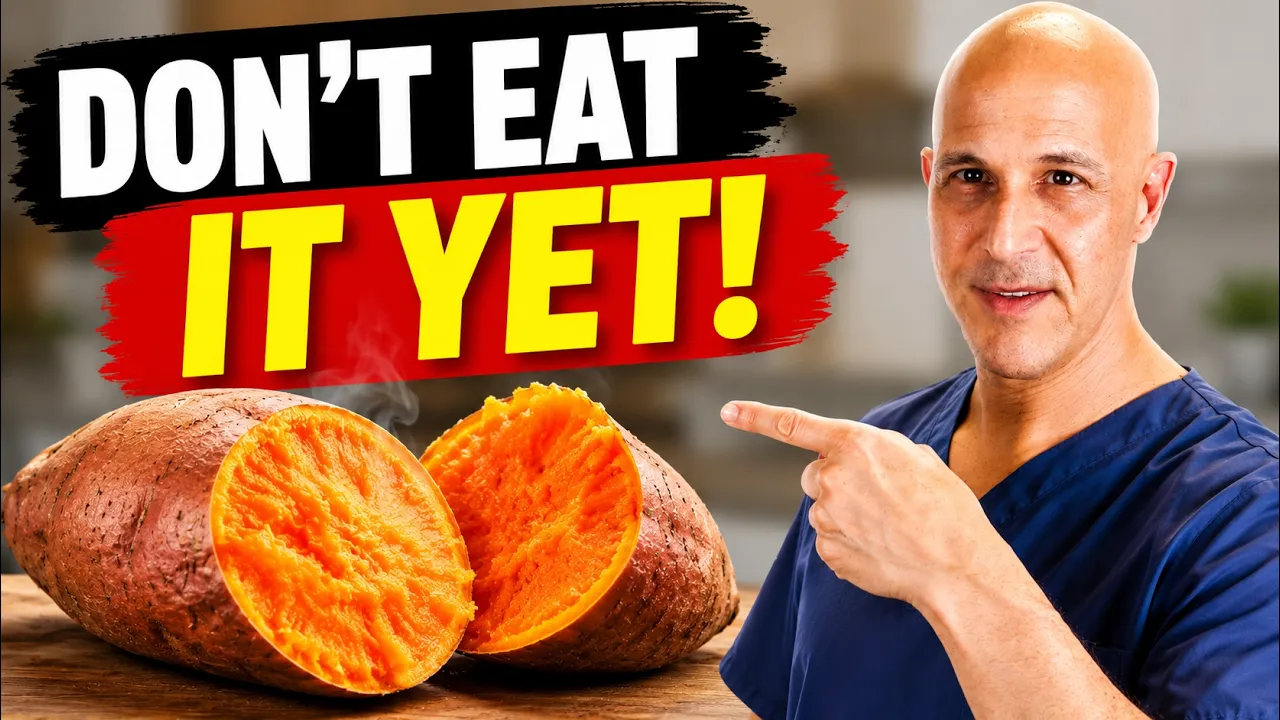
Cook Your Sweet Potato — Then Do THIS Before You Eat It | Dr. Mandell
motivationaldoc
151,792 views • 1 month ago Save 3 min 2 min read
Video Summary
Unlock profound health benefits by transforming a common food: cooking and cooling sweet potatoes dramatically increases resistant starch, a powerful prebiotic that fuels your gut microbiome. This simple shift, a process called retrogradation, restructures carbohydrates to resist digestion, feeding beneficial gut bacteria and producing butyrate, which strengthens your intestinal lining and reduces inflammation.
The ripple effects extend to your blood and brain. By slowing glucose absorption, cooled sweet potatoes stabilize blood sugar, leading to sustained energy, reduced cravings, and healthier blood vessels. Furthermore, the gut-derived short-chain fatty acids communicate with your brain, enhancing focus, clarity, and mood. Consuming about half a medium sweet potato with a meal, 3-4 times weekly, alongside protein and healthy fats, and followed by light activity, can significantly improve overall well-being.
Short Highlights
- Cook and cool sweet potatoes to increase resistant starch through retrogradation.
- Resistant starch feeds beneficial gut bacteria, producing butyrate.
- Stabilize blood sugar and energy levels.
- Improve focus, clarity, and mood via the gut-brain axis.
Key Details
The Power of Cooling Sweet Potatoes [0:00]
- Cooking sweet potatoes makes their starch easily digestible, converting to glucose quickly.
- Cooling the cooked sweet potato causes starch molecules to reorganize and crystallize, making them resistant to digestion.
- This process, called retrogradation, transforms digestible carbohydrates into resistant starch.
"When you cook a sweet potato, the starch inside opens up, it gelatinizes, it becomes easy to digest, which means it can break down quickly into glucose."
Fueling Your Gut Microbiome [1:00]
- Undigested resistant starch travels to the colon, where gut bacteria ferment it.
- This fermentation produces short-chain fatty acids, notably butyrate.
- Butyrate is crucial for gut health: it fuels intestinal cells, strengthens the gut barrier, reduces inflammation, and prevents toxins from entering the bloodstream.
"What you can't digest, your bacteria feed on it."
Stabilizing Blood Sugar and Energy [2:00]
- Slower glucose absorption into the bloodstream leads to lower blood sugar spikes and a more controlled insulin response.
- Stable insulin levels prevent the body from storing excess glucose as fat, leading to steady energy and fewer cravings.
- Healthier blood vessels result from reduced stress on blood vessels due to stable blood sugar.
"This means lower spikes in blood sugar and a more controlled insulin response."