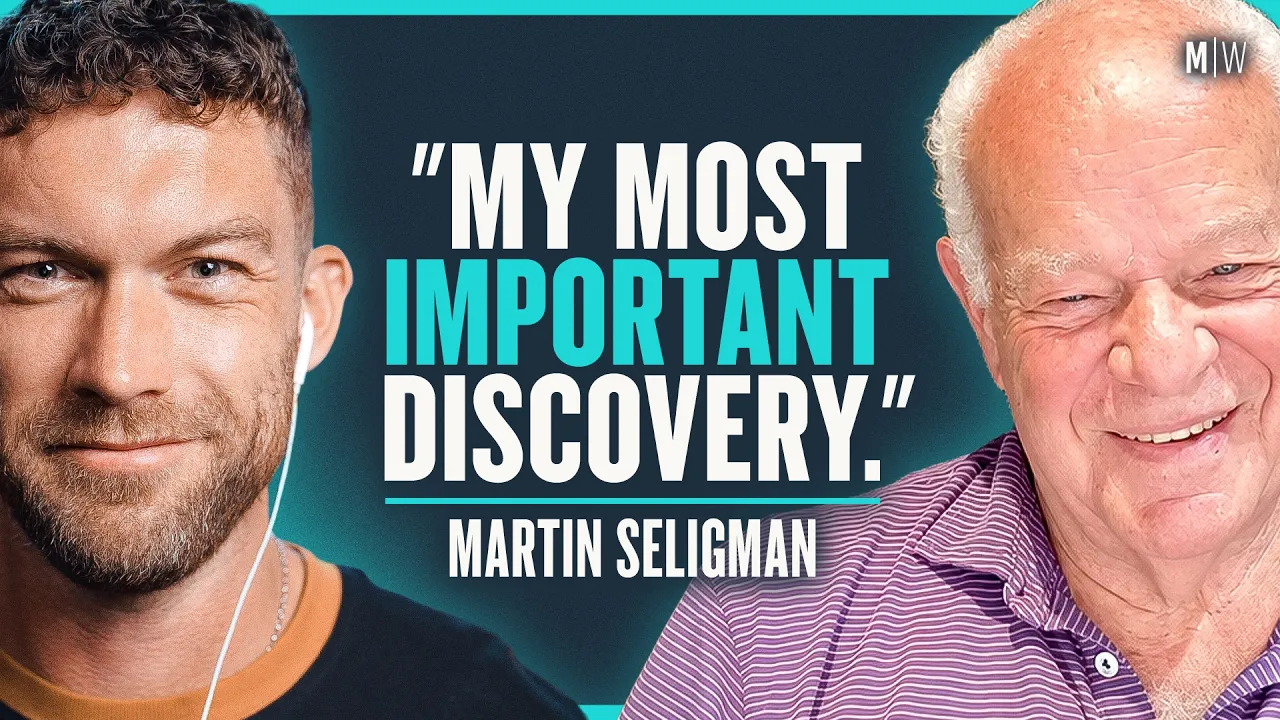
Global Meet-Up #8 (Hong Kong): The Occult of the Meritocracy
Predictive History
43,736 views • 15 hours ago Save 143 min 17 min read
Video Summary
The speaker argues that the meritocracy, once a symbol of fairness and opportunity, is now failing society by prioritizing IQ and standardized testing over genuine intellectual development and emotional intelligence. He contends that elite universities, instead of fostering critical thinking and open debate, have become pathways to narrow definitions of success, producing anti-intellectual graduates. This system, he claims, is detrimental to children, leading to immense pressure and unhappiness, and it also fails to cultivate public intellectuals.
Furthermore, the speaker posits a controversial theory that the meritocracy's origins lie not just in educational ideals but in occult eschatology, a belief system focused on creating a perfected world. He traces this back to medieval Europe and the Protestant Reformation, suggesting that secret societies like the Freemasons sought to establish reason as a divine force through systems like the SAT and IQ tests. He proposes a radical alternative: a new educational model centered on nature, the occult, and great books, fostering individual purpose and the parent-child bond, rather than competition and conformity.
Short Highlights
- The meritocracy is failing society by prioritizing IQ and standardized tests over genuine intellectualism and emotional intelligence.
- Elite universities foster a narrow definition of success, leading to anti-intellectual graduates and a lack of public intellectuals.
- The meritocracy harms children, causing immense pressure and unhappiness.
- The speaker suggests the meritocracy has roots in occult eschatology, a belief in creating a perfected world.
- An alternative educational model should focus on nature, the occult, and great books.
- The parent-child bond and individual purpose should be central to education.
- The future may involve a collapse of the current system and the rise of new models.
Key Details
The "End of the World" Tour and Global Instability [0:00]
- The speaker is on a global tour, meeting viewers and subscribers.
- He notes increasing global instability, including wars in Iran and Ukraine, riots in Europe, potential famine in Africa, and political shifts in South America.
- He believes his past predictions about global events are manifesting and that things will escalate next year.
- He plans to lecture on community, hope, and the world after collapse.
"And so it seems as though things I've been predicting or forecasting for the past couple of years, they are manifesting."
Critiquing the Meritocracy: A Personal Journey [1:15]
- The central thesis is that the meritocracy is failing society and is not fair.
- The speaker shares his personal story, born in a poor fishing village in 1976.
- He immigrated to Toronto at age six, not speaking English.
- His teacher recommended kindergarten due to his lack of progress, but his mother let him choose to go to grade two, a decision that led to bullying and academic struggles.
"And my teacher said, no, actually. I think your son should go to kindergarten."
A Substitute Teacher's Impact [4:30]
- In grade 10, a troubled teenager with poor English and family issues, a substitute teacher asked him where he wanted to go for college.
- Her belief in his potential sparked a transformation, leading him to get a full scholarship to Yale.
- He initially saw himself as proof that meritocracy works, coming from poverty to an elite university.
"She told me I was special. And there was something about me. And, if I really worked hard, then I could climb to great heights."
Three Major Issues with Meritocracy [7:30]
- The speaker outlines three major criticisms of the meritocracy.
- First, it's the opposite of fairness, discriminating in favor of high IQ and good memory, while discarding others.
- He argues that emotional intelligence and hard work are more crucial for success than high IQ.
- Standardized tests like the SAT unfairly favor a specific type of intelligence.
"But what I want to show you today is that it is not fair. It's failing our children."
The Anti-Intellectual Nature of Elite Universities [9:00]
- Second, the meritocracy is anti-intellectual because universities prioritize paths to success (internships, grad school) over intellectual habits like curiosity, imagination, and learning from failure.
- Graduates of elite universities are often unwilling to engage in open debate or learn new ideas, focusing on a narrow definition of success.
- The speaker believes this is why there are few public intellectuals today, despite significant investment in elite education.
"And the idea of intellectual habits means to be curious about the world. And to be imaginative. And to speculate. And make mistakes. To fail."
Involution and the Death of Childhood [11:30]
- Third, the meritocracy leads to "involution," where competition intensifies to extreme levels.
- The acceptance rate at Yale dropped from 20% to 5%, with applicants' resumes becoming increasingly demanding from birth.
- This has led to the "death of childhood" in places like Hong Kong, with children pressured from a young age.
- The speaker notes similar issues in Western education, with students feeling burnt out and lacking freedom to fail.
"And it's really destroyed the happiness and mental health of children."
Alternative Systems: Nordic Model and Historical US Education [13:30]
- The speaker contrasts the meritocracy with better systems.
- Nordic countries focus resources on vocational colleges for tradespeople, accommodating the majority's desire for practical skills.
- Historically, the US had three types of universities: Ivy League (for the rich), research universities (for the smart), and state schools (for farmers/engineers), which fostered prosperity.
"Because that's where the majority of people want to go to school. The reality is, the majority of people don't want to go to school to read books."
The Occult Origins of Meritocracy [15:00]
- The speaker proposes a controversial explanation for the meritocracy: the occult and eschatology.
- He suggests powerful groups, like Freemasons, with a specific understanding of the cosmos, planned the meritocracy to create "heaven on earth."
- This ties into a belief in bringing about the end times or perfecting the world through human action.
"The real reason why we have the meritocracy has to do with the occult. Or, eschatology."
Medieval Europe and the Protestant Reformation [17:00]
- He traces the idea of humans creating paradise on earth back to a rebellion against the static, hierarchical medieval worldview.
- The Protestant Reformation was a radical revolution that shifted the focus from divine punishment to individual potential and freedom.
- Romantic poets and figures like Sabbatai Zevi and Jacob Frank challenged religious authority, paving the way for individualism.
"Rather than say the Fall was what doomed humanity, John Milton was trying to say, no, Satan actually liberated us from prison."
Modernity, Gnosticism, and Kabbalah [20:00]
- Modernity's radical departure is the idea that individuals can become divine and create paradise on earth.
- This is linked to the concept of the "New Jerusalem" and the influence of Freemasons in the US.
- The speaker connects this to Kabbalah, which applies Gnostic philosophy to the Bible, viewing consciousness as primary and the world as interconnected energy.
"God created the world in order to complete itself, to know itself. But during this process of creating the world, because we are too egotistical, because we are unredeemed, we defied God."
The Freemasonic Ideal and the SAT [23:00]
- The Freemasonic tradition sought to perfect the world by making reason supreme.
- The SAT, pioneered by James P. Conant (Harvard) and Henry Chauncey (ETS), was created to find the "best and brightest" based on IQ.
- The concept of IQ itself is presented as unscientific, originating from a French psychologist's concern about social inequality.
"The reason why, of course, is that it aligned with the idea of reason. So the idea was to use the SAT to find the people with the highest IQ."
Meritocracy's Flawed Execution and the Shift to AI [26:00]
- The meritocracy, intended to spread reason, has become exclusionary and divisive.
- The belief is that external factors (family, culture, race) corrupted the experiment.
- The new tactic is to use Artificial Intelligence (AI) to achieve the same goal of making people "reasonable" through pervasive data collection and psychological profiling.
"The eschatology is still the same, but now they're switching tactics."
Critiquing Common Beliefs About Children and Education [29:00]
- The speaker challenges three common beliefs: children as blank slates, children as "mini-mes," and the idea that critical thinking/creativity will save us from AI.
- He argues that teaching critical thinking through reduction and categorization is the wrong approach.
- True creativity comes from synthesis and imagination, a connection to the divine, not just logic.
"What people don't appreciate is that how kids are taught in school to be critical thinkers is actually, it doesn't actually make them critical thinkers."
Children's Innate Connection and Purpose [32:00]
- Children are not blank slates; they have an innate connection to the divine and are excellent judges of character.
- They come with a purpose, and parents are uniquely equipped to help them achieve it.
- The speaker shares a story about his daughter's early communication and his belief that children choose their parents.
"Children aren't blank slates. They have their own conception of the universe, which is often more pure and more truthful than, than ours."
Redefining Education: Nature, Occult, Great Books [37:00]
- A new school should center on the child's purpose and the parent-child bond.
- Three fundamental elements are missing from current education: nature, the occult, and the great books.
- Nature teaches observation and connection to the divine; the occult addresses fundamental questions of existence; great books offer portals into divine consciousness.
"And if you accomplish these two things, I guarantee you the school will be successful."
Reconciling Critiques with Elite Institutions [43:00]
- Addressing a question about elite universities preserving great books, the speaker argues they have abandoned this mission.
- He advocates for democratizing knowledge, citing his experience teaching great books in China, where students connected deeply with Dante, Homer, and Plato.
- YouTube has also democratized access to knowledge and great books.
"The great, like, these poets were prophets who were also revolutionaries. They felt that what was, um, stunting human growth, what was destroying innovation in society was the fact that you had an elite that monopolized knowledge and literacy."
The Occult, Reason, and Capitalism [47:00]
- The shift from medieval society to modernity was facilitated by the merchant class, using transnational capital.
- "Reason" became a new religion, distinct from emotion, representing capital and progress.
- Freemasonry is presented as the "religion of capitalism," created to spread reason through science and the meritocracy.
"Freemasonry is the religion of capitalism. Right? I'm sorry. Emotion is tied to old religion. Reason, you need, for, but for reason to spread, you need a new religion."
Kabbalah, Messianic Eschatology, and the Meritocracy [50:00]
- Freemasonry merged with Kabbalah, a form of messianic eschatology where humans can force the end times.
- The goal was to use reason, identified with the meritocracy, to bring about heaven on earth through education.
- The SAT was designed to find those with "reason" (IQ) to perfect society, but it became exclusionary.
"And the Freemasons believed that, yes, we have reason, and therefore we now have a duty to exercise our reason in order to bring about heaven on earth."
The Future: AI and Control Grids [53:00]
- The speaker believes the meritocracy has failed, and the focus is shifting to AI for control.
- AI will be used for digital currency and digital IDs to track individuals, creating psychological profiles.
- This system is being implemented through corporate services and surveillance technology.
"They don't have to bug my room. They send agents. Okay. They, they know exactly where I am, what I'm doing just by following my, uh, movements with, with their surveillance technology."
The Nature of Children and Purpose [56:00]
- Children are not blank slates but come with a purpose and an innate connection to the divine.
- They are excellent judges of character and possess a purer conception of the universe.
- The speaker believes children choose their parents, and parents are uniquely equipped to help them fulfill their purpose.
"Children aren't blank slates. They have their own conception of the universe, which is often more pure and more truthful than, than ours."
The Role of Parents and Trusting Instincts [59:00]
- Parents are the best guides for their children, and their life experiences prepare them to be so.
- The speaker emphasizes trusting parental instincts over external advice.
- The love between a parent and child is the fundamental bond of society, which should be structured around it.
"You are the best parent for your child, okay? Don't listen to anyone else's advice, don't listen to teachers, don't listen to doctors, don't read these books, trust your heart."
Navigating System Collapse and New Models [1:02:00]
- The current system is collapsing, leading to a variety of emerging models: AI-controlled states, corporate states (network states), religious cults, and city-states.
- The speaker's proposed model, focusing on parent-child love and individual purpose, aims to be flexible and resilient.
- This model unleashes human potential and can provide intellectual energy to other systems.
"What will emerge, uh, from the chaos are maybe like city states. Okay. So for example, Hong Kong is a city state."
World War III and Geopolitical Instability [1:05:00]
- The speaker believes the world is already in World War III, citing the war in Iran disrupting supply chains.
- He predicts inflation, empty shelves, and potential famines next year.
- China's insular approach to crises is contrasted with Western nations' involvement driven by "messianic eschatology."
"So, next year, I think you'll start to see inflation. But you'll also see empty shelves. You might also see some famines in the world."
The Value of Family and Children [1:08:00]
- The speaker credits his children with his eventual success at age 50, experiencing "ego death" and finding a clear purpose.
- He emphasizes that fame and material wealth are irrelevant compared to being a good role model and building a better future for his children.
- The family is presented as the unique experience that makes one who they truly are.
"But when you have children, you experience something called ego death, which is like, everything you do now is not for you, but for your child."
The Faustian Bargain of the Elite [1:13:00]
- The elite, like Elon Musk and Donald Trump, operate under a Faustian worldview, believing struggle and striving justify their actions.
- They believe God will forgive their "evil" deeds if they continue to push humanity forward.
- This mindset, driven by a desire for power and progress, contrasts with a focus on empathy and inner harmony.
"The elite don't really see things the way that we see things, okay? They think they're doing God's work because they are contributing to the development of humanity."
The Nature of Happiness and Self-Betrayal [1:20:00]
- Happiness is defined as the harmonization of one's body, soul, and spirit, fulfilling one's true purpose.
- Unhappiness and illness stem from betraying oneself by pursuing goals dictated by external pressures.
- The speaker encourages listeners to listen to their hearts and courageously pursue their true desires, like becoming a baker instead of an accountant.
"Happiness is just the connection between your body, your soul, and your spirit. Okay. Where you're aligned together."
The Role of Evil and Free Will [1:17:00]
- The speaker addresses the concept of children being born with evil purposes, drawing on Kabbalistic ideas that the path to good can involve engaging with evil.
- He argues that the universe operates through free will, and judging others' journeys is not possible.
- The elite's actions, though seemingly evil, may serve a cosmic purpose by highlighting the importance of empathy and creativity for future leaders.
"The fundamental principle of the universe is free will. And we all have to go on our own journey."
The Future of Education and Leadership [1:18:00]
- Mass industrial society, with its focus on hierarchy and exploitation, is collapsing.
- The next era will require leaders with imagination and empathy, not psychopaths who thrive in the current system.
- The speaker aims to build a "university for profits" focused on human knowledge and creativity.
"And these people need to have imagination and empathy, okay, which is the opposite of what the elite have."
The Problem with Digital Currency and Control [1:04:00]
- The power to print money is shifting from banks to corporations, leading to digital currencies and IDs.
- A potential crisis, like economic collapse and mass unemployment, could force governments to implement Universal Basic Income (UBI) via digital currency, ensuring compliance.
"If you want to eat, you have to adopt the system, right? Okay, so right now people don't want to adopt the system, but if a major crisis happens, the government is forced to come in and issue UBI, then visual currency, digital ID will be very easy, easy to implement, okay?"
Southeast Asia's Vulnerability [1:07:00]
- The speaker expresses a negative outlook for Southeast Asia due to structural contradictions.
- Limited water resources, dependence on the Tibetan Plateau (controlled by China), overpopulation, and ethnic conflicts create significant geopolitical risks.
"Too many people, too few resources, too many ethnic conflicts, uh, in the area. Okay?"
The Nuclear Family vs. Matriarchal Systems [1:19:00]
- The speaker is conflicted about the nuclear family, acknowledging its role in mass industrial society but also the historical prevalence and potential benefits of matriarchal systems.
- Matriarchal societies, with fluid family structures and shared child-rearing, might be more adaptive in times of scarcity or population decline.
"But maybe from, from another perspective, uh, maybe that's a better system. So, I myself am conflicted."
Addressing Bad Parents and State Intervention [1:21:00]
- The speaker acknowledges the existence of bad and abusive parents but suggests their behavior often stems from external pressures and societal flaws.
- He believes that if parents are allowed to focus on their children without excessive state interference, they will naturally do a good job.
- The breakdown of mass industrial society will necessitate a return to trusting the parent-child bond.
"So, I think that the idea of a mass industrial society, it is unique in human history. I think, I think it's very anti-human."
Resilience Through Faith and Self-Forgiveness [1:23:00]
- Resilience and happiness are fostered by faith in a loving God, enabling self-forgiveness.
- Shame and guilt, often stemming from a lack of belief in divine forgiveness, can lead to fear and destructive behavior.
- Believing in God allows for embracing mistakes as part of a learning process, rather than succumbing to shame.
"You need to believe in God. You need to believe in Jesus, basically, in order to be able to forgive yourself, because often you yourself don't have the power to forgive yourself."
The Elite's Mindset and the Future of Leadership [1:24:00]
- The elite operate with a Faustian mentality, believing their striving and achievements justify their actions, with God ultimately forgiving them.
- This mindset, prevalent in mass industrial society, is being challenged by the collapse of that system.
- The future requires leaders with imagination and empathy, qualities lacking in the current elite, to rebuild civilization.
"And they've been taught to see the world this way ever since that they were young. So the elite have a different mythology than we do."
The Nature of Happiness [1:26:00]
- Happiness is the alignment of body, soul, and spirit, fulfilling one's purpose.
- Betraying oneself by not pursuing one's true desires leads to unhappiness and illness.
- True happiness comes from having the courage to listen to one's heart and pursue one's purpose, free from ego and fear.
"So happiness is just the connection between your body, your soul, and your spirit. Okay. Where you're aligned together."