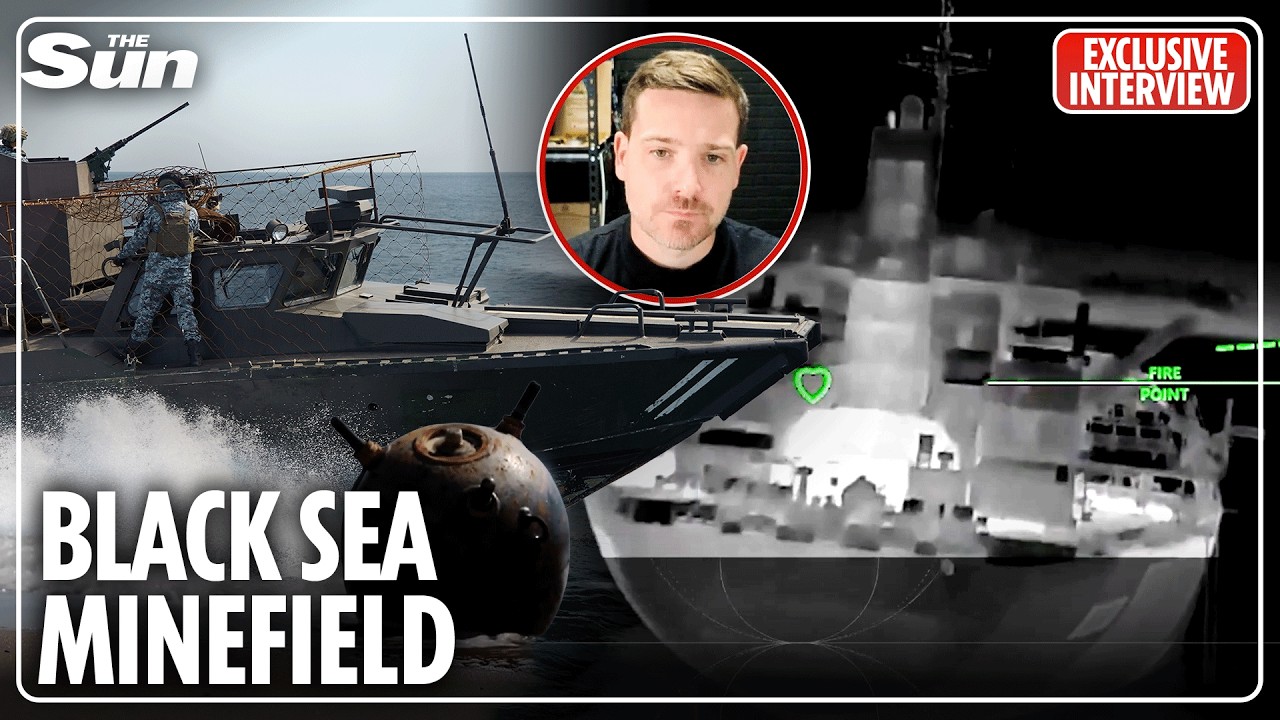
Ukraine blocked the Russian navy from the Black Sea. Now comes the hard part
The Sun
95,772 views • 1 month ago Save 5 min 3 min read
Video Summary
Ukraine has achieved the unthinkable: forcing the vaunted Russian Black Sea Fleet to retreat into port, effectively neutralizing its freedom of maneuver. While Russia has lost control of the sea, Ukraine has yet to secure it, as the same asymmetric tactics—missiles, drones, and sea mines—that crippled the Russian fleet now prevent either side from safely navigating the waters. This stalemate mirrors the volatility of the Strait of Hormuz, where disruption is effortless but total control remains a logistical and military nightmare.
Simultaneously, the Russian military is grappling with a severe, unsustainable manpower crisis. Having largely exhausted the willing prison population, Moscow is increasingly reliant on a "shadow mobilization" to force contract signings among students and debtors. Despite this internal strain, recent diplomatic efforts led by Jared Kushner and Steve Whitcoff have attempted to bridge the divide between Moscow and Kyiv, though initial meetings were marked by mockery and remain far from a ceasefire.
Short Highlights
The current state of the Black Sea and Russian military operations is defined by several critical factors: * The Russian Black Sea Fleet has been forced into hiding, losing its freedom of maneuver. * Neither side currently controls the sea, as asymmetric threats prevent safe passage. * Sea mines present a persistent, nearly impossible-to-clear threat to all shipping. * Russia is conducting a "shadow mobilization" to bypass political backlash. * Russian casualty rates currently exceed their recruitment capacity. * Recent peace talks between U.S. delegates and both sides yielded no immediate results.
Related Video Summary
- US Offers Security Deal in Ukraine Talks But Territory Still Key
- Russia WAS behind Leipzig airport drone plot + explosive rockets fired at German power station
- It's only a matter of time before Putin’s state sponsored terrorism triggers mass casualty event
- Storm Shadow strike rocks Russian army HQ and Ozon Warehouses burn as CIA visits Moscow
Key Details
The Black Sea Stalemate [0:00]
- Ukraine has successfully used missiles and drones to force the Russian Navy to hide in port.
- While Russia has lost control of the region, Ukraine has not gained it, as both sides remain vulnerable to strikes.
Ukraine found ways, via missiles and drones and other means, to shut down the Black Sea, to where the Russian ships have been effectively hiding.
The Minefield Challenge [2:20]
- Sea mines are easily deployed but extremely difficult and dangerous to clear, threatening both military and civilian vessels.
- Clearing mines is a massive, daunting military operation that remains a significant risk even in peacetime.
It is so much easier to disrupt something than to clear it.
The Shadow Mobilization [4:26]
- Russia is avoiding a formal, politically unpopular mobilization by pressuring soldiers into contract service.
- The military is specifically targeting students and debtors to fill gaps as the supply of prison recruits has dried up.
They're finding ways to fill the ranks without actually having to use the term mobilization, which is politically unpopular.
Unsustainable Attrition [5:39]
- For several months, Russian casualties have exceeded the number of new recruits, creating an unsustainable long-term outlook.
- The reality of the war is becoming impossible to hide from the Russian public as injured soldiers return home.
There's been either right on the line or more Russian soldiers killed and seriously wounded than they've been able to recruit.
Diplomatic Uncertainty [6:29]
- A U.S. delegation including Jared Kushner and Steve Whitcoff held talks in both Moscow and Kyiv to restart peace negotiations.
- The meetings were marked by friction, including Ukrainian officials mocking the Russian "Kiev regime" rhetoric during the visit.
There was no expectation that there's going to be an immediate ceasefire or anything like that.