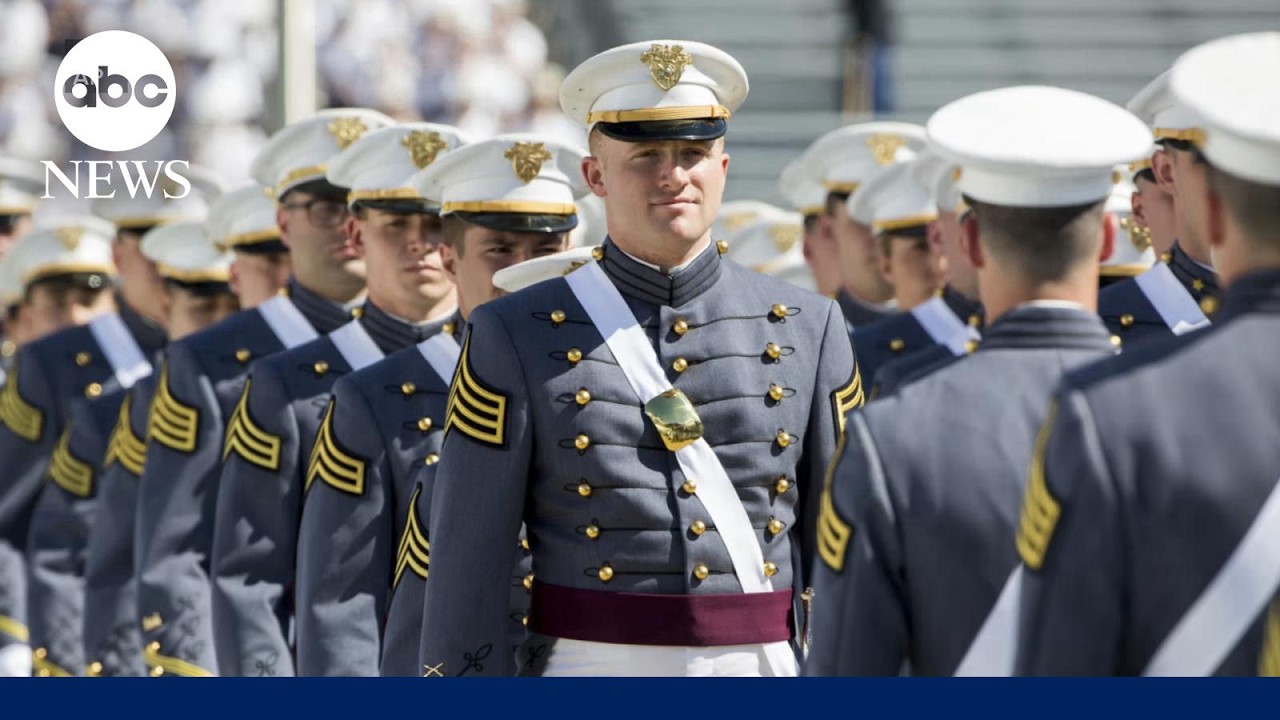
West Point ends speech restriction policy
ABC News
4,005 views • 1 month ago Save 3 min 3 min read
Video Summary
A protracted legal dispute over free speech at West Point has concluded with the Pentagon agreeing to abandon a policy that required civilian professors to seek approval before expressing opinions in the classroom or speaking publicly. The policy, enacted last year, was immediately challenged by Professor Tim Bakken, a law professor with 27 years at the academy, who argued it violated the First Amendment and academic freedom.
Bakken contended that the restriction was unprecedented in U.S. history and undermined the core academic mission of searching for truth. A judge had previously sided with Bakken, temporarily halting the policy and emphasizing the need for cadets to encounter diverse viewpoints. The resolution allows professors like Bakken to continue teaching and speaking freely, a crucial element for developing critical thinking in future military leaders.
Short Highlights
- West Point will not implement a policy restricting civilian professors' speech.
- The policy required professors to get approval before speaking or writing publicly.
- Professor Tim Bakken challenged the policy as a First Amendment violation.
- A judge had previously paused the policy, citing the need for diverse viewpoints for cadets.
Key Details
Legal Battle Over Speech Policy Ends [0:00]
- A months-long legal battle over free speech at West Point has concluded.
- The Pentagon agreed not to implement a policy restricting civilian professors' public expression.
- The policy required approval from military administrators before professors could speak or write publicly.
"The policy prohibited professors at West Point, and it said that if they wanted to speak or write publicly, they had to obtain approval from military officer administrators at West Point."
Professor Challenges Policy as Unconstitutional [0:49]
- Professor Tim Bakken challenged the policy, calling it a violation of the First Amendment.
- He described the restriction as a strong limitation on personal freedom and academic inquiry.
- Bakken believes this is the only restriction in U.S. history requiring college professors to get approval before public speaking or writing.
"I thought that went too far. And, in fact, it appears that that's the only restriction in possibly U.S. history in which one college has said that its professors must obtain approval before speaking or writing publicly."
The Importance of Academic Freedom [1:55]
- Academic freedom is a constitutional right, essential for searching for truth.
- College teachers are expected to be neutral in their pursuit of knowledge.
- The challenged rule prohibited professors from discussing their specialties, such as constitutional law or poetry, freely.
"The primary reason why academic freedom in particular is a constitutional right is that we look to college teachers to be neutral people who will search for the truth."
Judge's Intervention and Future Role [4:15]
- A judge had temporarily paused the policy earlier in the year.
- The judge stated that cadets need exposure to varied viewpoints for genuine strength and leadership.
- Professor Bakken affirmed his commitment to teaching cadets and contributing to national security and the military academy's mission.
"The point at which I would add something would be to say throughout our history since World War Two in Korea somewhat, but in Vietnam also in Iraq and Afghanistan wars in addition, we have done very well."