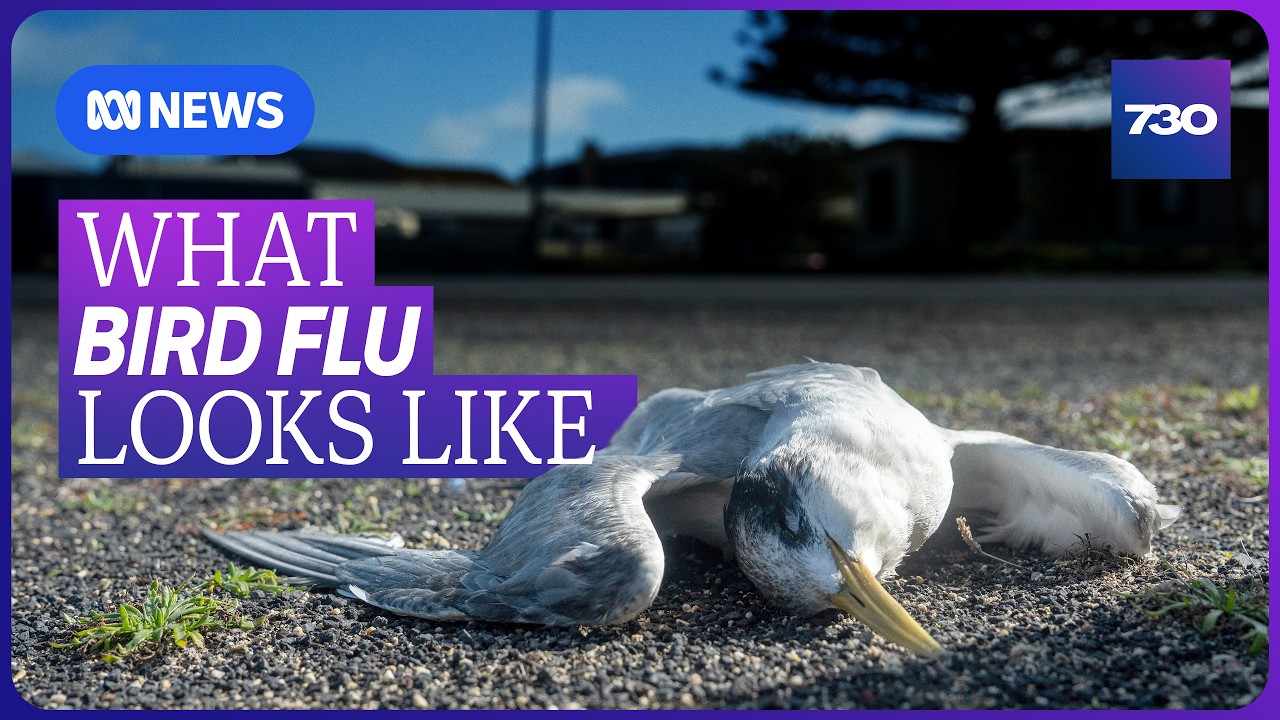
The threat to Australia's native species from H5N1 bird flu is growing | 7.30
ABC News In-depth
15,577 views • 1 month ago Save 4 min 3 min read
Video Summary
Australia faces an escalating crisis as the H5 bird flu virus decimates native wildlife, with a federal report warning that nearly 400 species, including penguins and Tasmanian devils, are at high to extreme risk. Despite the virus not yet reaching Australia's poultry industry, the potential for extinction looms over unique Australian animals, raising fears that this outbreak could be a "tipping factor." While the risk to humans is low, the virus's rapid spread and devastating impact on poultry overseas, causing mass culls and price hikes, have prompted stringent biosecurity measures and a debate over vaccination for Australian birds.
Short Highlights
- Nearly 400 native bird and mammal species are at high to extreme risk from bird flu.
- The virus has caused escalating numbers of dead and dying birds across Australia.
- Unique Australian animals like penguins, sea lions, seals, and the Tasmanian devil are threatened.
- Australia's multi-billion dollar poultry industry has not yet detected H5 bird flu.
- Egg prices could rise significantly if the virus impacts the poultry sector.
Related Video Summary
- Albanese faces criticism over 'melon' comments on a podcast | 7.30
- Australia Released Ants to Kill the World’s Most Poisonous Animal — The Results Shocked Scientists
- Markets Brace for US CPI; AI Firms Crush Earnings | The Asia Trade 8/12/2026
- Faith, Power and Modi: Inside the Politics Reshaping Hinduism in Australia | Compass
Key Details
Confronting Reality of Bird Flu [0:00]
- The H5 virus has been detected in Australia for nearly two months, with an escalating number of dead and dying birds.
- Bird watcher Maureen Christie describes walking onto beaches littered with dead birds, emphasizing the helplessness of the situation.
"Absolutely awful because there's nothing you can do about it. They can't be saved, it's not like a sick or injured bird that can be taken into to care and brought back to health."
Widespread Risk to Native Species [0:47]
- A federal government report, "a list of doom," warns that almost 400 native bird and mammal species are at high to extreme risk.
- Threatened species include penguins, sea lions, seals, and the Tasmanian devil.
- There is concern that this outbreak could be a "tipping factor" that pushes already vulnerable species toward extinction.
"Unfortunately Australia has a very strong history of extinction and the thing that I'm concerned about is that this may be the tipping factor that tips a species into extinction."
Global Context and Human Risk [1:33]
- H5 bird flu originated in China in the 1990s and has since affected over 80 countries, causing millions of poultry deaths and mass culling.
- Australia and New Zealand were among the last unaffected continents.
- The risk of transmission to humans from the virus is considered low.
"Every continent is infected. Australia and New Zealand were the last holdout."
Impact on Poultry and Biosecurity Measures [2:03]
- While H5 bird flu has not been detected in Australia's poultry industry, farmers are implementing strict biosecurity measures.
- Victorian egg producer Brian Ahmed describes limiting access to his farm and keeping sheds fenced off.
- Victoria has mandated that birds in coastal and southern areas be kept indoors.
"At the moment we're very strict on who we allow onto the property. We have a fenced off area where all our sheds are and no one's going to go into that section unless they have to."