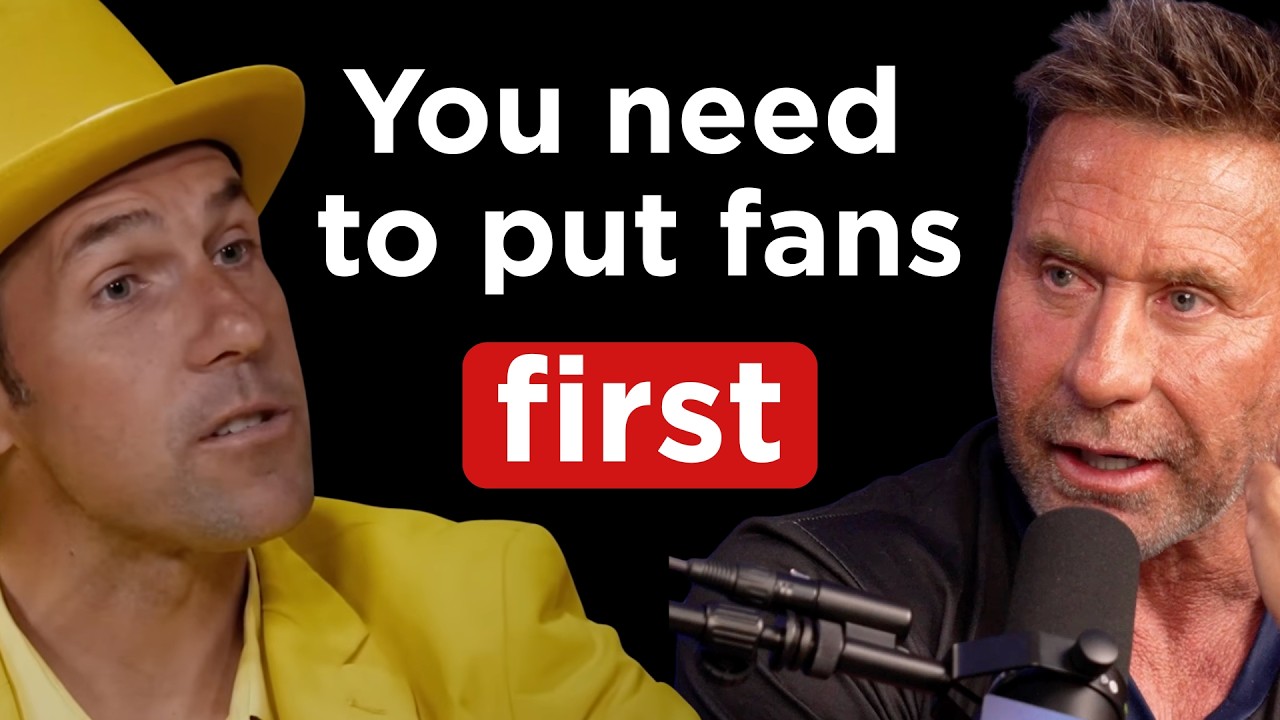
The Secret to a $1 Billion Business | Savannah Bananas' Jesse Cole
Ed Mylett
455 views • 18 hours ago Save 46 min 10 min read
Video Summary
Jesse Cole, the visionary behind Fans First Entertainment and the Savannah Bananas, transformed baseball from a slow, boring game into a high-energy spectacle that attracts millions. Facing near bankruptcy with only two tickets sold in his first three months, Cole drew inspiration from Walt Disney to create an "adults and kids can have fun together" experience.
Cole's "Fans First" philosophy dictates every business decision, prioritizing fan experience over profit. This approach led to innovative ideas like all-inclusive tickets, eliminating fees, and creating "Banana Ball" with faster play and constant entertainment. This strategy has resulted in massive waitlists, millions of social media followers, and a new deal with ESPN and Disney, proving that focusing on fans creates unparalleled business success.
Short Highlights
- The "Fans First" Philosophy: Every decision prioritizes fan experience, aiming to create "raving fans" rather than just customers.
- Revolutionizing Baseball: Transformed the game into a non-stop entertainment spectacle with "Banana Ball," addressing issues of it being "too long, too slow, and too boring."
- Overcoming Adversity: Started with minimal funds ($268) and faced near failure, selling their house to fund the Savannah Bananas.
- Massive Popularity: Boasts millions on waitlists for tickets, huge social media followings, and a deal with ESPN and Disney.
- Innovation Through Friction: Identifies and eliminates pain points in traditional experiences, inspired by companies like Disney and Uber.
- Control is Key: Maintains control over all aspects of the business, from ticketing to broadcasting, to ensure a consistent fan experience.
- Giving Back: Through "Bananas Foster," honors foster families at every game, aiming to inspire more families to get involved.
Key Details
The Genesis of "Fans First" [00:00:00]
- The speaker introduces Jesse Cole, highlighting his entrepreneurial success and focus on "culture" and "client experience."
- Cole's teams, like the Savannah Bananas, have massive waitlists (4 million+ as of April 2026), fill stadiums (80-100k fans), and boast over 21 million social media followers.
- A new deal with ESPN and Disney underscores his status as a "great American business story."
"This dude is one of the great American business stories because he gets the most important things in an AI area, which is experience and culture for the fans."
From Baseball Player to Bored Spectator [00:02:06]
- Cole played baseball his whole life, dreaming of pro ball, but a shoulder injury ended his career.
- While coaching, he found the game boring and realized the fans' experience was paramount.
- Inspired by Walt Disney's desire for a place where adults and kids could have fun together, Cole envisioned a similar experience for baseball.
"I realized one day, I'm sitting in the dugout, the best seat in the house, with the best players. All these guys go play pro. They're the best of the best. I'm bored out of my mind, Ed. I'm just sitting there."
The Humble Beginnings in Gastonia [00:04:17]
- Cole's journey began almost 20 years ago, with the Savannah Bananas now in their 11th year.
- He spent 10 years running a college summer team in Gastonia, North Carolina, starting with $268 and only 200 fans per game.
- He experimented with unconventional promotions like "salute to underwear nights" and "flatulent fun nights" to attract crowds.
"People don't realize they think it's an overnight success, but it's going on almost 20 years now."
The "Bananas" Brand is Born [00:07:35]
- Cole and his wife sold their house and lived minimally to fund the Savannah Bananas, facing massive debt.
- After struggling to sell tickets, they launched a "name the team" contest, receiving generic suggestions until "Bananas" was proposed.
- The name was embraced for its fun potential, leading to ideas like "Banana-Nanas" (a senior citizen dance team) and "Man-Nanas" (a male cheerleading team).
"And we had one suggestion, the Bananas. And I know we looked at each other and said, go Bananas."
Embracing the "Fans First" Experience [00:09:40]
- Their first opening day featured all-inclusive tickets, covering food and drinks, for $15 to provide the best value.
- Initial execution was chaotic, with long lines and overwhelming demand for food, but the unique entertainment (dancing players, costumed characters) captivated fans.
- This "fans-first" approach, focusing on a frictionless and entertaining experience, became their core strategy.
"All your hamburgers, hot dogs, chicken sandwiches, soda, water, popcorn dessert all night long. And your ticket. No ticket fees. No convenient fees. No service fees."
The Power of Attention and Experience [00:12:11]
- The unique fan experience generated significant national attention, making traditional marketing unnecessary.
- Cole emphasizes that "attention beats marketing 1,000% of the time."
- They continuously create remarkable moments, capturing and sharing them on social media to gain attention.
"We didn't have to market again. And this is an honest, true story. Since that day, we have spent zero on marketing."
The "Fans First" vs. "Customer" Distinction [00:14:40]
- Cole distinguishes between transactional "customers" and dedicated "fans," who are more invested.
- He believes the future of business lies in cultivating a large fanbase.
- Fans demonstrate extreme loyalty, traveling long distances and even getting tattoos of the company logo.
"Customers are transactional. They come and go. Fans. Fans are different."
Turning Mistakes into Fan Loyalty [00:17:13]
- A costly mistake involved emailing 44,000 people instead of 4,000 for a ticket opportunity, costing $6 million in free tickets.
- Instead of shying away, they apologized and offered free tickets to everyone affected, turning a negative into a positive.
- This action solidified fan loyalty, with many expressing gratitude for the company's handling of the error.
"And then now, every day, every game, I have someone that was a part of that. And they give me a hug and say, we're a fan for life because of that."
Creating Experience Beyond Baseball [00:19:51]
- Cole advises entrepreneurs to identify and eliminate "friction points" in their customer experience.
- He uses examples like Uber (eliminating taxi hassles) and Netflix (addressing Blockbuster's limitations).
- For baseball, he identified it as "too low, too long, too slow, and too boring," leading to the development of "Banana Ball."
"I truly believe the starting point of all innovation starts from putting yourself in the customer's shoes and asking, what are the friction points in the experience?"
The Innovation of "Banana Ball" [00:21:30]
- Cole brainstormed ways to eliminate boring elements of baseball, such as mound visits and long pauses between pitches.
- He observed fans leaving games after about two hours, leading to the creation of a two-hour game format.
- "Banana Ball" features constant action, no dead air, and entertainment integrated throughout.
"I said, we're going to make a two-hour game because our fans are showing it. And you want them to want more, not less."
Attention Over Marketing [00:24:34]
- Cole differentiates between a "marketing plan" and an "attention plan," prioritizing the latter.
- He emphasizes creating remarkable moments that capture attention organically.
- An example is a player who hit a baseball while on stilts, generating millions of views and followers.
"Everybody has a marketing plan, okay? Who has an attention plan?"
The Importance of Personal Energy [00:26:40]
- Cole believes great entrepreneurs bring a specific, high energy to their work.
- He focuses on doing activities that give him energy: creating, sharing, and growing.
- This approach allows him to be the best version of himself for his team and family.
"I do every day what gives me energy. And that brings more energy out of me."
Walt Disney's Influence: Vision and Control [00:30:50]
- Cole admires Walt Disney's ability to "do the impossible" and work backward from a perfect experience.
- Disney obsessed over "plussing the experience," never settling for "fine."
- Disney's strategic move to buy vast land in Florida for complete control over his vision (Disney World) is a key lesson.
"He always imagined what the perfect experience was and worked backwards from that."
Maintaining Control in Business [00:34:01]
- Cole emphasizes the importance of maintaining control over business operations to preserve the fan experience.
- He cites examples of companies losing their way after going public or bringing in private equity.
- Fans First Entertainment controls its ticketing, broadcasting, and merchandise to ensure a seamless fan journey.
"As soon as you lose a little bit control, as soon as you have someone from the outside that wants to make a little bit more money, you lose the experience and you start losing fans."
Long-Term Vision vs. Short-Term Gain [00:37:13]
- Cole prioritizes the next "quarter century and beyond" over short-term profits or quick exits.
- He contrasts this with entrepreneurs focused on selling their businesses quickly, often leading to poor decisions.
- Companies like Costco are highlighted as examples of long-term commitment to core values.
"I'm not focused on the next quarter. I'm focused on the next quarter century and beyond."
The "Learn, Change, Plus" Mindset [00:43:35]
- Cole implements a nightly "Learn, Change, Plus" (LCP) process to continuously improve the fan experience.
- This involves detailed reports from various departments, identifying areas for enhancement.
- The goal is not perfection but continuous improvement, aiming for each show to be significantly better than the last.
"We have an LCP. So every single night, learn, change, plus. Every night? Wow. Every single night."
The "Bananas Foster" Initiative [00:48:40]
- Cole's wife, Emily, is the driving force behind their charitable work, "Bananas Foster."
- They became licensed foster parents, experiencing firsthand the challenges and rewards of the system.
- The initiative honors foster families at every game, telling their stories and giving them a standing ovation from the entire stadium.
"And by doing that every single game, do you think that will get some more families that are interested in being a part of that?"
The "Heart of a Champion" [00:52:40]
- Cole describes himself as extremely competitive, but focused on competing against himself and his team to improve.
- He recounts a devastating experience with sound issues at a large stadium event, leading to refunds and a commitment to never lose control of the experience again.
- Adversity, like ticket system failures or broadcast transmission issues, fuels their drive to innovate and overcome challenges.
"We lost control and we didn't control the sound at the stadium. And so when you look at that, I look at that as a, the great moment in the scheme of things, because we're not, we're not going to let that happen again."
Why Traditional Sports Lag Behind [00:56:10]
- Cole suggests that traditional sports focus on the "easy way" to grow (increasing prices, selling more sponsorships) rather than the "hard way" (maintaining prices while enhancing experience).
- Implementing the level of pre- and post-game entertainment and fan interaction seen with the Bananas is extremely difficult and resource-intensive.
- He contrasts this with the Globetrotters, who, while successful for decades, largely replicated their show rather than innovating, a path Cole actively avoids.
"It's hard to have a two-hour show where you're doing 10 to 15 things you've never done in front of a live crowd every single night."