The Ultimate Guide to Male Hormones & Men’s Health
Mel Robbins
29,205 views • 21 hours ago Save 59 min 10 min read
Video Summary
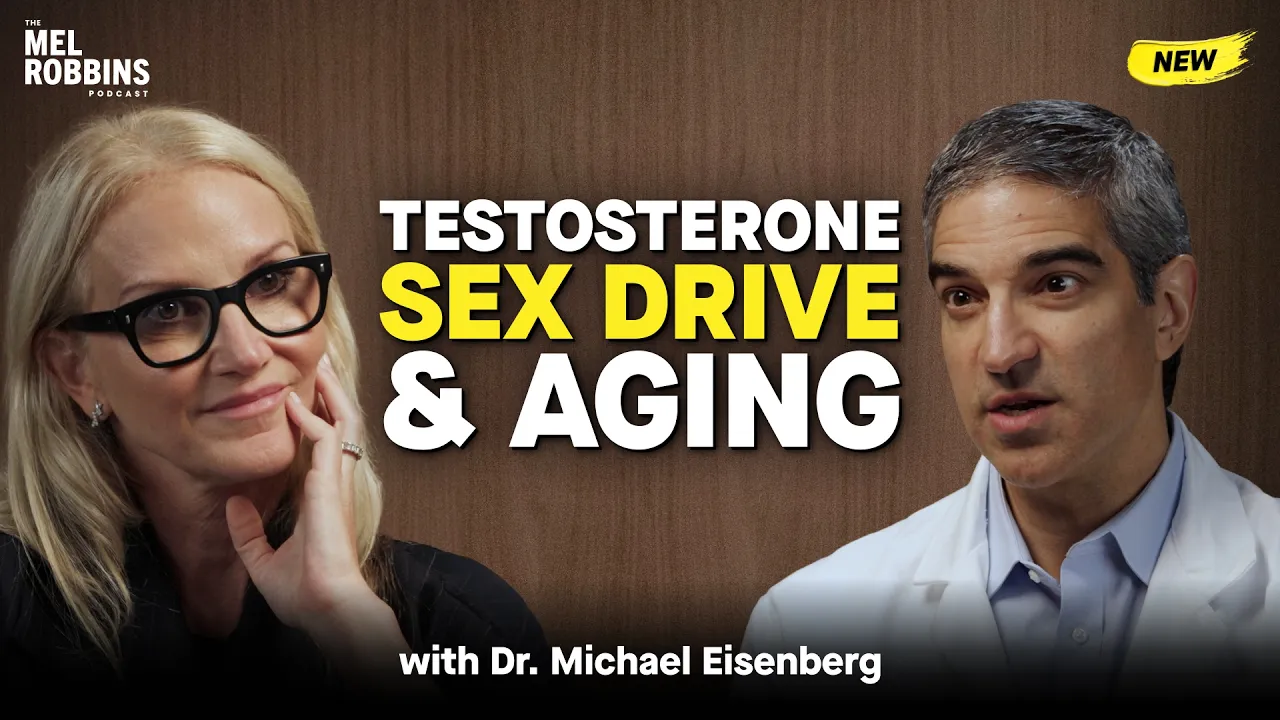
Globally, sperm counts are declining, and over half of men over 50 experience low testosterone, yet discussions about male hormonal and reproductive health remain shrouded in shame and embarrassment. Dr. Michael Eisenberg, head of Stanford's Male Reproductive Medicine and Surgery Program, joins Mel Robbins to demystify these critical aspects of men's health, emphasizing that education and proactive measures can significantly improve quality of life and longevity.
The conversation delves into the signs of low testosterone, such as fatigue, low libido, and mood changes, and explores the benefits of treatment, including improved energy, sexual function, and bone density. Dr. Eisenberg also addresses common concerns, debunking myths about prostate and heart health risks associated with testosterone therapy and highlighting that many issues, from erectile dysfunction to fertility challenges, are treatable. The discussion underscores the profound link between overall health, relationships, and hormonal well-being, encouraging men to take agency over their health and seek medical guidance.
Short Highlights
- Male hormonal and reproductive health are critical for overall well-being and longevity, yet often neglected due to embarrassment.
- Testosterone levels naturally decline with age, with about half of men over 50 experiencing low levels.
- Symptoms of low testosterone include fatigue, low libido, poor mood, and concentration issues.
- Erectile dysfunction is common, affecting over half of men over 40, and has numerous treatable causes.
- Male fertility is declining globally, and male factors contribute to 50% of infertility cases.
- Healthy relationships and regular sexual activity are linked to increased longevity and overall health.
- Men should proactively manage their health, get regular check-ups, and consult doctors for hormonal and reproductive concerns.
Key Details
The Crisis in Men's Health [00:00:00]
- Global sperm counts are declining, and over half of men over 50 have low testosterone.
- Many men are uncomfortable discussing hormonal, reproductive, and sexual health due to shame and concerns about masculinity.
- Dr. Michael Eisenberg joins Mel Robbins to provide an "ultimate guide" to male hormone and men's health.
"This is a very important topic and something that a lot needs to be done about and can be done about."
Understanding Male Hormone Health [00:02:45]
- Male hormone health primarily focuses on testosterone levels, with a normal range of 300-900 nanograms per deciliter.
- Testosterone levels peak between ages 20-30 and decline by about 1% per year thereafter.
- By age 80, about 50% of men have low testosterone.
"The normal range of testosterone is quite wide, right, 300 to 900 nanograms per deciliter."
Signs and Symptoms of Low Testosterone [00:06:04]
- Symptoms are often quality-of-life related: low energy, low sex drive, poor mood, poor concentration, and poor sleep.
- Other indicators can include low blood counts (anemia) or low bone mineral density.
- Erectile dysfunction can also be a sign of low testosterone.
"Low energy level, low sex drive, you know, poor mood, poor sleep, poor concentration."
The Benefits of Testosterone Therapy [00:10:09]
- Treatment can improve energy, vitality, sexual function (libido and erectile function), and penile health.
- It can also enhance bone mineral density, help with low blood counts, and improve lean body mass and metabolic health.
- Some studies suggest a lower risk of developing diabetes for men on testosterone.
"It can help with energy level, you know, vitality."
When to Get Tested [00:13:12]
- Men should consider getting tested for low testosterone starting around age 40-50, or earlier if specific medical conditions exist.
- Conditions like testicular cancer history, chemotherapy, anemia, or low bone density warrant earlier screening.
- Symptoms like persistent low energy, low libido, or erectile dysfunction are also reasons to get tested.
"So getting checked, I think, sooner rather than later is a reasonable thing to do."
The Embarrassment Factor [00:17:33]
- Despite increasing openness, many men still feel shame or guilt about hormonal issues, fearing it impacts their masculinity.
- The advent of treatments like Viagra made discussions about sexual health more comfortable.
- Dr. Eisenberg emphasizes that these conditions are common and treatable, not a sign of personal failing.
"But, you know, I think there's also just this, you know, feeling of shame a little bit and guilt, something, you know, like sort of concerns about their own masculinity."
How Poor Sleep Impacts Testosterone [00:22:00]
- Poor sleep blunts the body's normal hormonal feedback mechanisms.
- It disrupts the natural rhythm of testosterone production, leading to general suppression.
- Men experiencing sleep deprivation or consistently getting only 4-5 hours of sleep per night show suppressed testosterone levels.
"Poor sleep affects testosterone, you know, through a few mechanisms, but primarily it really just blunts our normal, you know, kind of feedback."
Excess Body Fat and Testosterone [00:24:11]
- Testosterone converts to estradiol (an estrogen) in fatty tissue, which signals the body to reduce testosterone production.
- Excess body fat can also impact hormonal regulation and blunt the body's normal production response.
- Weight loss, through diet, exercise, or bariatric surgery, can reliably increase testosterone levels.
"And a lot of that conversion of testosterone to estradiol happens in fatty tissue."
Chronic Stress and Hormonal Health [00:27:06]
- Chronic stress triggers cortisol release, which blunts the body's normal testosterone response.
- The body prioritizes survival over longevity functions like hormone and reproductive health during high stress.
- Reducing stress can lead to improvements in testosterone levels.
"If there's too much stress, we get this cortisol release in our body. And that basically just blunts the normal testosterone response."
Depression and Testosterone Link [00:32:03]
- Depression and low testosterone are closely linked; each can impair the other.
- Depression can blunt the body's ability to respond to normal stresses and rhythms, affecting hormonal signaling.
- Some antidepressant medications can also lower testosterone levels, complicating treatment.
"And this is one where we think low testosterone itself can impair mood, but also depression itself can also impair testosterone production."
Alcohol's Impact on Testosterone [00:36:06]
- Excessive alcohol consumption blunts the body's ability to regulate normal hormone levels and impairs testosterone production.
- Moderation is key; curbing alcohol intake can lead to improved testosterone levels.
- Reducing alcohol dependence significantly benefits overall health beyond just hormone levels.
"Alcohol also is associated with low testosterone. And what alcohol does really at every level is blunts the body's response to the feedback of regulating normal levels."
Testosterone Therapy: Concerns and Options [00:42:00]
- Concerns about testosterone therapy include long-term effects and the "oil intake" from injections.
- Testosterone therapy has been used for decades and is considered safe, with various delivery methods available: injections, gels, pellets, and oral tablets.
- Longer-acting injections, daily gels, or pellets can be alternatives to frequent injections.
"Testosterone therapy has been done for decades and decades. You know, it's very, very safe."
Potential Side Effects of Testosterone [00:46:36]
- Testosterone can lower sperm production, acting as a contraceptive in men.
- Other side effects include oily skin, acne, hair loss, and potential breast growth (gynecomastia) due to conversion to estrogen.
- Landmark studies like the TRAVERSE trial have debunked earlier concerns about increased risks of prostate cancer and heart issues.
"Testosterone has been tested by the World Health Organization as a contraceptive."
The Importance of Medical Supervision [00:52:50]
- Testosterone should always be overseen by a doctor to ensure it's prescribed only to those who need it.
- Taking testosterone with normal levels is unlikely to help symptoms and may expose individuals to unnecessary risks.
- Clinics that indiscriminately prescribe testosterone for performance enhancement are cautioned against.
"Because you can certainly be abused or misused or misprescribed. You can give anybody testosterone. But you really want to make sure you're giving it to people that need it."
Erectile Dysfunction: Prevalence and Causes [01:01:05]
- Erectile dysfunction (ED) is the consistent inability to achieve or maintain an erection sufficient for sexual activity.
- It's highly common, affecting over half of men over 40, with prevalence increasing with age.
- ED is primarily caused by issues with blood flow into the penis, influenced by factors like smoking, diabetes, high blood pressure, and trauma.
"It's so common. I think that, you know, when men come in, they think they're the only one affected."
The Emotional Toll of ED [01:07:40]
- Men experiencing ED often feel inadequate, experience a loss of masculinity, guilt, and contribute to relationship problems.
- It can lead to withdrawal and depression, significantly impacting quality of life and intimacy.
- Many men feel hopeless, unaware that effective treatments are available.
"They feel inadequate, lack of masculinity. They feel a sense of guilt, like they've done something wrong."
Treating Erectile Dysfunction [01:11:48]
- A holistic approach involves reviewing medications, lifestyle factors (diet, exercise), and BMI.
- First-line treatments include phosphodiesterase inhibitors (e.g., Viagra, Cialis) which enhance blood flow.
- Second-line options include medications inserted into the urethra, and third-line options involve penile injections.
"As long as you have a penis, we can always make it hard."
The Connection Between Sex and Longevity [01:25:31]
- Studies suggest men who ejaculate more frequently (e.g., 20+ times/month) have a lower risk of prostate cancer.
- Regular sexual activity (e.g., once or twice a week) is linked to living longer, potentially twice as long.
- Strong relationships and intimate connection are crucial for overall health and longevity, reducing risks of mortality.
"So really fascinating. So what they found is that men that ejaculated 20 times a month or more compared to those less had about a 20% lower risk of developing prostate cancer."
Male Fertility Decline and Its Importance [01:34:04]
- Sperm counts are declining globally, and male reproductive health is generally deteriorating.
- Male factors contribute to 50% of infertility cases, yet men are often not evaluated.
- Low sperm count can be a "check engine light" for overall health, indicating potential underlying issues.
"There's been lots of studies that show that sperm counts are going down globally."
Men's Pelvic Floor Health [01:43:17]
- Pelvic floor muscles control erections, ejaculation, orgasm, and urinary/bowel control.
- Strengthening these muscles through exercises can help with issues like chronic pelvic pain and post-surgery recovery (e.g., after prostate removal).
- Awareness of pelvic floor health is important for both men and women.
"So they control erections, ejaculation, orgasm. They're also involved in urine control, bowel control."
Urinary Changes with Age [01:45:06]
- As men age, the prostate can enlarge, narrowing the urethra and making urination more difficult.
- This can lead to increased frequency of urination, especially at night, and difficulty emptying the bladder.
- Medications and treatments are available to manage these symptoms.
"So we do see that that men wake at night. There's different reasons for that."
Prostate Cancer Screening [01:48:00]
- Prostate cancer is often asymptomatic and diagnosed through screening blood tests (PSA).
- Screening typically begins in the 50s, or earlier for those with a strong family history.
- Urinary symptoms can sometimes be a sign, but prostate cancer is often detected before symptoms appear.
"Usually, most commonly, prostate cancer is diagnosed just with a blood test."
Taking Agency Over Your Health [01:50:00]
- Men should be aware of their health, recognize they have agency to improve it, and conduct self-assessments.
- Regular check-ups for blood pressure, cholesterol, and other health metrics are crucial as they tie closely to hormonal and reproductive health.
- Improvements in these areas can impact quality of life and longevity.
"The most important thing I would say is just to be aware of your health. Realize that you have agency, that you can improve things."
Final Thoughts on Men's Health [01:52:00]
- Men's hormonal, sexual, and reproductive health are critical and deserve more open discussion and action.
- Many conditions are treatable, offering hope for improved mood, energy, and overall well-being.
- Understanding these issues is key to living a more fulfilling life and can have profound impacts on longevity and relationships.