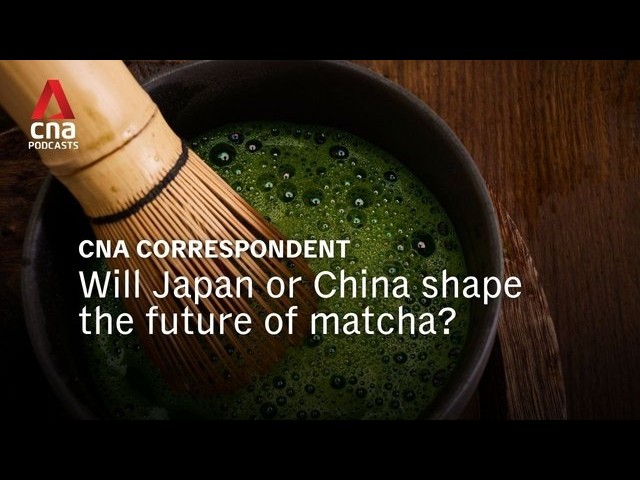
China dominates global matcha supply but can Japan protect its premium edge? | CNA Correspondent
CNA
4,806 views • 2 months ago Save 17 min 4 min read
Video Summary
The global explosion in matcha demand has fundamentally split the market between Japan's heritage-focused craftsmanship and China's industrial-scale production. While Japan struggles to meet demand due to land and labor constraints, it has successfully pivoted to a premium model, protecting its Uji brand by positioning its matcha as a ceremonial, high-end luxury. This scarcity-driven strategy has revitalized a declining domestic tea industry, even as retail prices for top-tier powder have surged.
Conversely, China has transformed from a newcomer into the world's largest matcha producer, accounting for 70% of global output. By leveraging government-subsidized technology and massive plantation capacity, China dominates the beverage-grade market—the mass-market segment that Japan cannot supply. While the two nations currently occupy different tiers, China’s aggressive R&D and long-term industrial goals suggest a future where it may eventually challenge Japan’s supremacy even in the premium sector.
Short Highlights
- Japan and China utilize distinct economic models to address the global matcha shortage:
- Japan focuses on scarcity, premium craftsmanship, and protecting the historic Uji brand.
- China prioritizes accessibility, industrial scale, and technological innovation to supply the mass market.
- The global market demands approximately 100,000 tons of matcha annually, a volume Japan cannot produce.
- China's production surge is driven by government-backed poverty alleviation programs and advanced, cost-effective machinery.
- The matcha boom has ironically increased the price of traditional sencha tea in Japan as farmers shift land use to tencha production.
- Industry experts remain divided on whether the current matcha boom will persist or if consumer trends will shift to other products like hojicha.
Related Video Summary
- Supply Chain Expert Answers Chinese Manufacturing Questions | Tech Support | WIRED
- Chip Rout Deepens After China's Surprise AI Breakthrough | Bloomberg Brief 7/17/2026
- Global Meet-Up #1 (Tokyo): Japan's Geo-Political Outlook
- Chip Rout Deepens; Trump Talks Up Iran Diplomacy | Bloomberg Brief 07/28/2026
Key Details
The Global Matcha Shortage [0:00]
- Global demand for matcha has reached approximately 100,000 tons annually, a massive volume that exceeds Japan's production capacity.
- To mitigate supply risks, some businesses have secured 12-month contracts with suppliers to lock in both volume and pricing.
Because the global shortage is very demanding now. So that's why we saw it before. So we saw it coming.
Japan’s Premium Pivot [2:00]
- Japan’s tea industry, which faced a 30% decline in production over 20 years, has been revitalized by the matcha boom.
- Retail prices for matcha in Japan have jumped three to five times, with some high-quality varieties selling for over 200 U.S. dollars for 30 grams.
The matcha boom boosted business opportunity. And that's even so in Uji in Kyoto, the home of matcha.
Protecting the Uji Legacy [4:00]
- Historic estates like Horishime-yen are focusing on soil and climate to maintain their premium status in the face of limited land and labor.
- Production processes for premium matcha involve precise steaming, drying, and the use of stone mills to maintain quality.
We should recall our roots and tell this to the world.
China’s Industrial Rise [6:00]
- China now accounts for 70% of global matcha production, centered largely in Guizhou province, which was once a poverty-stricken area.
- Local government support and lower-cost, domestically produced machinery have allowed Chinese producers to scale operations rapidly.
The vast majority of demand in the international market is for beverage-grade matcha.
Divergent Market Strategies [8:00]
- China positions its product in the mid-to-lower tier, targeting the massive demand for matcha lattes and desserts where a stronger tea flavor is preferred.
- Japan maintains its focus on the high-tier, ceremonial market, though some producers welcome the competition for the activity it brings to the broader industry.
Indeed, China isn't trying to replace Uji yet. They're supplying the mass market that Japan cannot need.
The Future of the Matcha Market [11:00]
- China has set long-term goals to grow its matcha industry into a 1.5 billion U.S. dollar business by 2030.
- Analysts question the longevity of the current matcha boom, noting that potential future trends like hojicha (roasted tea) could disrupt the market.
This is definitely something that will happen. You don't have to think twice.