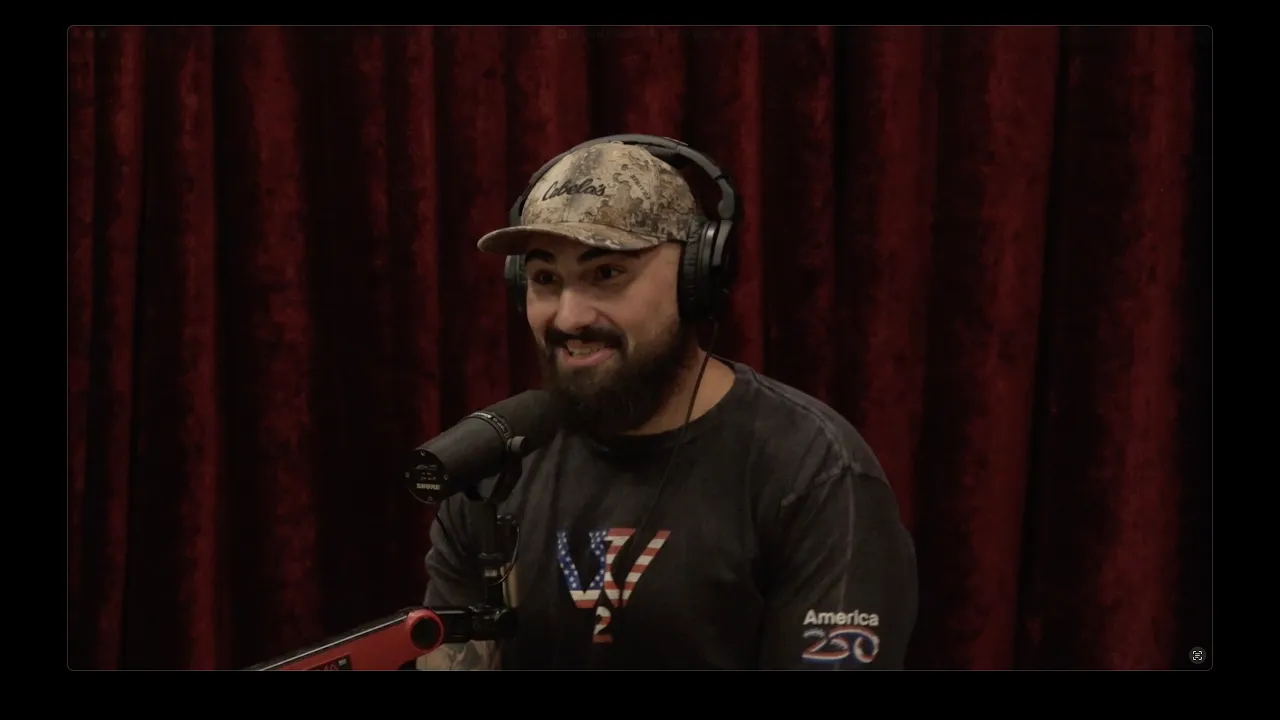
SURPRISE ATTACK? USS Lincoln TAKEN OUT, Iran EXPOSES Trump | Seyed M. Marandi
Danny Haiphong
190,420 views • 1 month ago Save 39 min 6 min read
Video Summary
The U.S. faces a "major crisis" aboard the USS George Washington, with sailors taking their lives, as the U.S. Navy grapples with a months-long blockade on Iran. Professor Mohamed Mirandi highlights a "contradictory posture" from Washington, pointing to conflicting statements on gas prices and CENTCOM's alleged preparations for strikes in Israel.
Mirandi asserts that "anything that comes out of Washington is probably a lie or deception," questioning the U.S. narrative on the Strait of Hormuz being open while simultaneously citing gas prices as a concern. He argues that sanctions against Iran have failed for decades and will continue to do so, despite intentions to "increase suffering." The professor details Iran's preparations for potential conflict, including building missiles and drones, expanding underground bases, and issuing warnings of retaliation against U.S. allies if civilian infrastructure is targeted. He also notes a significant reduction in ship traffic through the Strait of Hormuz, impacting global supply chains for crucial commodities beyond crude oil.
Short Highlights
- U.S. faces a "major crisis" on the USS George Washington with sailors taking their lives.
- The U.S. Navy's blockade on Iran has been ongoing for months.
- Conflicting statements emerge from Washington regarding gas prices and potential strikes.
- Iran is actively preparing for potential conflict, building military capabilities.
- The Strait of Hormuz is significantly less trafficked, impacting global supply chains.
- Sanctions against Iran are deemed ineffective and aimed at increasing suffering.
- Iran's regional influence and global power status are perceived as enhanced.
Key Details
U.S. Naval Crisis and Iran Blockade [0:00]
- The USS George Washington is replacing the USS Lincoln due to a "major crisis" involving sailors taking their lives.
- This occurs amidst a months-long U.S. Navy blockade on Iran.
"Now the USS Lincoln has been replaced by the USS George Washington or will be in about a week's time because of a major crisis on board, sailors taking their lives."
Contradictory U.S. Posture [0:26]
- U.S. official Scott Besson threatens increased economic measures against Iran.
- Simultaneously, J.D. Vance prioritizes U.S. gas prices, creating a perceived contradiction.
- CENTCOM's meetings in Israel and claims of preparing for new strikes are met with denials.
"Now, Scott Besson just said that Iran can expect economic measures against them to increase to degrees never before seen and measures never before seen."
Washington's Deception and Sanctions [1:12]
- Professor Mirandi states that "anything that comes out of Washington is probably a lie or deception."
- He questions the U.S. stance on the Strait of Hormuz being open while gas prices are a concern.
- Decades of sanctions against Iran are seen as attempts to "strangle the Iranian people" and are expected to fail.
"But after that, I think the second most important thing is to keep in mind that anything that comes out of Washington is probably a lie or deception."
Iran's Preparations and Retaliation Threats [3:25]
- Iran has received threatening messages from the U.S. through third parties.
- Iran is witnessing a buildup of U.S. capabilities and preparing for potential conflict.
- Preparations include building missiles and drones, expanding underground bases, and command and control capabilities.
- Iran has warned of relentless retaliation against cooperating countries if the U.S. targets civilian infrastructure.
"And the Iranians are preparing themselves as well. They're building missiles, drones, they're expanding their underground bases, they're expanding their command and control capabilities."
Strait of Hormuz and Global Shortages [5:35]
- The Strait of Hormuz is described as "more or less closed," with limited ship passage.
- Significant reduction in daily ship traffic compared to normal conditions (130-180 down to 7-17).
- Shortages are growing rapidly for helium, sulfur, fertilizers, refined products, petrochemicals, and LNG.
"But the number of ships that go through it every 24 hours is far less than what we would have under normal conditions before the war."
Iran's Resilience and U.S. Underestimation [8:22]
- Iran's long history, religious ideology, and wise leadership (Ayatollah Khamenei) contribute to its steadfastness.
- Iran has been preparing for war for over 30 years, developing indigenous technology, including advanced drones and missiles.
- The U.S. underestimated Iran's capabilities, believing its own propaganda about Iran's collapse.
"And the United States, of course, being the imperial and arrogant power, it underestimated Iran's capabilities."
Demise of U.S. Invincibility [11:39]
- The "aura of U.S. invincibility has been demolished" due to Iran's resistance.
- Incidents involving U.S. SEALs and bombing fishing boats are cited as examples of U.S. military failings.
- The crisis on the aircraft carrier is seen as another sign of U.S. weakness.
"And now, of course, the aura of U.S. invincibility has been demolished."
Doubts on U.S. and Israeli Narratives [14:04]
- The speaker expresses doubt about the official narrative of Trump's assassination attempt, suspecting Israeli intelligence involvement.
- Similar doubts are raised about the 9/11 attacks, influenced by a documentary and evolving views on U.S. foreign policy.
- The perceived over-reliance on Israeli intelligence is seen as a major weakness for the U.S.
"As soon as I heard the story, I was sure that this was Israeli intelligence. I had no doubt."
Iran's Enhanced Global Position [18:57]
- Iran's position has been "enhanced dramatically" and it is becoming a global power.
- In West Asia and North Africa, Iran is considered the most powerful country.
- The U.S. and the West are seen as declining, while Iran's status grows.
"And I think this will end very poorly for the Israeli regime. And Iran, as I said, Iran's status will be enhanced."
Iran's Role in BRICS and Global South [22:02]
- Iran's joining the New Development Bank of BRICS is a significant step in its financial and economic development.
- This is seen as a response to U.S. economic warfare and a move towards a non-Western global order.
- The U.S. is seen as strangling itself and the global economy with its actions against Iran.
"BRICS is going to become more important. I mean, it may be slow and there may be ups and downs and hiccups."
Regional Escalation and Resistance Fronts [25:48]
- Saudi Arabia is losing its aggression against Yemen.
- Iran has warned Syria against intervention in Lebanon on behalf of Israel and the U.S.
- Iran explicitly names Lebanon, Palestine, Yemen, and Iraq as fronts that must be resolved.
"And Iran is saying that if you act on behalf of Israel and Lebanon, we will we will deal with you."
Iran's Steadfastness and Support for Palestine [28:46]
- The Iranian people are steadfast in their support for Palestinians and oppose genocide.
- This stance is seen as intolerable by Western elites and the "Zionist regime."
- The importance of focusing on the suffering in Gaza and supporting the resistance fronts is emphasized.
"The Iranian people are guilty of standing up against genocide for the United States and for the Zionists. That's just intolerable."