Why Working Harder Isn't the Answer to Financial Freedom
The Rich Dad Channel
36,140 views • 7 days ago Save 20 min 4 min read
Video Summary
While saving money might seem like a safe bet, the rich understand that true financial freedom comes from "letting go" of conventional wisdom and embracing strategic financial moves. This approach contrasts sharply with the "monkey trap" mentality where people cling to jobs, savings, and retirement plans during crises, ultimately trapping themselves.
The core principle is to shift from working for income to having money work for you. This involves converting "earned income" from a paycheck into "passive income" from assets like real estate and businesses, and understanding the power of "good debt" to acquire these income-generating assets. The ultimate move is to release the ingrained fear of debt and the reliance on so-called experts, who often offer advice that benefits salespeople rather than investors.
Short Highlights
- The Monkey Trap: Conventional "safe" financial habits like saving and job security can become traps during crises.
- The Rich Let Go: Unlike the poor and middle class who cling to assets, the rich strategically release and acquire.
- Earned vs. Passive Income: The wealthy focus on generating passive and portfolio income, not just a paycheck.
- Good Debt vs. Bad Debt: Borrowing to acquire income-generating assets is key, not acquiring liabilities.
- Rejecting "Experts": True investors think for themselves, rather than blindly following salespeople disguised as advisors.
- The Power of Letting Go: The greatest obstacle is the psychological grip of fear and ingrained beliefs, not the difficulty of the moves themselves.
Key Details
The Monkey Trap Analogy [00:00:00]
- Saving money requires no financial intelligence and can be a trap during crises.
- Millions of people, like monkeys, cling to jobs, houses, and savings during downturns, mistaking these for safety.
- The things people hold for safety—job security, savings, houses, retirement plans—are often the real trap.
"The things you hold for safety are the trap."
The Rich vs. The Poor in Crisis [00:01:00]
- The rich open their hands during a crisis, while the poor and middle class close them.
- Being careful means knowing when to let go, not just holding on tighter.
- The hunter doesn't catch the monkey; the monkey's own hand, stuck in the trap, does.
"The rich know being careful means knowing when to let go."
Five Essential Money Moves [00:02:00]
- The speaker outlines five money moves crucial for navigating crises, emphasizing they are not about stock picking or market timing.
- These moves are all variations of the same core action: opening your hand.
- The difficulty lies not in the action itself, but in overcoming the ingrained habit of holding on.
"All five moves are the same move, made five different ways."
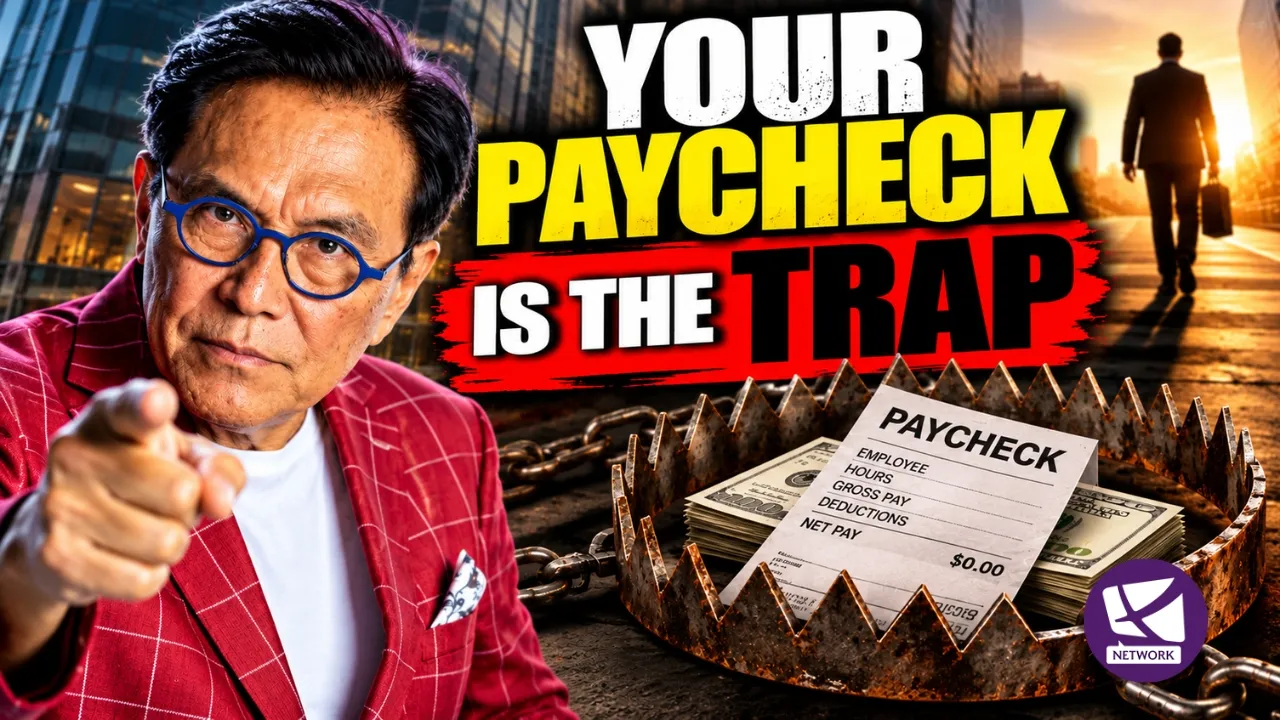
The Trap of Earned Income [00:05:00]
- Most people work for "earned income" (a paycheck), which is highly taxed, time-consuming, and offers little leverage.
- Rich Dad called earned income "just over broke," meaning you work hard but end up back where you started.
- The paycheck is the "fruit in the coconut," the thing people hold so tightly they can't free their hand.
"The government taxes the income you work hard for more than the income your money works hard for."
The Bank's Strategy: Borrowing [00:07:00]
- Banks pay savers a tiny interest rate while lending that money out at much higher rates.
- Banks get rich by borrowing money (from savers) and putting it to work, not by saving.
- This highlights that the bank is a borrower, not a saver.
"The bank is not a saver. The bank is a borrower."
Embracing "Good Debt" [00:08:00]
- Fear of debt keeps most people poor; the rich learn to borrow wisely.
- "Bad debt" is borrowing for liabilities (cars, vacations) that take money out of your pocket.
- "Good debt" is borrowing to buy assets (rental properties, businesses) that put money into your pocket.
"The rich borrow to buy assets. Things that put money in your pocket."
Letting Go of Experts and Stories [00:13:00]
- Financial advice from brokers and planners is often from salespeople, not investors who have achieved wealth themselves.
- The experts' advice during a crash (save, get out of debt, invest in mutual funds) contrasts with the rich who were buying assets.
- The tightest grip is the fear of letting go of the "story"—the ingrained beliefs about safety, jobs, savings, and experts—which feels like losing a part of oneself.
"Parrots repeat. Investors think."
The Real Goal: Planting Trees [00:16:00]
- The monkey holds onto the fruit (paycheck, savings) out of fear, while the rich plant trees (invest in income-generating assets).
- Letting go is difficult because it means admitting what you were taught might be wrong.
- The rich achieve freedom by letting go of limiting beliefs and fear, while others remain trapped by their perceived safety.
"The poor and middle class spend their lives protecting the fruit. The rich spend their lives planting trees."