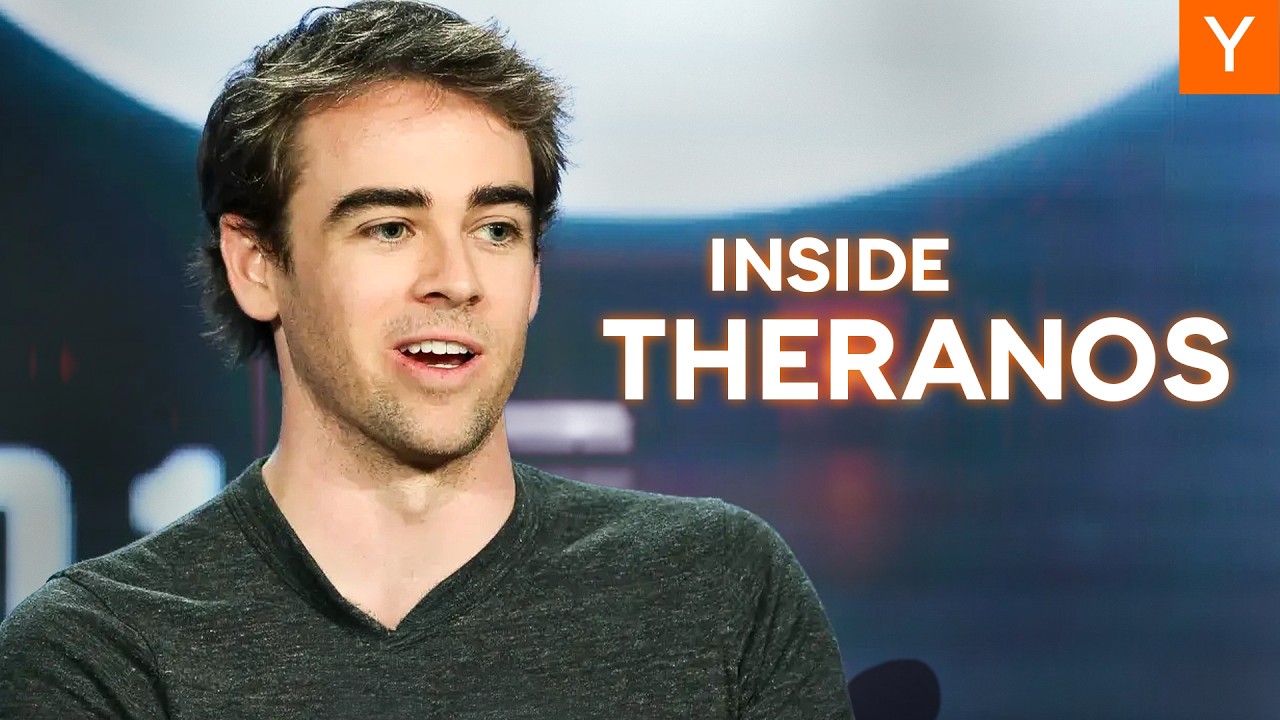
Inside Theranos with ex-Employee Tyler Shultz
Y Combinator
27,525 views • 4 days ago Save 168 min 8 min read
Video Summary
Tyler Shultz, grandson of former Secretary of State George Shultz, details his harrowing experience as a whistleblower at Theranos, where he exposed a culture of fear, gaslighting, and systemic medical fraud. Despite his initial admiration for Elizabeth Holmes's vision of revolutionary blood testing, Shultz soon discovered that the company was faking results, using third-party equipment, and intimidating employees into silence. His decision to speak out triggered a brutal campaign of legal threats and surveillance that nearly ruined him financially and mentally.
Shultz’s testimony highlights the danger of unchecked charisma and the failure of corporate governance, as he fought to hold the company accountable while his own family remained under Holmes's spell. His eventual decision to go on the record with the Wall Street Journal was a pivotal moment that forced the collapse of the fraudulent enterprise, proving that even a young, inexperienced employee can dismantle a multi-billion dollar deception when armed with the truth.
Short Highlights
- The Theranos technology was a total fabrication that failed to perform basic diagnostic tests accurately.
- Management, specifically Elizabeth Holmes and Sunny Balwani, created a culture of fear, intimidation, and constant surveillance to suppress dissent.
- The board of directors, including George Shultz, was heavily manipulated by Holmes and remained largely blind to the fraud.
- Shultz spent nearly $500,000 in legal fees to defend himself against aggressive litigation tactics from David Boies's law firm.
- The company used third-party equipment from Siemens and Roche to run patient samples while falsely claiming they were being tested on Theranos devices.
- Whistleblowers face immense personal and professional risks, but protected government channels and contingency-based legal counsel are vital resources.
- Building a healthy startup culture requires intentionality, defined core values, and the courage to address ethical concerns early.
Key Details
The Illusion of Innovation [0:02:40]
- Tyler Shultz was recruited to Theranos after meeting Elizabeth Holmes, who presented a vision of revolutionary, portable blood testing technology.
- Shultz was initially captivated by Holmes's charisma and the mission, leading him to switch his major to biology at her suggestion.
she was the type of person where as soon as she starts speaking the rest of the room would just go silent like she had this way of just like locking in an audience
The Culture of Silos [0:07:30]
- Shultz realized during his internship that employees were heavily siloed, with locked doors and overreaching NDAs justified by fears of corporate espionage.
- Despite working in research, he noticed that top talent was not being retained, a red flag he initially ignored.
you shouldn't come back here you should go somewhere else and learn how to do real science
The Launch and the Lies [0:11:30]
- On his first day as a full-time employee, Shultz learned that the product launched at Walgreens was not actually running tests on Theranos devices.
- The company was secretly using third-party equipment from companies like Siemens and Roche to process patient samples.
we have zero tests that have been validated on the theranos platform but we weren't actually using the product for anything
The Normandy Lab [0:15:30]
- The lab housing the Theranos devices was ironically named "Normandy," symbolizing a "storming of the beaches" of healthcare.
- Sunny Balwani managed the lab through intimidation, bullying employees to run patient samples despite clear quality control failures.
i would describe him as having like the personality of gravel
The Feedback Loop of Fear [0:18:45]
- Holmes and Balwani intentionally cultivated a culture where questioning leadership resulted in termination and, frequently, legal threats.
- Employees were so paralyzed by fear that some would quit without notice, moving to different states to escape the company's reach.
we will sue you too if you get in our way we will destroy your life if you try to to come up against us
The Syphilis Validation Failure [0:26:30]
- A validation study for a syphilis test showed dangerously low sensitivity and specificity, yet management proceeded to test real patients.
- Shultz felt physically ill knowing that patients were receiving incorrect medical information from a non-functional test.
it's not even an ethics question because like to me ethics is when you have competing values and you have to decide which value is going to win out yes this was like it's not an ethical question it's clear right versus wrong
The Email Confrontation [0:29:45]
- After being ignored by management, Shultz documented his concerns in an email to Holmes, which she forwarded to Balwani.
- Balwani responded with a blistering, aggressive attack, accusing Shultz of ignorance and threatening him.
if i had any other last name that i would have already been held accountable in the strongest way
The Family Trust Fund [0:35:15]
- Shultz discovered that his grandfather, George Shultz, had set up a trust fund for his great-grandchildren consisting entirely of Theranos stock.
- This created a massive, blinding financial incentive that made it nearly impossible for his grandfather to objectively evaluate the fraud.
that's just a blinding amount of money to somebody like especially to someone on a board where the a board member is supposed to be looking after the interests of the shareholders
The Military Marketing Myth [0:46:15]
- Holmes claimed the devices were being used on battlefields in Afghanistan, a claim Shultz knew was false.
- This deception was bolstered by fake marketing materials attributed to General Jim Mattis, which fooled board members and investors.
we have been using theranos for two years with incredible success
The Wall Street Journal Reach Out [0:56:00]
- Shultz was contacted by a reporter from the Wall Street Journal who had a history of exposing medicare fraud.
- Despite his family's warnings, Shultz decided to talk on background to help guide the reporter's investigation.
i just couldn't get that idea out of my head i'd let like a month pass and i didn't respond to him but in my research i had learned that he had actually previously won a pulitzer prize
The Ambush at the Grandfather's House [1:06:00]
- Shultz was lured to his grandfather's house under the pretense of signing a simple NDA, only to be confronted by two litigators from David Boies's firm.
- The lawyers attempted to bully him into revealing the names of other sources and retracting his statements.
my grandson is not a rat
The Legal War of Attrition [1:15:30]
- Shultz was subjected to a war of attrition, with legal threats and temporary restraining orders used to exhaust him.
- He spent nearly $500,000 on legal fees and was followed by private investigators hired by Theranos.
they were trying to kill the wall street journal and pretty much everything you can invent in your head like the types of things they were they would try to get me to do or say is what the affidavits were
The Lowest Point [1:22:30]
- Shultz isolated himself from friends and family, fearing that any communication could be used against him as evidence.
- He lived in constant terror, even sleeping with a knife, after a lawyer's briefcase containing his documents was stolen.
i was so afraid that someone was going to send me a text or something and say oh i remember you saying xyz back in 2013
Going on the Record [1:26:00]
- After months of pressure, Shultz decided to go on the record with the Wall Street Journal, despite his lawyers' and parents' desperate pleas.
- His testimony was instrumental in the publication of the investigative series that exposed the company.
fraud is not a trade secret
Vindication [1:29:00]
- The articles triggered inspections by CMS and the FDA, confirming that Theranos's practices put patient health in immediate jeopardy.
- Shultz’s claims were proven true, and the company's internal documents confirmed the very failures he had reported.
i do not think that it was anything like this i just can't imagine apple being able to accomplish the things they did running an organization the way that this organization was run which was filled with threats bullying and lies and gaslighting
Lessons for the Future [1:33:00]
- Shultz emphasizes that whistleblowers should utilize government programs like the SEC's, which can provide legal protection and financial rewards.
- He urges founders to build cultures of transparency and to "flex the ethical muscle" by taking small issues seriously before they become systemic frauds.
if you have those core values then it's something to hold yourself accountable to and you can see when you're starting to make decisions that don't align with those core values