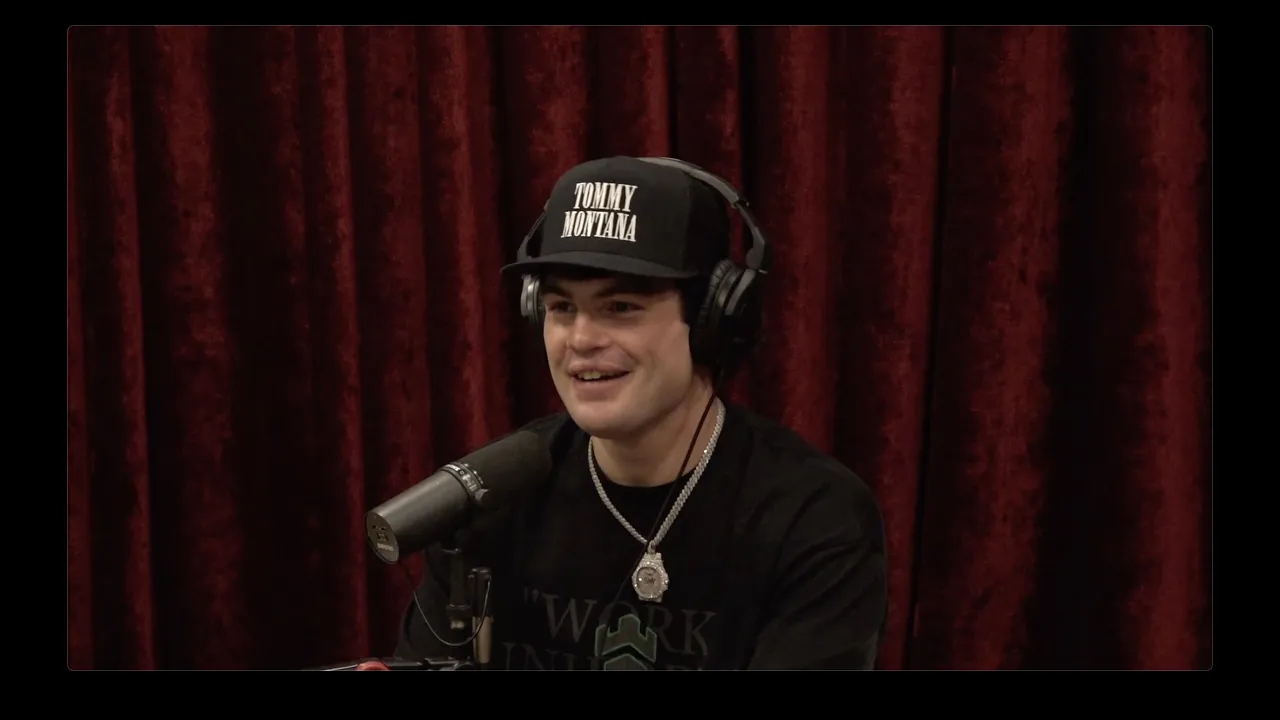
JRE MMA Show #189 with Tommy McMillen
PowerfulJRE
20,980 views • 18 hours ago Save 133 min 9 min read
Video Summary
The speaker discusses the chaotic and entertaining fighting style of "Hokkit," highlighting his recent performance against Cyril Gane as one of the most exciting heavyweight fights in UFC history. He also delves into his own journey from a small Montana town to MMA, emphasizing the importance of mental fortitude, hard work, and overcoming adversity. The conversation touches on the challenges of weight cutting, the potential benefits of peptides, and the mental aspect of fighting, drawing parallels to his own career and the mindset of other fighters.
The discussion then shifts to the fighter's personal struggles with partying and substance use, including a recent overdose incident. He reflects on how MMA has provided him with purpose and structure, despite his wild lifestyle. The conversation also explores the business side of fighting, the importance of brand building, and the potential for future success, while acknowledging the need for balance and better decision-making.
Short Highlights
- Hokkit's fighting style is characterized by chaos and an insane pace, making him a unique and entertaining fighter.
- The speaker's journey from Montana to MMA was driven by a desire for financial freedom and a belief in his UFC potential.
- Mental fortitude and an "unbeatable mind" are crucial for success in MMA, enabling fighters to overcome adversity.
- The speaker has faced significant setbacks, including injuries and the impact of COVID-19, but used them to fortify his mind and career.
- Balancing a wild lifestyle with the demands of professional fighting is a constant challenge, but MMA provides purpose.
- The speaker acknowledges the dangers of substance use and the need for better decision-making, influenced by his girlfriend and the near-fatal overdose incident.
- The future is bright for the speaker, with opportunities in business and a desire to become one of the most entertaining fighters in UFC history.
Key Details
The "Hokkit" Phenomenon [00:00:00]
- "Hokkit's" fighting style is described as dragging opponents into "pure madness" with an insane pace.
- His recent fight against Cyril Gane is considered one of the most entertaining heavyweight fights in UFC history.
- The speaker expresses admiration for Hokkit's ability to make Gane fight in a "slobber knocker" style.
"what is that like his i think it's like i think he's got like three fights now this year that's in like the top 15 like ranked fights on the verdict mma or something like that"
Montana Roots and Early Motivations [00:06:50]
- The speaker's father was a plumber and semi-pro boxer, influencing the family's involvement in fighting.
- Witnessing boxing on TV as a child sparked a desire for financial freedom and a belief that fighting was the path to achieve it.
- The speaker's father opened one of the first MMA gyms in Great Falls, Montana, providing an early introduction to the sport.
"i saw that on tv and i was like oh like you know i always wanted to make like money and just kind of wanted bigger things in my life since a little kid"
The Influence of Tim Welch and Sug [00:14:00]
- The speaker moved to Arizona to train under Tim Welch and Sug, who paved the way for other Montana fighters.
- Tim Welch is described as a smart and excellent analyst of MMA, with a profound understanding of fighters.
- Moving to Arizona was a pivotal decision, following the path of Sug, who was getting significantly better.
"i always followed his career like because of that like just the montana mma seems so small it still is to this day"
Early Career and the "Contender Series" Moment [00:20:30]
- The speaker moved in with Sug right after Sug won his "Contender Series" fight, with Snoop Dogg on commentary.
- Sug's knockout victory was a highlight-reel moment that significantly boosted his career.
- Sug fought without a full fight camp for that bout, possibly due to a concussion.
"i don't think snoop did very many of those no i think i think that might have been like the only one he did"
Diet, Discipline, and Martial Arts Philosophy [00:27:00]
- The speaker initially had a poor diet, eating "a block of cheese and fucking a bag of sour patch kids."
- Sug, a vegan at the time, introduced the speaker to healthier eating and discipline.
- Learning to eat healthy and be disciplined transformed the speaker's performance and camps.
"i had no like i was eating toaster i had toaster strudels in his like freezer just like just the worst diet ever"
The Mental Game in Fighting [00:36:00]
- The mind is considered the most important weapon in fighting, with some fighters unable to perform under pressure.
- The speaker emphasizes the "dog mentality" and the ability to rise to the occasion, as seen in Hokkit's fights.
- Mental preparation and accepting the risks are crucial for success, especially when facing larger, more powerful opponents.
"that that is the mind that's 100 because he made a choice like a crazy choice to do something he absolutely nobody wants to wade in on cyril gone"
Adversity and Injury [00:48:00]
- The speaker has faced significant injuries, including a pinched sciatic nerve that lasted over two years.
- He found relief through stretching hip flexors and utilizing a reverse hyper machine and Teeter Deck for decompression.
- The experience of overcoming injuries has made him grateful for his health and more resilient.
"i had a pinch sciatic nerve in my back and so anytime i would do any kind of anything at all honestly i couldn't really do much but sit stationary and like punch"
The Power of Peptides and Recovery [00:57:00]
- The speaker has used peptides, like the "wolverine stack" (BPC-157 and TB-500), for injury recovery, noting significant positive effects.
- He believes peptides should be legal in the UFC to aid in healing and recovery, not considered cheating.
- Red light therapy and cold plunges are also part of his recovery routine.
"i got on uh some peptides to like to like fix it and dude that that i never felt so good in my life"
Great Falls, Montana: A "Meth Capital" and "Where Dreams Go to Die" [01:08:00]
- Great Falls, Montana, is described as a "meth capital" with limited opportunities, contributing to the speaker's desire to leave.
- The town's lack of hope and pervasive partying culture influenced his own habits.
- MMA provided a purpose and a way to escape the limitations of his hometown.
"it's like where dreams go to die no one's got any kind of sense of like direction and wanting to like do big things"
The Overdose Incident and Wake-Up Call [01:15:00]
- The speaker recounts a near-fatal overdose incident at a club due to mixing substances.
- He received Narcan and hospitalization, waking up hours later.
- The incident was a wake-up call, but he doesn't believe he'll stop partying entirely, focusing instead on safer practices.
"my body like gave out and i kind of started to like almost choke on like i was like kind of like like stuff was coming out of my mouth"
The Role of a "Chaperone" and a Supportive Girlfriend [01:25:00]
- The speaker acknowledges the need for a "chaperone" or someone to help monitor his decisions when partying.
- His girlfriend, who doesn't do drugs, is a positive influence, encouraging better choices.
- The incident was kept quiet initially but later leaked to TMZ, causing concern for his parents.
"i mean i will say right now i got this uh i got a girlfriend in my life she doesn't do drugs and it's probably the best influence in my life right now"
Building a Brand and Business Ventures [01:35:00]
- The speaker is working on building his brand and exploring business opportunities, including a peptide and supplement company.
- He recognizes the importance of diversifying his income streams, especially given the risk of injury.
- He acknowledges the need to handle business outside of fighting, which he previously avoided.
"i'm signing with monster now and i was talking to hans i thought it'd be cool to kind of like mat out half the garage"
The "Tommy Gun" Pose and Hokkit's Marketability [01:45:00]
- The speaker discusses Hokkit's "Tommy Gun" pose, which some interpret as a "fentanyl lean."
- He believes Hokkit is entertaining and understands the business of fighting, attracting casual fans.
- Hokkit's persona, while controversial, is effective in generating attention and making fights more marketable.
"i just like the guy i think he's entertaining i think he understands the business better than most people"
Talking Shit and Emotional Control in Fights [01:55:00]
- The speaker enjoys "talking shit" as part of the fight build-up, seeing it as a natural and entertaining aspect.
- He notes that some opponents become too emotional, which can be a disadvantage.
- The speaker aims to remain calm and focused, viewing fights as business transactions rather than personal vendettas.
"i just noticed that last fight he looked at me and he was pissed just like really like me mugging me i'm like bro like you're looking at me he's not gonna do anything"
The Importance of Work Ethic and Overcoming Setbacks [02:05:00]
- The speaker emphasizes his work ethic, which allowed him to win state wrestling titles despite not being the most skilled.
- He highlights the impact of his upbringing, with less structured guidance, forcing him to develop self-discipline.
- Adversity, including COVID-19 and injuries, has forged his mental toughness and resilience.
"i saw off on jv and all year i told myself i'm gonna win state like i need to win state my like dad was only one that believed me"
The Role of MMA in Saving His Life [02:20:00]
- The speaker believes MMA has saved his life, providing purpose and structure.
- He feels a debt to the sport for the blessings and opportunities it has brought him.
- He acknowledges the need to balance his wild lifestyle with his career and personal growth.
"i don't think i'd be alive today to be honest if i didn't fight you know fighting's definitely got me to where where i'm at"
Future Fights and Strategic Career Progression [02:25:00]
- The speaker is focused on getting back into fighting shape and is currently sober from alcohol.
- He plans to call out a top 15 opponent after a few more fights to ensure he is fully prepared for a title run.
- He recognizes the importance of development and avoiding being "fast-tracked" to a title shot before he's ready.
"i almost just want to once you get to the top 15 you can't be as active you know there's only so far you can go to the top"