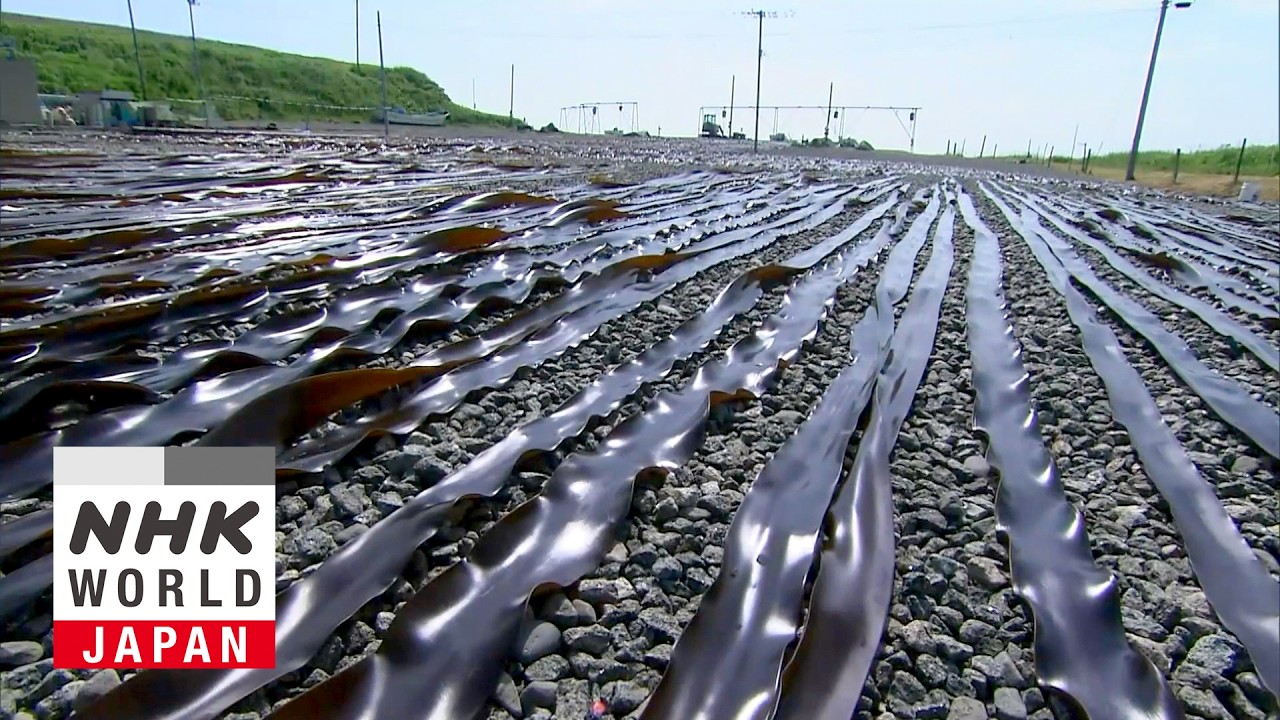
Seaweed - Japanology Plus
NHK WORLD-JAPAN
46,800 views • 1 month ago Save 24 min 4 min read
Video Summary
Seaweed, long a staple in Japanese cuisine, is emerging as a powerful superfood with diverse applications beyond food, including environmental solutions and bioplastics.
Experts highlight Japan's vast variety of seaweed, with around 1,500 types, of which 50-60 are edible. Innovative chefs are transforming seaweed into novel dishes, from pasta and grilled onigiri to elaborate parfaits, showcasing its versatility and nutritional benefits. Beyond its culinary appeal, seaweed is being harnessed for its environmental potential. Researchers are developing methods to generate electricity from acidic seaweed and create bioplastics from edible but unused parts of kombu. Furthermore, seaweed cultivation is being expanded to combat global warming due to its high CO2 absorption capacity, with new vertical farming techniques dramatically increasing yields. Even a kombu bath and beauty treatments are being offered, demonstrating the multifaceted role seaweed plays in Japanese culture and its potential to address future challenges.
Short Highlights
- Seaweed is a nutrient-rich superfood with at least 1,500 varieties in Japan, 50-60 of which are edible.
- Innovative Japanese cuisine features seaweed in dishes like pasta, grilled onigiri, and parfaits.
- Seaweed is being explored for environmental benefits, including CO2 absorption and electricity generation.
- Bioplastics are being developed from seaweed, repurposing waste parts of kombu.
- Cultivation methods are evolving to boost seaweed production for climate change mitigation.
- Seaweed is used in unique applications like kombu baths and beauty treatments.
Key Details
Seaweed's Culinary and Nutritional Value [00:00:00]
- Japan boasts approximately 1,500 types of seaweed, with 50 to 60 varieties commonly consumed.
- Seaweed is packed with essential minerals like iron, magnesium, and calcium, along with vitamins.
- Common edible seaweeds include nori, kombu, wakame, hijiki, and mozuku.
"Seaweed is packed with all sorts of minerals, like iron, magnesium, calcium, as well as plenty of vitamins."
Innovative Seaweed Dishes [00:01:45]
- A cafe in Minamisoma, Miyagi Prefecture, serves innovative seaweed-based dishes.
- The menu includes garlic and oil pasta with wakame and mekabu, utilizing different parts of the wakame plant.
- Grilled onigiri are packed with wakame, offering a crunchy texture and toasted flavor.
- A popular seaweed parfait features white chocolate with aonori flakes, gelato with aonori, ice cream with mushio seaweed salt, and tosaka nori.
"The flavor of the seaweed, especially after it's been baked with the rice, just really goes together very well."
Historical Significance of Seaweed in Japan [00:07:45]
- Seaweed became widely recognized as food in Japan around the 8th century, with wakame mentioned in early records.
- During the 13th century, seaweed became a vital part of Buddhist vegetarian cuisine in temples.
- By the 17th century, seaweed became accessible to the general population due to advancements in sea shipping routes.
- In the early 18th century, sheet nori production, inspired by papermaking, led to the popularization of rolled sushi.
"For the upper class living in the capital, seaweeds brought from distant shores were the ultimate luxury."
Seaweed for Power and Bioplastics [00:10:15]
- At Mutsu Technical High School, students developed a power-generating device using highly acidic keurushigusa seaweed.
- The device utilizes a chemical reaction involving sulfate ions, copper, and zinc to generate electricity.
- Researchers at Iwate University are producing bioplastics (PHAs) by feeding seaweed, specifically unused kombu parts, to microorganisms.
- This process repurposes waste seaweed into a durable plastic film, offering an alternative to petroleum-based plastics.
"Creating plastic using biological materials and microorganisms is a manufacturing method that I believe will become an increasingly valuable asset for humanity."
Combating Global Warming with Seaweed [00:14:45]
- Seaweed and marine ecosystems absorb significant amounts of CO2, storing carbon on the ocean floor at a faster rate than land-based ecosystems.
- Despite this potential, seaweed harvests have declined due to rising sea temperatures and other factors.
- Efforts are underway to expand seaweed populations through innovative vertical cultivation methods for kombu, dramatically increasing yields in the same area.
- This expansion aims to capture more carbon and secure a sustainable food source.
"By increasing seaweed, we can capture more carbon and also secure a sustainable source of food. It's two birds with one stone."
Seaweed Farming and Cultural Experiences [00:17:00]
- Experimental seaweed farming of Matsumo, a premium seaweed rich in nutrients, is being conducted using land-based methods.
- This method offers efficiency and avoids the grit found in naturally harvested seaweed.
- Hakodate, Hokkaido, offers a kombu tour that includes harvesting demonstrations, a full-course meal, and unique experiences like a kombu bath and beauty treatments.
- The kombu bath utilizes fukoidan, believed to promote skin regeneration and rich in marine minerals.
"It kind of slips over the skin. It's a very pleasant feel."