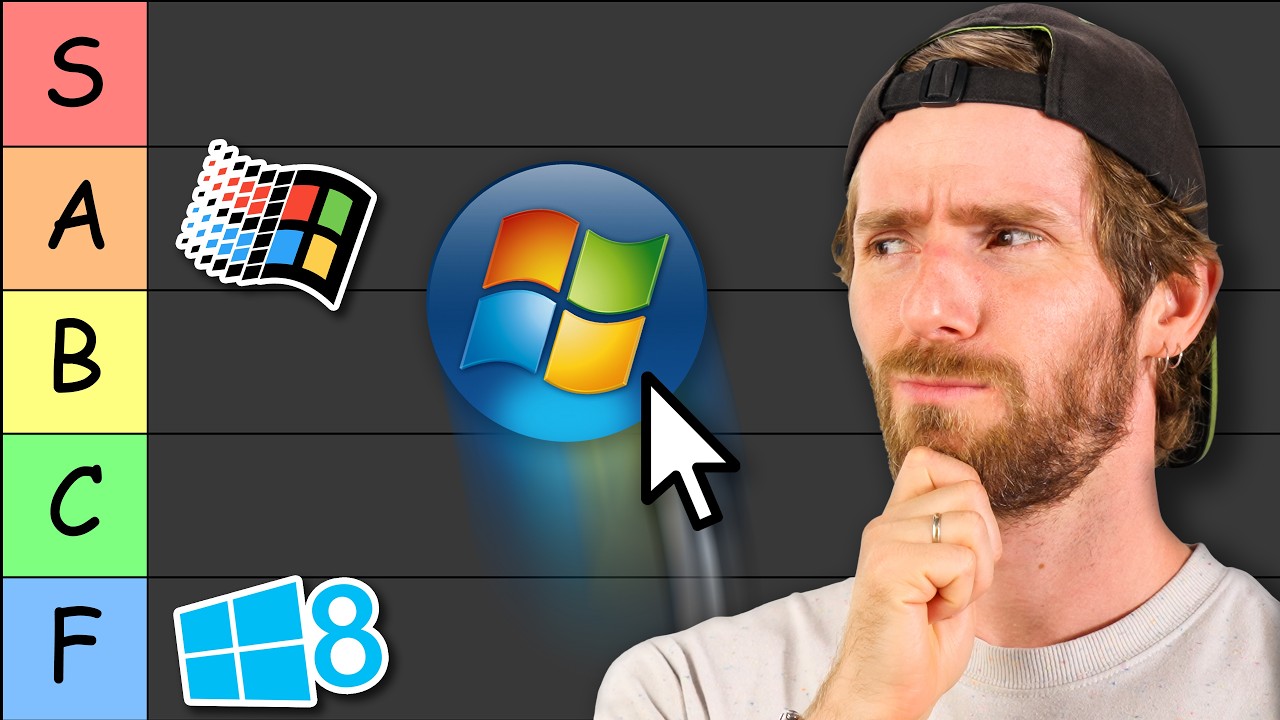
Windows has driven me to tears....
Linus Tech Tips
165,239 views • yesterday Save 20 min 8 min read
Video Summary
This video ranks every PC version of Windows released for consumers in North America over the past 40 years, from the rudimentary Windows 1.01 to the latest Windows 11. The ranking process highlights significant shifts in Microsoft's operating system, including the move away from DOS with Windows 95, the unification of consumer and NT lines in Windows XP, the controversial interface changes in Windows 8, and the aggressive upgrade tactics of Windows 10. Ultimately, Windows 7 emerges as a beloved favorite, while Windows Me and Windows 8 are deemed significant missteps. The video concludes by acknowledging the growing viability of alternative operating systems like Linux and macOS due to perceived shortcomings in Windows 11, particularly its aggressive AI integration and broken search functionality.
Short Highlights
- Windows 7: Praised for refining Windows Vista, it's considered a rock-solid platform with fantastic hardware support and a significant market share until Windows 11.
- Windows XP: Marked the unification of consumer and NT lines, doing away with DOS and bringing a redesigned interface, improved performance, and stability, making it an S-tier OS.
- Windows 98 (especially SE): Seen as a tune-up to Windows 95, it embedded internet features, improved hardware support, and had a long lifespan, earning an A.
- Windows 10: Introduced a new Start menu, a Chromium-based Edge browser, and DirectX 12, but was criticized for aggressive upgrade tactics and extensive data harvesting.
- Windows 95: A significant leap forward, introducing enduring interface paradigms like the Start menu, Recycle Bin, and Windows Explorer, earning a B.
- Windows Vista: Introduced important security and feature changes like UAC and a new compositing window manager, but was largely ignored due to its predecessor's popularity.
- Windows 11: Criticized for aggressive AI integration, broken search functionality, and a feeling that users are merely generating shareholder value.
Key Details
The Humble Beginnings: Windows 1.01 and 2 [00:00:00]
- Released 40 years ago, Windows 1.01 featured early elements like top bar controls and menus, with bundled apps like Notepad and Paint.
- It included a game called Reversi, though its usefulness by today's standards is considered minimal.
- Windows 2 offered similar functionality with enhancements for newer processors.
"we've come a long way baby"
The Dawn of Usability: Windows 3 and 3.1 [00:02:00]
- Windows 3.1 began to feel usable for productivity with support for TrueType fonts, multimedia improvements, and games like Minesweeper and Solitaire.
- It was still built on DOS but did a decent job of running DOS applications within the GUI, making computing more accessible.
- This version introduced the Windows Registry, which continues to be a point of contention.
"this i know how to play"
Early Networking and Gaming: Windows for Workgroups [00:03:30]
- Windows for Workgroups introduced simple file and printer sharing.
- It also bundled the game Hearts.
- Supporting more complex games remained a challenge, with many gamers opting to boot back into DOS for better performance and stability.
"microsoft tried to support game developers with the win g api which did enable some bangers shout out sim tower"
The Spectacle of Windows 95 [00:05:00]
- Windows 95 was launched with a massive marketing campaign, including a deal with the Rolling Stones and a sitcom starring Jennifer Aniston and Matthew Perry.
- It introduced enduring interface paradigms like My Computer, the Recycle Bin, Windows Explorer, and the Start button.
- Features like USB support, advanced graphics card expansion ports, and the FAT32 file system were not present at launch but added later.
"my computer the recycle bin windows explorer auto run for cds the device manager long file names direct x and of course yes the button you press to turn your computer off the start button"
Internet Integration: Windows 98 [00:07:30]
- Windows 98 embedded internet features like Internet Explorer, Outlook Express, and NetMeeting.
- It featured a new version of Explorer that resembled a web browser, with an address bar and forward/back buttons.
- The Windows Driver Model led to massive improvements in hardware support, especially for audio and USB devices.
"this newfangled internet stuff was embedded everywhere"
The Unstable Millennium: Windows Me [00:10:00]
- Windows Me was an attempt to unify the consumer and NT lines but was largely seen as an unstable, unreliable, and unnecessary release.
- It introduced System Restore, System File Protection, and automatic Windows updates.
- Despite some redeeming qualities, it is widely considered a dumpster fire and received a D-minus rating.
"it had redeeming qualities it introduced system restore system file protection and automatic windows updates"
The Unification Achieved: Windows XP [00:11:30]
- Windows XP finally unified the consumer and NT lines, doing away with DOS and introducing a redesigned Start menu and ClearType for improved text readability.
- It featured a colorful new visual style, improved multi-user management, and better performance.
- XP was praised for its stability, ease of use, and improved hardware support, making it an S-tier operating system.
"xp did away once and for all with dos under the hood and brought us a redesigned two column start menu that let us pin our favorite and most frequently used apps and docs"
The Overlooked Vista and Beloved Seven [00:15:00]
- Windows Vista, despite introducing important security features like UAC and a new compositing window manager, was largely ignored due to its predecessor's popularity and hardware demands.
- Windows 7 took the unappreciated Vista and refined it into one of Microsoft's most beloved products, improving multi-core performance, speeding up boot times, and refining the Aero Glass interface.
- Windows 7 is considered an S-tier operating system for its stability, hardware support, and significant market share.
"seven refined multi-core performance sped up boot improved remote desktop protocol let us snap our pretty aero glass windows into place"
The Controversial Windows 8 and 8.1 [00:18:00]
- Windows 8 introduced a touch-based UI and Metro design language, removing the Start button and alienating many users, leading to a free downgrade program.
- Windows 8.1 corrected many of these issues, bringing back a proper Start menu and enabling users to default to the desktop view.
- Despite improvements, Windows 8.1 still had a divide between Metro apps and the desktop interface and saw the start of Microsoft's obsession with cloud data.
"oh all it needed was a little percussive maintenance"
Aggressive Tactics and Data Harvesting: Windows 10 [00:21:00]
- Windows 10 was pushed aggressively through free upgrades, sometimes using dark patterns and sneakily installing itself.
- It introduced a new Start menu, allowed Metro apps to run in windows, and replaced Internet Explorer with the Chromium-based Edge browser.
- Concerns were raised about the unprecedented amount of user data being sent back to Microsoft, with updates often resetting privacy settings.
"windows was no longer a product that users bought but rather a tool to harvest valuable data turning the user into the product"
AI Overload and Broken Search: Windows 11 [00:24:00]
- Windows 11 is criticized for its aggressive integration of poorly implemented AI tools and a broken search function heavily influenced by online results.
- The video suggests that Microsoft's actions show a view of users primarily as a means to generate shareholder value.
- Viable alternatives like Linux and macOS are presented as options for users dissatisfied with Windows 11's direction.
"microsoft has been caught in lies about the security of these tools multiple times and in spite of the many claims that they are listening to the user and will do better only part of that statement has proven true so far"
The Sponsor Break: Cape [00:27:00]
- Cape is a security-focused cellular carrier offering unlimited calls, texts, and data.
- Unique security features include signaling attack protection, identifier rotation, and the ability to delete call logs.
- Each plan includes two additional encrypted phone numbers, useful for 2FA.
"cape however can verify that your device location matches the network it wants to connect to and if things end up looking a little bit weird cape straight up blocks that connection"
Final Thoughts and Alternatives [00:29:00]
- The video concludes that a return to the glory days of S or A-tier Windows seems unlikely.
- Desktop apps are less important now, and many users could be fine with operating systems that can run a browser, such as Linux.
- Some die-hard Windows users have switched to Mac due to Windows 11's perceived issues.
"i don't think that we're going to return to the glory days of s or even a tier windows but i do have some good news viable options are out there for starters"