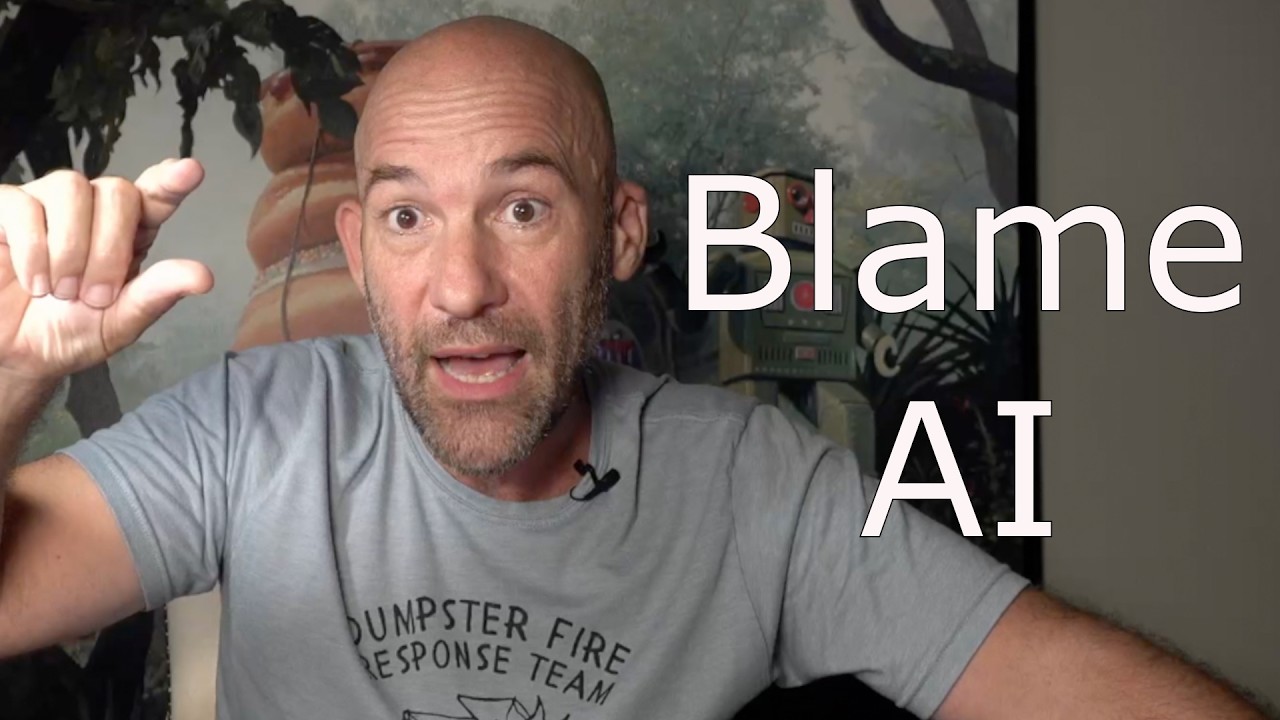
Visa 7% Layoff of 2600 Employees - AI Isn't Causing Job Loss
Eli the Computer Guy
5,311 views • Save 14 min (4 min read) • yesterday
Video Summary
Visa is implementing a significant workforce reduction, cutting approximately 7% of its employees, equating to about 2,600 positions, primarily in technology and product operations. This move is framed as an "efficiency push" to streamline operations and invest in growth areas, with AI cited as a tool to accelerate this evolution and shape work processes. The company aims to optimize its workforce to better capture future opportunities and lead in commerce transformation. This action reflects a broader trend in the financial and technology sectors, where companies are increasingly leveraging AI for automation and cost control after years of rapid hiring, essentially unwinding past expansion decisions.
Short Highlights
- Visa is laying off approximately 2,600 employees, about 7% of its workforce.
- The cuts are primarily in technology and product operations.
- The company cites an "efficiency push" and AI's role in reshaping work.
- This reflects a broader industry trend of cost control after rapid hiring.
Key Details
Visa's Efficiency Push and Workforce Reduction [0:00]
- Visa is cutting 7% of its employees, around 2,600 positions, mainly in technology and product operations.
- This is described as an "efficiency push" to streamline the company and invest in growth areas.
- AI is mentioned as a tool to accelerate this evolution and change how work is done.
"Visa is cutting 7% of employees in efficiency push as AI reshapes work."
The Concept of Efficiency in Business [0:00]
- The discussion highlights a perceived decline in the focus on efficiency in the tech industry over the past 10-15 years.
- Historically, efficiency involved maximizing employee value through training, better systems, or hiring better talent.
- The core idea of efficiency is using fewer people to achieve greater returns.
"The concept of is, if you have 10 employees doing the job, can you decrease that down to seven or five or two?"
Historical Context of Hiring and Efficiency [0:00]
- For years, companies hired extensively, driven by low interest rates, to demonstrate success to investors through growth rather than profit.
- This led to a disregard for efficiency, with companies hiring "and hired and hired and hired and hired."
- The speaker contrasts this with an earlier era where efficiency was a normal business consideration, with consultants dedicated to identifying and removing operational friction.
"The fact of the matter is, efficiency went the fuck out the window many, many, many years ago, and it's something that I have found to be absolutely and utterly bizarre, right?"
The "Fever Dream" of Recent Careers [0:00]
- Many professionals, particularly in tech, have spent their entire careers during a period of low focus on efficiency.
- This "fever dream" environment, lasting 10-15 years, meant that graduating and entering the workforce around 2010-2011 in hyper-growth companies meant never experiencing a focus on efficiency.
- This could leave individuals unprepared for a business environment that now prioritizes efficiency.
"The problem is we have adults that have literally had their entire careers during a fever dream."
Visa's Strategic Investments and Workforce Changes [0:00]
- Visa plans to invest more in growth areas such as affluent customers, cross-border activity, business payments, stablecoins, and geographic expansion.
- CEO Ryan McHenry stated the need to "evolve how we work" to capture future opportunities.
- The company's financial results are described as strong, yet layoffs are occurring.
"To capture the opportunities ahead and best position Visa to lead this transformation, we must continue evolving how we work."
AI's Role in Layoffs and Efficiency Gains [0:00]
- While AI is a factor, it's not the sole driver of the layoffs; efficiency gains are the primary motivation.
- AI is expected to help with tasks like report writing, proofreading, data retrieval, and code auditing, enhancing employee efficiency rather than directly replacing jobs.
- The layoffs are seen as unwinding past over-hiring decisions.
"While AI played a significant role in the layoffs, it wasn't the sole driver, right?"
Adapting to Evolving Business Needs [0:00]
- The speaker advises employees to actively understand leadership's priorities and align their skills accordingly.
- This involves listening to executives, identifying what the organization truly needs, and positioning oneself as valuable.
- Ignoring leadership's priorities or focusing on outdated skills can be detrimental in a changing job market.
"You have to start talking to your leadership team to understand what your organization actually needs."
The Importance of Adaptability in Tech Careers [0:00]
- The tech industry has historically seen rapid change, contrasting with a recent period of perceived stagnation where specific tech stacks remained dominant for years.
- Professionals are urged to be adaptable, as priorities and resource allocations within companies are shifting.
- Understanding and aligning with leadership's current priorities is crucial for career longevity, especially when facing potential layoffs.
"The past 15 years, it is amazing how stagnant the tech sector is for many of these technology employees."