How to SURVIVE This Bear Market.
Coin Bureau
65,687 views • 3 days ago Save 11 min 4 min read
Video Summary
Despite a brutal October that saw sentiment plummet and major outflows from U.S. spot Bitcoin ETFs, the crypto market is demonstrating surprising resilience. The recent Binance hack, the largest in crypto history, was contained as stablecoins were frozen and the exchange absorbed the loss, preventing a systemic crisis unlike the FTX collapse. This strength is attributed to a fundamental shift in market structure: institutional investors and corporate treasuries now hold a significant portion of Bitcoin, acting as a stable floor and preventing the dramatic drawdowns seen in previous bear markets.
The traditional four-year cycle, once driven solely by Bitcoin halvings, appears to be stretching and flattening. This evolution is due to the diminishing impact of halvings compared to the massive flows from ETFs and corporate holdings, coupled with restrictive global liquidity and a strengthening dollar. While the market awaits potential shifts from the Federal Reserve's December meeting, the underlying holder base suggests a more robust foundation than the prevailing doomer sentiment indicates, even if the parabolic rallies of the past are no longer the norm.
Short Highlights
- Market Resilience Despite Sentiment Collapse: October saw extreme fear and outflows from U.S. spot Bitcoin ETFs, yet the market's core structure held firm.
- Contained Binance Hack: The largest crypto theft ever was prevented from becoming systemic as stablecoins were frozen and Binance absorbed the loss.
- Institutional Holdings Provide a Floor: U.S. spot Bitcoin ETFs and corporate treasuries now hold a significant supply, preventing the severe drawdowns of past bear markets.
- Evolving Four-Year Cycle: The traditional cycle, driven by halvings, is lengthening and flattening due to institutional flows and liquidity factors.
- Global Liquidity Constraints: A strengthening dollar and expensive borrowing costs have limited the fuel for parabolic rallies.
- Long-Term Holders Accumulating: Patient retail investors are buying the dip, indicating a healthy market bottom rather than an asset class collapse.
Key Details
Sentiment Collapse and the Coinbase Premium [00:00:41]
- Sentiment shifted rapidly from greed to extreme fear in October after a September rebound.
- Leverage was quickly liquidated, causing cascading price drops.
- The Coinbase premium, a measure of U.S. demand, sank to multi-year lows, indicating a pullback by American buyers and institutions.
-
"through late october it sank to its lowest level in years and the spot etfs were much the same with both the bitcoin and ethereum funds bleeding money as the month drew to a close"
The Binance Exploit and Contained Damage [00:01:22]
- Attackers drained Binance's hot wallets in the largest theft in crypto history.
- Tether and Circle froze the stolen stablecoins, preventing their movement.
- Binance covered the losses from its SAFU fund and corporate reserves, replenishing withdrawals.
-
"this time it was an outside theft not insolvency and the exchange absorbed the loss instead of passing it on"
The Broken Four-Year Cycle Thesis [00:02:13]
- Previous Bitcoin post-halving years saw significant gains, forming the basis of the four-year cycle.
- 2025 and 2026 broke this pattern, leading to widespread belief that the cycle is dead.
- The diminishing impact of halvings compared to ETF and corporate flows has drowned out this traditional driver.
-
"the thing that used to drive the cycle has been drowned out by flows that don't care what year it is"
Market Drawdowns and Institutional Stability [00:04:22]
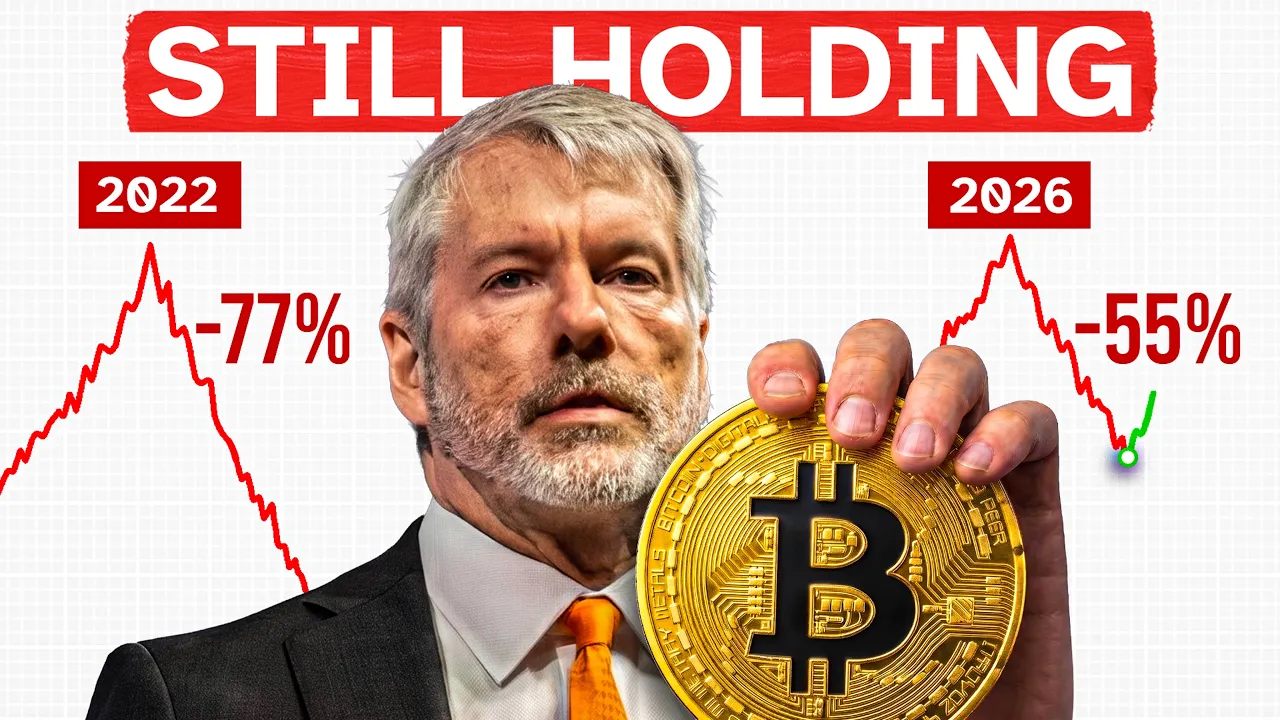
- This bear market's drawdown (55%) has been significantly shallower than previous cycles (84% in 2014/2018, 77% in 2022).
- U.S. spot Bitcoin ETFs and corporate treasuries (like MicroStrategy) now hold substantial amounts of BTC, acting as a stable floor.
- These holders are less likely to capitulate on sentiment swings compared to leveraged traders.
-
"so this time the floor is built on cold hard ownership"
The Absence of Parabolic Rallies: Liquidity and Dollar Strength [00:06:01]
- Past parabolic rallies were fueled by cheap borrowed money, but global liquidity has been restrictive since the Fed tightened in 2026.
- A strengthening dollar index (DXY) increases the cost of dollar-denominated debt for non-U.S. entities, leading to speculative asset sales.
- The unwinding of the yen carry trade, as the Bank of Japan allows yields to rise, also contributes to market volatility.
-
"dollars get scarcer and the first things to be sold are the speculative ones"
Pivots and the Stretching Cycle [00:08:26]
- The ongoing investigation into the Binance hack and the Federal Reserve's December meeting are key upcoming events.
- The current cycle is within the historical window for recovery after a peak, but the shape is changing: shallower drawdowns and longer rallies await liquidity.
- The four-year cycle appears to be stretching into a longer, shallower pattern rather than dying out.
-
"so rather than dying out entirely the four-year cycle looks to be stretching into something longer and shallower"