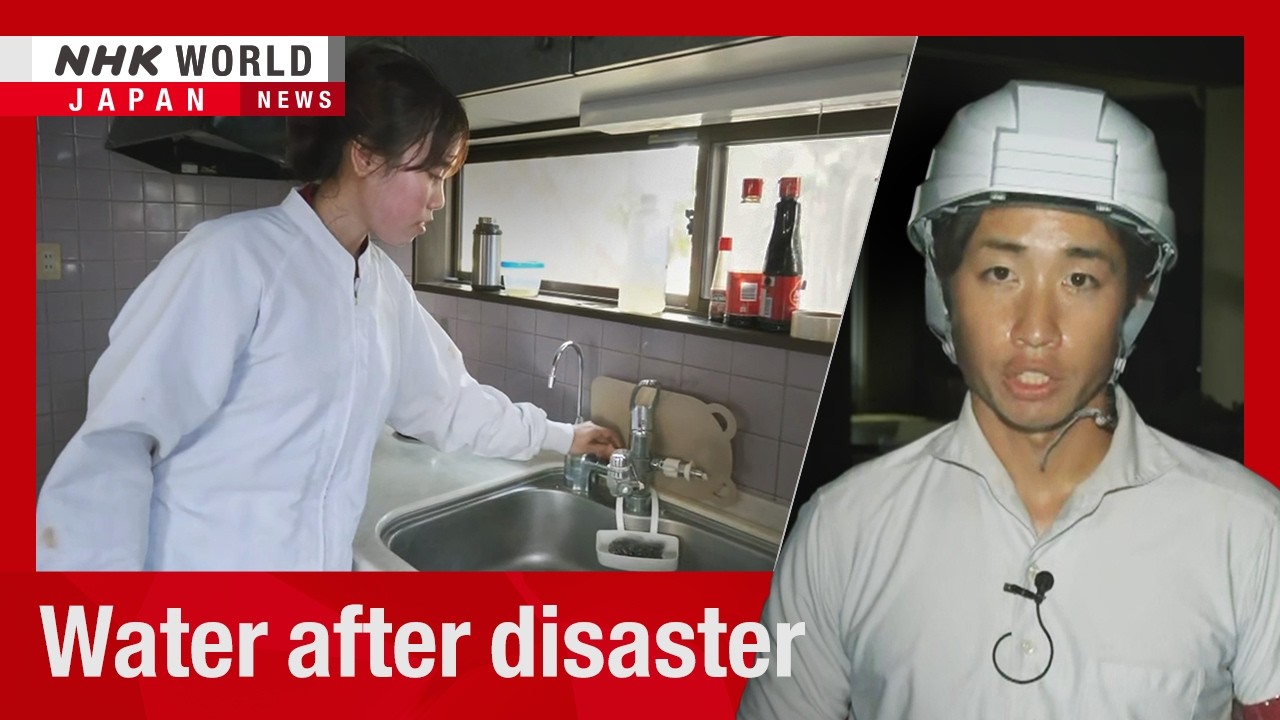
As taps run dry, quake-hit Kumamoto turns to its communityーNHK WORLD-JAPAN NEWS
NHK WORLD-JAPAN
7,216 views • 1 month ago 4 min read
Video Summary
As a powerful earthquake devastates Kumamoto Prefecture, residents face a critical shortage of water and electricity, exacerbated by scorching 30-degree Celsius heat. Shelters are overflowing, with many seeking refuge not just from damaged homes but from the lack of potable water due to ruptured pipes. Officials have established water stations, but the situation remains dire, with the water supply intermittent and undrinkable.
Amidst the official response, citizen initiatives are stepping up. The Kumamoto Vietnamese Association is mobilizing volunteers to distribute essential food and water supplies to affected families, including an Indonesian household whose home was damaged. The long-term recovery remains uncertain, with key lifelines like power and water still compromised and widespread damage to houses, streets, and even Shinkansen tracks, leaving the timeline for normalcy difficult to predict.
Short Highlights
- Water Crisis: Damaged pipes have led to a severe lack of potable water, forcing residents to seek supplies from shelters and water stations.
- Heat Concerns: Daytime temperatures exceeding 30 degrees Celsius raise fears of a secondary disaster due to the heat, especially for those without power or air conditioning.
- Citizen Aid: Volunteer groups like the Kumamoto Vietnamese Association are actively distributing food and water to those in need.
- Infrastructure Damage: Beyond homes, streets and even Shinkansen tracks have sustained damage, complicating recovery efforts.
Related Video Summary
- Israel violates ceasefire, freed Palestinian prisoners bear torture marks, with Nora Barrow-Friedman
- LIVE: View of rescue efforts at collapsed mall after deadly 7.1 earthquake in Japan
- 2 Men Go To Mosque With Axe & Hammer
- This is a 'MAJOR' national security concern going forward, says Rep Mike Lawler
Key Details
Shelters and Water Shortages [0:04]
- Shelters in Yatsushiro City are accommodating up to 250 people, with many seeking refuge due to damaged homes and a critical lack of water.
- The earthquake ruptured numerous water pipes, creating a significant problem, especially with high temperatures.
"The quake damaged a lot of pipes. That's obviously a big problem, especially in this weather."
Impact of Extreme Heat [0:21]
- Daytime temperatures have surpassed 30 degrees Celsius and are forecast to remain high.
- A major concern is preventing a secondary disaster caused by the heat, particularly for those without power or air conditioning.
"A major concern is making sure this quake doesn't trigger a second disaster caused by the heat, especially with so many still without power or air conditioning."
Official and Citizen Relief Efforts [0:32]
- Local governments have set up water stations where people can collect water.
- Citizen initiatives, like those from the Kumamoto Vietnamese Association, are actively gathering and distributing food and water.
"The local governments have also set up water stations. People can come with or without containers and get some water to take home."
Volunteer Distribution [0:44]
- Volunteers from the Kumamoto Vietnamese Association have spent two days driving across the region to deliver supplies.
- They responded to a social media post from an Indonesian family whose home was damaged and who were experiencing a lack of water.
"They have spent the past two days driving all over the region to homes like this one."
Undrinkable Water Supply [1:00]
- The Indonesian residents reported that the water supply cut out after the quake.
- Although it returned briefly this morning, the water was cloudy and undrinkable.
"While it came back for a few hours this morning, she said it was cloudy and undrinkable."
Uncertain Recovery Timeline [1:10]
- It is too early to determine how long it will take for the water supply to return to normal.
- Securing essential lifelines like electricity and water is a priority, followed by repairs to damaged houses and streets.
"It's still too early to say. Like you mentioned, there's still so much to be done."
Widespread Infrastructure Damage [1:28]
- Significant damage has been observed, including torn-up streets and fallen side panels on Shinkansen tracks.
- The extent of the damage makes it difficult to estimate the timeline for full recovery.
"At one point, we even drove by the Shinkansen track and saw some of the side panels had fallen off."
Echoes of Past Disasters [1:42]
- The reporter notes the heartbreaking experience of seeing these communities affected again after the 2016 earthquakes.
- There is hope that the residents will find the strength to rebuild and overcome this tragedy, similar to the past decade.
"It's so hard to see these communities get hit again. So many people were heartbroken, but they've spent the last decade rebuilding."