Printing Money Was the Cure... Now It's the Disease
Peter Schiff
3,250 views • yesterday Save 50 min 11 min read
Video Summary
The speaker warns of an impending debt crisis driven by excessive credit demands and insufficient supply, which will inevitably lead to higher interest rates and runaway inflation. He criticizes the Federal Reserve's current monetary policy, arguing that despite their rhetoric of fighting inflation, their actions continue to fuel it. The speaker also laments the political nature of economic decisions, citing the Fed's delay in rate hikes due to an upcoming election and the widespread government subsidies in agriculture, which he views as a form of socialism that ultimately harms the economy and consumers.
The discussion then shifts to the volatile AI market, where the speaker notes a cooling trend due to rising credit costs and companies like Meta facing negative cash flow. He also touches upon the potential impact of California's proposed wealth tax on tech billionaires. Finally, the speaker expresses concern over the increasing government involvement in various sectors, from agriculture to healthcare, arguing that these interventions, often disguised as support, distort markets, raise costs, and ultimately reduce economic prosperity, pushing societies towards socialism rather than capitalism.
Short Highlights
- The global economy faces a looming debt crisis due to high credit demand and low supply, leading to rising interest rates and inflation.
- The Federal Reserve's policies are criticized for continuing to fuel inflation despite their stated goal of combating it.
- Government subsidies, particularly in agriculture, are seen as a form of socialism that distorts markets and harms consumers.
- The AI market is experiencing a downturn as credit costs rise and companies struggle with profitability.
- California's proposed wealth tax could have significant implications for tech billionaires and the state's economy.
- The speaker advocates for free-market capitalism and criticizes government intervention across various sectors, including healthcare and agriculture.
- Rising interest rates and government deficits are directly linked to increased borrowing costs, such as higher mortgage rates.
Key Details
Looming Debt Crisis and Inflation [0:00]
- The world is on a collision course for a debt crisis due to an imbalance between credit demand and supply.
- This imbalance will drive interest rates higher, necessitating more inflation, which is now the primary problem.
- The predicted outcome is runaway inflation, hyperinflation, a currency crisis, and a sovereign debt crisis.
"We are on a collision course for a debt crisis. We just have so many demands for credit throughout the world and not enough supply of credit."
Federal Reserve Policy and Market Expectations [0:45]
- The Federal Reserve's upcoming meeting decision is unlikely to involve a rate hike due to market expectations of 90% certainty against it.
- However, the market anticipates an 80% chance of a rate hike in December, which the Fed is likely to follow.
- The Fed is described as a "creature of market expectations" and avoids disappointing the markets.
"So if the markets are 90 percent sure the Fed is not going to do something, they're not going to do something."
The Political Influence on Fed Decisions [1:47]
- The speaker believes the Fed is delaying a rate hike this week due to an election the following week, to avoid appearing political.
- Interest rates are seen as a political issue affecting voters who are burdened by debt and higher interest payments.
- The Fed's decision to wait for the election is considered political in itself, as it implies prioritizing political optics over necessary economic action.
"So I think in order to appear to be apolitical, the Fed is choosing to do nothing, which in and of itself is political."
The Fed's Accommodative Stance [3:12]
- The Fed should be hiking rates because they are still too low, which will lead to continued inflation.
- The Fed's balance sheet is still expanding, indicating an accommodative policy that is creating inflation, despite their rhetoric.
- The speaker intends to discuss the Fed's policy mistakes in more detail in a future podcast.
"Their conduct continues to be, we are creating inflation."
Brazilian Election Upset and Market Reaction [3:47]
- The speaker discusses the recent election results in Brazil, where Bolsonaro was expected to win but lost in a runoff.
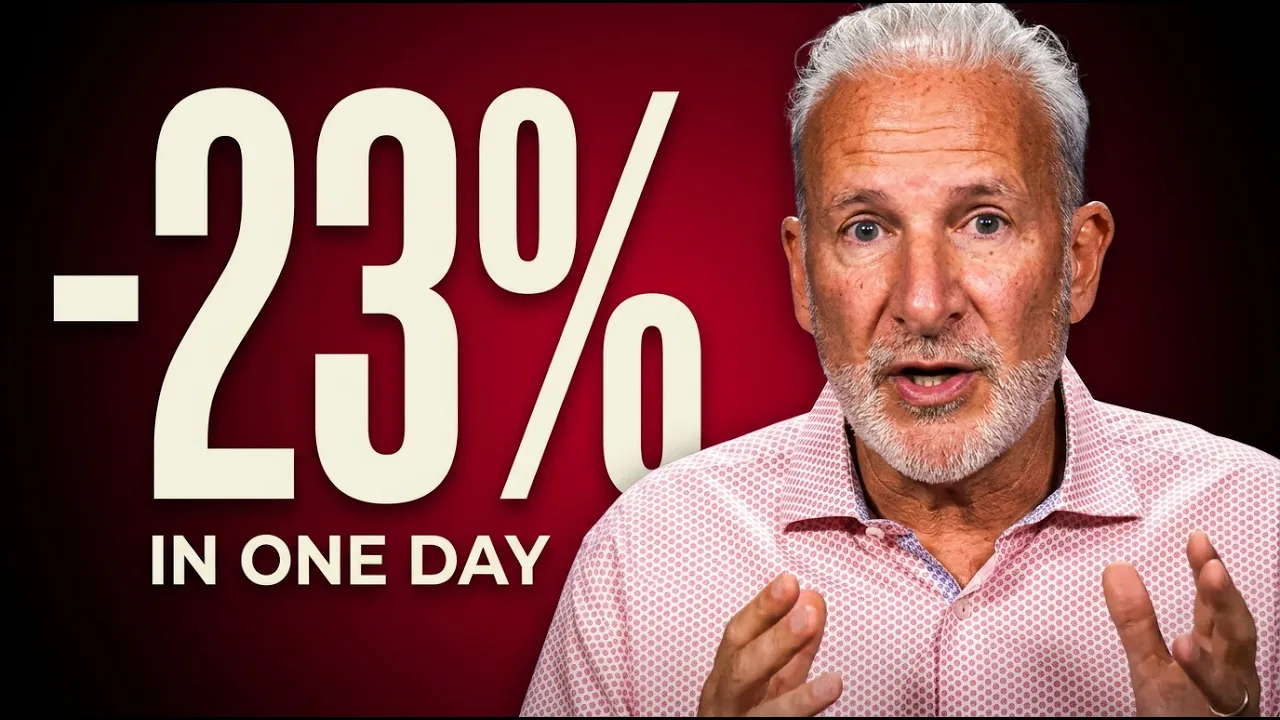
- The market reacted sharply to Bolsonaro's loss, with the Brazilian stock market down 15% and the real down 8% against the dollar.
- For American investors, Brazilian stocks were down approximately 23% in U.S. dollars in one day, comparable to the U.S. stock market's decline on Black Monday in 1987.
"And when he lost, the reaction was sharp. The markets got clobbered today in Brazil."
Election Controversy and Political Parallels [5:04]
- The election was close, with allegations of irregularities, including extended polling hours.
- Lula, at 80 years old, has become president for the fourth term, drawing a parallel to the age of the U.S. President.
- The media's labeling of Bolsonaro as "far right" is questioned, with the speaker arguing he is simply right of center.
"And Bolsonaro is protesting that maybe there was some funny business going on."
The Dangers of Democracy and Socialist Appeals [7:02]
- The speaker criticizes democracy, suggesting Lula won by appealing to voters' ignorance and desire for government handouts.
- He argues that capitalism, not government intervention, provides the highest standard of living for workers.
- Politicians offering government benefits undermine economic opportunity and ultimately reduce the standard of living for workers.
"The dangers of democracy because Lula wins by appealing to the ignorance of the typical voter into thinking that they're going to get something for nothing from the government."
Agricultural Subsidies and Political Motivation [9:10]
- Donald Trump's promise of an $8 billion aid package to farmers is seen as a move to secure votes in agricultural states.
- This adds to the record-breaking $55.4 billion in farmer welfare projected for the year, surpassing the 2020 record.
- The speaker questions why farmers should receive special government benefits compared to other occupations.
"And so Trump is saying, we're going to give farmers $8 billion to help offset the high cost of diesel."
The Inefficiency of Farm Subsidies [10:47]
- Farmers pass on increased diesel costs to consumers through higher food prices, while receiving subsidies afterward.
- Subsidies often benefit large corporate farms more than small family farms.
- The justification that farming is inherently risky and thus requires government support is dismissed; risk is part of the occupation.
"So it really amounts to a windfall because the farmers are not just going to share this with their customers."
Subsidies Reduce Supply and Raise Food Prices [13:24]
- A significant portion of farm subsidies involves paying farmers not to farm their land, reducing supply and artificially raising prices.
- This policy of propping up food prices is counterproductive when combined with programs like SNAP, which aim to help low-income individuals afford food.
- The speaker argues that cheaper food in a free market would reduce the need for such assistance programs.
"Part of the goal is to reduce the supply of the agricultural output. So there's not as much wheat, not as much soybeans or corn. So we reduce the supply so that there's higher prices."
Tobacco Subsidies and Contradictory Policies [14:47]
- The government subsidizes tobacco farmers while simultaneously running campaigns against smoking due to its health risks.
- Tobacco subsidies are argued by farmers to increase tobacco prices, which they claim reduces smoking, a contradictory stance to other agricultural arguments.
- These subsidies are characterized as "welfare payments" and "rent-seeking" behavior.
"But on the other hand, we subsidize tobacco farmers."
Free Market vs. Government Intervention [16:37]
- The speaker advocates for abolishing the Department of Agriculture and allowing a free market in farming.
- Protectionism and agricultural quotas are unnecessary, even in the context of wartime preparedness.
- Government intervention, like subsidies and quotas, undermines the standard of living by forcing the use of resources inefficiently.
"We should have no agriculture department. We should not be paying farmers."
The Jones Act and Political Influence [18:57]
- The Jones Act, a protectionist shipping regulation, has persisted for a century due to the lobbying efforts of a small group of ship operators who benefit from it.
- This group shares profits with politicians to ensure the act's survival, despite its negative economic impact.
- The speaker argues that repealing the Jones Act would be beneficial for the country.
"Look at all the people who suffer from the Jones Act, yet the Jones Act has been on the books for like a hundred years."
Republican Hypocrisy on Spending and Taxes [20:20]
- Republicans are criticized for not genuinely reducing government spending, despite advocating for tax cuts.
- Increased government spending, even with tax cuts, ultimately increases the burden on taxpayers.
- The "Big Beautiful Bill" (likely referring to the Tax Cuts and Jobs Act of 2017) is cited as an example of tax cuts increasing deficits, leading to higher interest rates and inflation.
"Because if the Republicans really cared about the taxpayer, then the Republicans would be cutting government spending because that's the only way to relieve the taxpayer."
The Shifting Stance on Medicare [22:46]
- Republicans, who historically opposed socialist programs like Medicare, now campaign on protecting it.
- This shift is attributed to voter demand; once a government program is established, it becomes politically difficult to remove.
- The speaker believes programs like Medicare and Social Security should not exist and were originally opposed by Republicans.
"But the reason that Republicans now support them is because the voters want them because you can't take something away."
The Flawed Logic of Health Insurance Mandates [24:20]
- The speaker argues that insurance companies should discriminate based on pre-existing conditions, as this is the basis of insurance.
- Tying health insurance to employment, a result of government policy (tax-free employer-provided insurance), is seen as a distortion.
- A free market in healthcare would lead to more affordable and better services.
"They're not supposed to sell a policy to a sick person at the same price that they sell a policy to a healthy person. That's not insurance."
The AI Bubble Deflates [27:41]
- The AI bubble is showing signs of deflating due to the rising cost of credit, impacting companies that borrow heavily for AI infrastructure.
- Meta is mentioned as an example, planning to raise $35 billion while its stock is down significantly and it faces negative cash flow from AI investments.
- The creation of non-voting Class C shares by Meta is linked to Mark Zuckerberg's need to pay California's proposed wealth tax without losing control of the company.
"And a lot of this is a consequence of the rising cost of credit, because a lot of these companies are borrowing a tremendous amount of money to build out the infrastructure for AI."
California Wealth Tax and Credit Market Concerns [29:50]
- The proposed California wealth tax is seen as the "camel's nose under the tent," potentially leading to further taxes and lower thresholds.
- Creditors are becoming wary of financing AI buildouts, leading to significant drops in the stock prices of AI-related companies.
- Elon Musk's comments suggest lenders are concerned about the repayment of loans to money-losing AI companies investing in depreciating assets.
"And creditors are starting to back away from financing this build."
Competition for Capital and Debt Crisis Fears [32:05]
- Anthropic's IPO filing, potentially raising $100 billion, highlights the intense competition for capital.
- Governments also require increasing amounts of capital, competing with companies for limited supply in the credit markets.
- This intense demand for credit, coupled with insufficient supply, reinforces the speaker's prediction of a debt crisis and rising interest rates.
"So you have all of these companies competing for a limited supply of capital."
Gold and Silver Market Dynamics [34:01]
- Gold and silver prices, along with mining stocks, have been negatively impacted by the sell-off in tech and AI stocks.
- Despite the price drops, the speaker believes gold is at a floor around $4,000 and silver below $54 presents a buying opportunity.
- He argues that factors like a potential recession, the housing market implosion, and the need for easy money policies are fundamentally bullish for gold.
"Gold, and in particular, the gold mining stocks over the last week, got caught up in the sell-off in tech stocks."
Opportunity in Gold and Silver [36:02]
- The speaker views the current downturn in gold and silver prices as a great opportunity, as fundamentals have improved.
- He encourages buying physical gold and silver, suggesting there is little downside risk at current price levels.
- The market's reaction to news is seen as skittish, with traders misinterpreting bullish factors for gold as bearish.
"But I look at it as a great opportunity because the fundamentals have actually gotten a lot better, even as the prices have come down."
Fed Rhetoric vs. Action [37:48]
- The speaker anticipates the Fed will attempt to sound tough on Wednesday but their actions will not match their rhetoric.
- He plans to discuss the market's reaction to the Fed's announcements on his next podcast.
- The speaker encourages viewers to subscribe to his YouTube channel and follow him on social media platforms.
"I'm sure they're going to try to talk tough again on Wednesday, but their rhetoric is never matched by their actions."