Iran launched surprise attack on US forces: CENTCOM
CNN
936,643 views • Save 6 min (4 min read) • 20 hours ago
Video Summary
Air defense crews successfully intercepted multiple ballistic missiles fired by Iran towards U.S. forces in the Middle East, specifically a U.S. base in Jordan. This incident occurred approximately 10 hours after the U.S. president spoke positively about ongoing negotiations with Tehran, which Iran had publicly denied. The president had previously threatened to target Iranian infrastructure, including bridges and power plants, if talks failed, but also expressed reluctance to harm civilians. The attack coincides with Israeli Prime Minister Benjamin Netanyahu's visit to Washington, raising questions about the U.S. response and the broader conflict's trajectory.
Short Highlights
- Iran launched multiple ballistic missiles targeting U.S. forces in the Middle East.
- U.S. air defense successfully intercepted the incoming fire.
- The incident occurred amid conflicting statements about U.S.-Iran negotiations.
- The attack happened while Israeli Prime Minister Netanyahu was in Washington.
Key Details
Missile Attack and Interception [0:03]
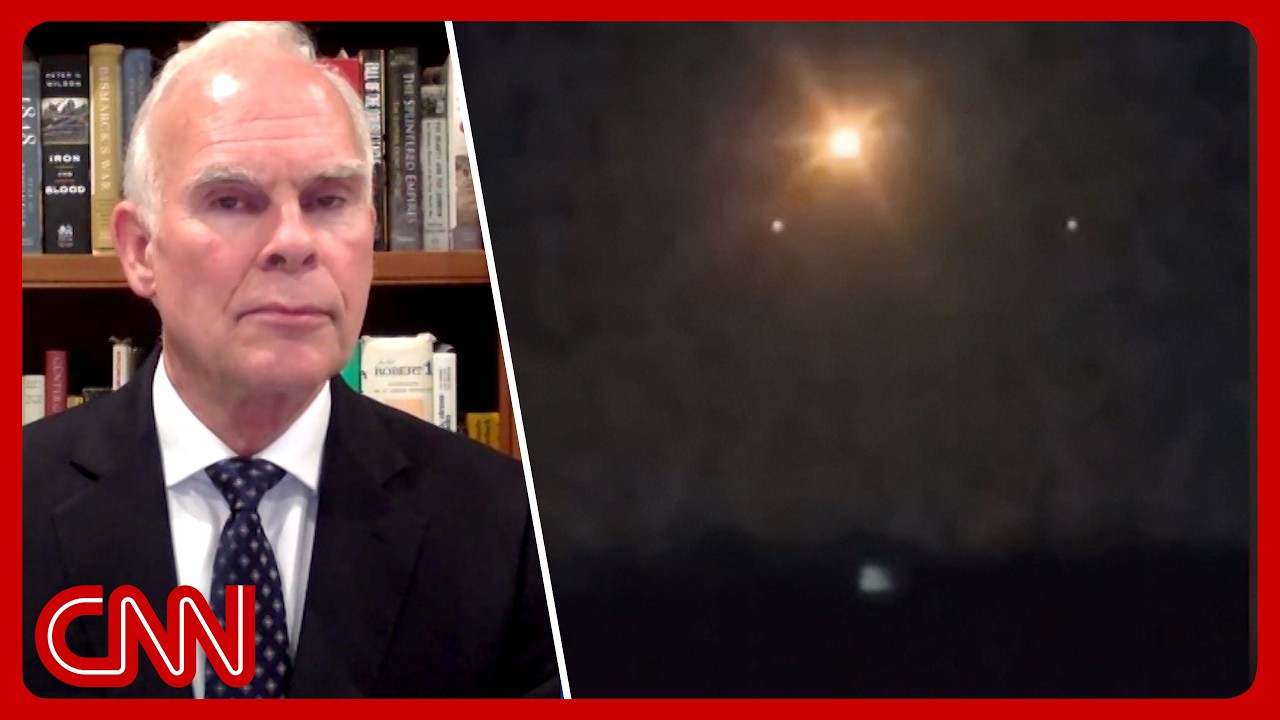
- Central Command confirmed that air defense crews targeted incoming fire from Iran.
- Multiple ballistic missiles were aimed at U.S. forces in the Middle East.
- A U.S. base in Jordan was identified as the target.
A statement from Central Command says it happened a bit more than two hours ago.
Conflicting Negotiation Signals [0:26]
- The missile incident followed the U.S. president's positive remarks about ongoing negotiations with Tehran.
- Iran had publicly denied that any such talks were underway.
- The president had previously threatened to destroy Iranian infrastructure if talks failed.
For some reason, for some reason, we can be in the midst of a beautiful discussion, and they'll come out and say, we're not talking, or we didn't discuss nuclear.
U.S. Administration's Stance [1:13]
- The administration was awaiting a reaction from the U.S. president following the confirmed missile attack.
- CENTCOM hailed the successful interception of the missiles as a success.
- The incident highlights the ongoing broader conflict and varying messages from the president regarding negotiations and potential war.
But it does speak to the broader conflict that is very much still underway here, as we've heard varying message from the president himself about whether or not talks are happening, whether he believes that they could be fruitful, or whether or not there is a chance of a return to all-out war here.
Netanyahu's Visit and Conflict Duration [2:02]
- The attack occurred while Israeli Prime Minister Benjamin Netanyahu was in Washington.
- The conflict has been ongoing for five months with no clear end in sight, contrary to the president's initial predictions.
- The president faces a difficult position navigating and negotiating a way out of the conflict.
And I think one thing tonight, even though as we were sitting here in Washington in this moment, as they were paying tribute to Lindsey Graham during his funeral today, talking about his support for these wars, for action in the Middle East, particularly in terms of what the president has done here, it's still not really clear, John, and how the president is going to respond to this or what he is going to do next in Iran.
Diplomatic Silence and Analysis [3:04]
- The U.S. president did not appear with visiting world leaders at the White House, a rare occurrence.
- This diplomatic silence occurred on the same day as the funeral for Lindsey Graham.
- Analysts suggest Iran's actions indicate a regime that is not deterred and is in "attack mode."
You know, John, one of the biggest thing that stood out to me was two world leaders came to the White House today and we did not hear from the president sitting next to them.
Iran's Strategic Thinking [4:32]
- Iran's actions are seen as a response to potential U.S.-Israel cooperation and a way to continue the war.
- The targeting of a U.S. facility on a Jordanian air base is viewed as a preemptive strike.
- The Iranian regime is described as having a "gangster regime" mentality with a high appetite for risk.
What Iran was doing, you know, to piggyback off of Karim's points, is that they're basically saying if Iran and the U.S. in essence get back together again, the Iranians see, or if Israel and the U.S. get back together again, the Iranians see this as being a major issue in terms of continuing the war.
U.S. Response Options [6:13]
- The U.S. has a range of options, including doing nothing or targeting strategic assets.
- Previous responses have focused on targets along the Persian Gulf coastline.
- A more significant response, such as targeting command and control nodes, is a possibility but could derail peace talks.
So I think the range of options that the U.S. has include doing nothing or going after several sets of targets.