"The Potluck": Musical Explores Trauma of 1979 Greensboro KKK Massacre of 5 Antiracist Activists
Democracy Now!
12,400 views • 2 months ago Save 24 min 4 min read
Video Summary
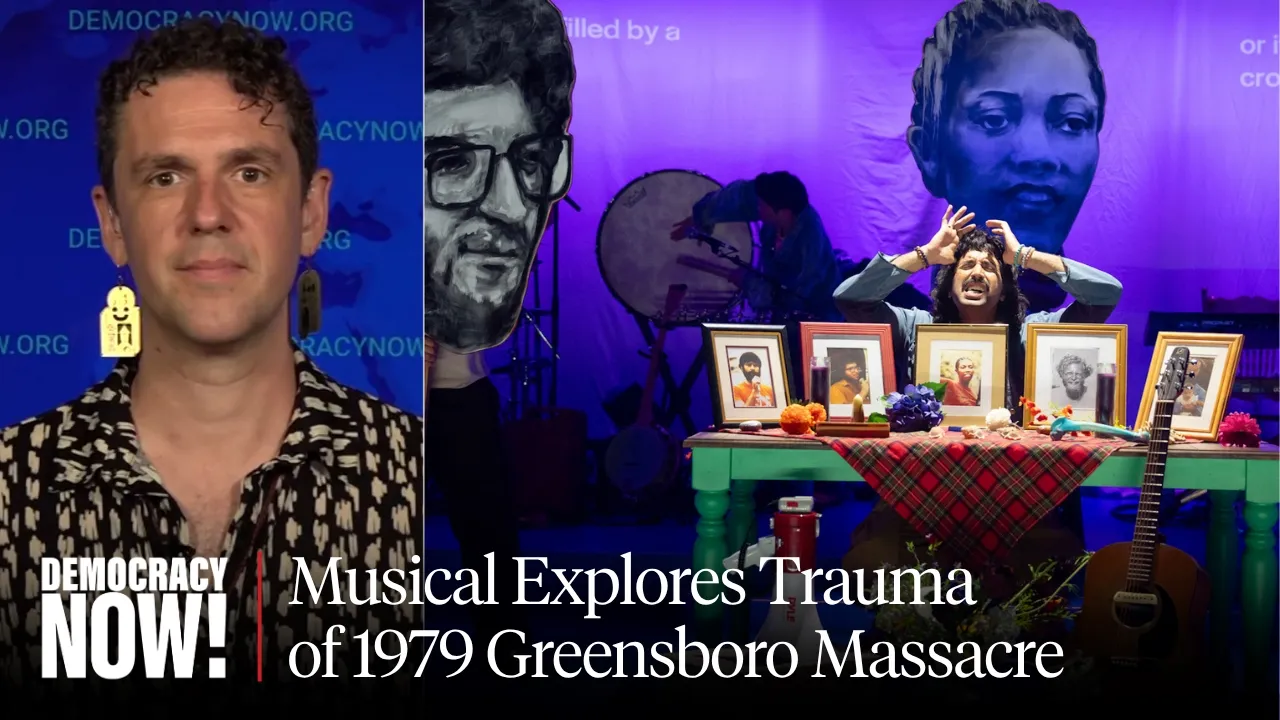
Born in the shadow of the 1979 Greensboro massacre, composer Cesar Alvarez has transformed the trauma of their parents' murdered comrades into a radical theatrical ritual. The musical, The Potluck, confronts the state-sanctioned assassination of five Communist Workers Party activists, who were gunned down by the KKK and American Nazi Party while local police stood by in calculated complicity. By forcing audiences to choose between witnessing the actual, graphic footage of the killing or engaging in a reflective, separate ritual, the play mirrors the complex, often dissonant ways communities attempt to heal and organize across difference.
At its core, the production serves as a bridge between the past and present, utilizing the metaphor of a potluck—a long-standing tradition among the survivors—to explore how divergent experiences can coexist within a shared struggle. Through evocative storytelling and songs that bridge decades of history, the play asks how modern movements can alchemize historical tragedy into actionable solidarity, ultimately honoring the lives of those lost while grappling with the unfinished work of their generation.
Short Highlights
- The 1979 Greensboro massacre resulted in the deaths of five activists and the injury of ten others during an anti-Klan rally.
- A jury later found the Greensboro police liable for wrongful death due to their cooperation with the KKK and American Nazi Party.
- The musical The Potluck is based on an annual healing ritual practiced by survivors for 47 years.
- The production forces audience members to choose between two paths:
- Watching seven minutes of graphic, historical footage of the murders.
- Stepping out to honor the victims through a separate, non-visual ritual.
- The play features a song where a survivor recounts major historical shifts to a deceased friend, including:
- The election of Nelson Mandela as president of South Africa.
- The fall of the Berlin Wall and the collapse of the Soviet Union.
- The AIDS epidemic.
- The September 11th terrorist attacks.
- The election of America's first Black president.
- The Occupy Wall Street movement.
- The 2008 economic collapse.
Key Details
The Weight of Legacy [00:00:15]
- Composer Cesar Alvarez created The Potluck to process the trauma of the 1979 Greensboro massacre, an event that killed five of their parents' close friends.
- The play explores the burden of carrying the names of the fallen and the struggle to continue their unfinished political work.
The piece then becomes this kind of attempt, this ritual to unveil what teachings we can gain from this history.
The Architecture of the Potluck [00:02:40]
- The musical is structured around the metaphor of a potluck, a tradition used by the survivor community for 47 years to foster healing and solidarity.
- The event represents the "dissonance" of working together across differences toward a shared goal of mutual nourishment.
And there's something that happens in a potluck, which is a clash, which is like a macaroni salad next to hand-rolled sushi.
Exposing State Complicity [00:04:10]
- The massacre occurred when the KKK and American Nazi Party targeted activists organizing textile workers, with the government acting in collusion.
- Greensboro police provided the protest permit to the Klan and vacated the area before the shooting began, a fact later confirmed by a Truth and Reconciliation Commission.
The government was utilizing this fascistic faction in order to do its bidding, which was to repress really, really radical thought around working-class solidarity.
The Choice of Witnessing [00:05:30]
- To address the difficulty of confronting the violence, the production offers two distinct paths: watching graphic archival footage or participating in a separate ritual.
- This design forces the audience to acknowledge that different people require different methods to process and learn from historical trauma.
We created this solution, which I'm really in love with, which is that in the piece, we ask people to decide whether they want to see the footage.
A Dialogue with the Departed [00:07:00]
- The musical features a song performed by Ruben Flores that imagines a conversation with a deceased friend about the world that has evolved since 1979.
- The song highlights both the progress made, such as the election of Nelson Mandela, and the persistent crises like climate change and economic instability.
It is a mess and it's incredible.