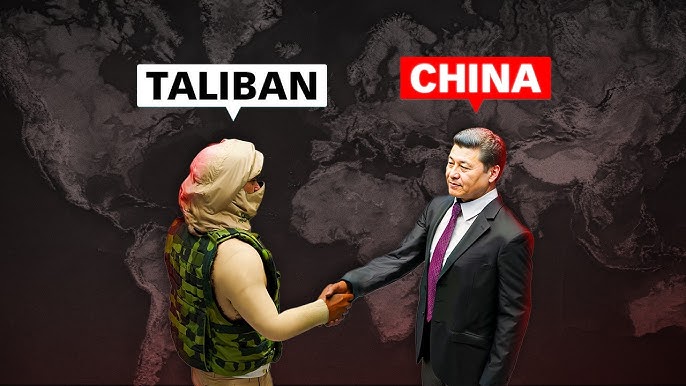
The Taliban’s Plan to Control Global Trade
fern
1,334,596 views • 9 months ago Save 26 min 9 min read
Video Summary
The video explores the Vakhan Corridor in Afghanistan and the Taliban's construction of a 120 km highway connecting it to China. This ambitious project is envisioned to revolutionize Afghanistan's economy and offer a new trade route for Chinese goods, potentially integrating into China's Belt and Road Initiative. However, the journey to document this endeavor is fraught with peril, as reporter Vali faces significant logistical and safety challenges in a politically unstable and remote region. The report delves into Afghanistan's rich history, its strategic importance, and the current struggles under Taliban rule, particularly the severe restrictions on women's rights and the economic collapse. Despite the immense challenges, the highway offers a glimmer of economic hope for the isolated communities of the Vakhan, though its true impact and China's commitment remain uncertain.
One striking detail is that the newly built highway connecting Afghanistan to China is a gravel road, raising questions about its practicality for robust trade and its ability to truly transform the country's economy as envisioned.
Short Highlights
- The Vakhan Corridor is a 350 km long, 16-64 km wide strip of land separating Tajikistan and Pakistan, with a short border to China.
- The Taliban are building a 120 km highway in the Vakhan Corridor to connect Afghanistan to China, aiming to transform the country's economy and global trade.
- Reporting on the highway project involved significant preparation, security risks, and travel challenges, including altitude sickness and difficult terrain, with a crew of producer and medic.
- Afghanistan's history is marked by conquests by various empires, earning it the nickname "graveyard of empires," and in the 19th century, it was a buffer zone during the Great Game between Britain and Russia.
- The new highway, costing an estimated $5 million, was reportedly completed in January 2024, but is a gravel road and its trade potential is questionable, with most current trade still relying on sea routes.
Key Details
The Vakhan Corridor: A Remote Afghan Frontier [0:02]
- The Vakhan Corridor is a geographically unique, 350 km long and 16-64 km wide strip of land in Afghanistan that borders Tajikistan, Pakistan, and China, making it one of the most remote regions on Earth.
- This region is characterized by immense mountains, sparsely populated valleys, and a striking natural beauty, home to nomadic life and seemingly untouched by time.
The corridor separates Tajikistan and Pakistan and ends at a short border with China.
The New Highway Project and Its Global Significance [0:44]
- The Taliban are constructing a 120 km highway within the Vakhan Corridor, intended to connect Afghanistan directly to China.
- This project is presented by the Taliban as a means to transform Afghanistan's economy and could significantly alter global trade by providing an alternative western route for Chinese goods.
- For China, the Vakhan Corridor could become a crucial link in its New Silk Road initiative, a vast infrastructure project aimed at expanding China's economic and geopolitical influence.
It could change global trade, offering an alternative route for Chinese goods flowing west.
The Perilous Journey of Investigation [01:49]
- Documenting the highway construction proved difficult due to a lack of public information, leading to reporter Vali's investigation.
- Traveling to Afghanistan, and specifically the Vakhan Corridor, is inherently dangerous and requires extensive preparation, including obtaining visas, journalist permits, and navigating politically unstable conditions.
- The journey involves multiple days of travel by car from Kabul, through difficult terrain, and at high altitudes where altitude sickness is a risk, compounded by limited cell signal, scarce clean water, and potential delays in medical care.
Traveling to Afghanistan is neither easy nor particularly safe.
Afghanistan's Rich History and Strategic Importance [05:30]
- Afghanistan, covering roughly 650,000 km² in South Central Asia with a population of about 43 million, is a diverse nation with numerous ethnic groups and languages.
- Historically, its strategic location has made it a target for numerous empires, including those of Alexander the Great, Genghis Khan, Timur, and the Mughals, leading to its reputation as the "graveyard of empires."
- During the 19th century, the region became central to the "Great Game" rivalry between the British and Russian empires, with the Vakhan Corridor emerging as a buffer zone. Afghanistan gained independence in 1919 after three Anglo-Afghan wars.
Because of its location, the land we now call Afghanistan has long been of interest to the world's superpowers.
Navigating Taliban Bureaucracy and Restrictions [08:20]
- Before departing Kabul, obtaining necessary filming permits from various ministries, including the Ministry of Foreign Affairs, was a crucial step.
- Despite initial success in securing permits, the journey encountered unexpected obstacles; in Faizabad, the local ministry initially banned filming in Badakshan province, citing regulations against broadcasting images of living beings and a desire to keep the road project secret.
- However, permission was eventually granted under strict conditions, prohibiting access to the wildlife area, Pakistani border regions, and crucially, the border with China where the highway connects to.
One of the essential spots we plan to visit. Vali and the crew are only allowed to drive to Bazai Gonbud.
The Echoes of Conflict: Soviet Invasion and Civil War [09:06]
- The Salang Tunnel, a significant piece of infrastructure, was built by the Soviets, a reminder of their 1979 invasion aimed at supporting the Afghan communist government against anti-communist Mujahideen.
- The nine-year Soviet-Afghan War became a major Cold War battlefield, with the US backing the Mujahideen, and despite heavy Soviet losses, Moscow began withdrawing troops by 1988, though conflict continued.
- The collapse of the communist regime in 1992 plunged Afghanistan back into civil war, culminating in the Taliban's seizure of power in 1996.
Afghanistan became one of the major battlefields of the Cold War.
Natural Resources and the Gold Rush [11:27]
- Afghanistan possesses vast natural resources, including copper, iron, rare earths, and gold, with an estimated worth of nearly $1 trillion, though much of it remains untapped.
- In the Badakshan province, a "gold rush" is evident, with local communities, including children, actively involved in gold extraction using rudimentary methods.
Afghanistan is rich in natural resources. Beneath its mountains lie vast deposits of copper, iron, rare earths, and gold.
The Taliban's Reign and Restrictions on Women [18:01]
- Since regaining power in 2021, the Taliban have reimposed strict Sharia-based laws, leading to a severe deterioration in the human rights situation, including arbitrary arrests, torture, and public executions.
- Girls and women face severe restrictions, with bans on secondary and university education, and many women are actively fighting against these measures.
- The internet has become a vital, albeit diminishing, space for freedom for Afghan women, with increasing signs that the Taliban intend to restrict internet access, as seen in a 48-hour country-wide shutdown.
The Taliban banned girls and women from secondary and university education.
China's Growing Influence and the New Silk Road [21:27]
- In the face of international isolation, China has emerged as a key international partner, becoming Afghanistan's biggest investor and its third-largest import supplier by late 2023.
- China's interest stems from Afghanistan's significant reserves of copper, lithium, and rare earths, crucial for its strategic industries.
- Beijing is considering extending the China-Pakistan Economic Corridor (CPEC) into Afghanistan, further integrating it into China's Belt and Road Initiative (BRI), also known as the New Silk Road, aiming to expand global trade routes and China's economic and political influence.
Afghanistan sits on massive untapped reserves of copper, lithium, and rare earths.
The Harsh Realities of the Vakhan Highway [23:11]
- The 120 km highway project, costing an estimated $5 million, was reportedly completed in January 2024 but is a gravel road, raising questions about its practicality for heavy trade.
- The high altitude in the Vakhan Corridor significantly impacts the crew, causing altitude sickness, shortness of breath, and headaches.
- Despite restrictions, Vali obtains firsthand footage of the Chinese border, revealing a heavily fortified area with fences, barbed wire, and guard posts, contradicting the image of a thriving trade route.
The so-called highway the Taliban built isn't paved. It's a gravel road.
The Kyrgyz Nomads and the Highway's Impact [25:30]
- The Kyrgyz people, a Turk ethnic group with a centuries-old presence in the Vakhan Corridor, live a life deeply tied to the land, marked by nomadic herding and resilience.
- Access to healthcare is limited, and child and maternal mortality rates are high, yet they maintain their traditions and language.
- The new highway has brought tangible change for the Kyrgyz, enabling traders to visit regularly with cars, providing access to goods previously unavailable due to long travel times.
Before they were completely cut off from places like Sahad, Kand or Ishkashim and had to travel by foot and with their animals.
Secrecy and Silence Around the Project [31:31]
- Efforts to interview workers or Taliban officials involved in the highway project are met with a wall of silence, with project managers and district heads refusing interviews or denying reporting on the road.
- The Afghan General Directorate of Intelligence (GDI) directly orders the deletion of all footage related to roads and construction machinery, suggesting a deliberate effort to conceal certain aspects of the project.
Why don't they want us to talk to him?
The Uncertain Future of the Vakhan Highway [33:04]
- While the highway represents an economic dream for the Taliban and a potential transit route for China, concerns about security, militant groups like the East Turkestan Islamic Movement, and China's cautious approach remain significant.
- The gravel road's practicality for heavy trade is questionable, and substantial infrastructure improvements are needed beyond the highway itself to turn the region into a viable transit hub.
- For now, Afghanistan's aspiration to transform global trade through the Vakhan Corridor remains largely a dream, overshadowed by political instability and economic challenges.
At least for now, Afghanistan's dream of transforming global trade through the Wakan corridor remains just that, a dream.