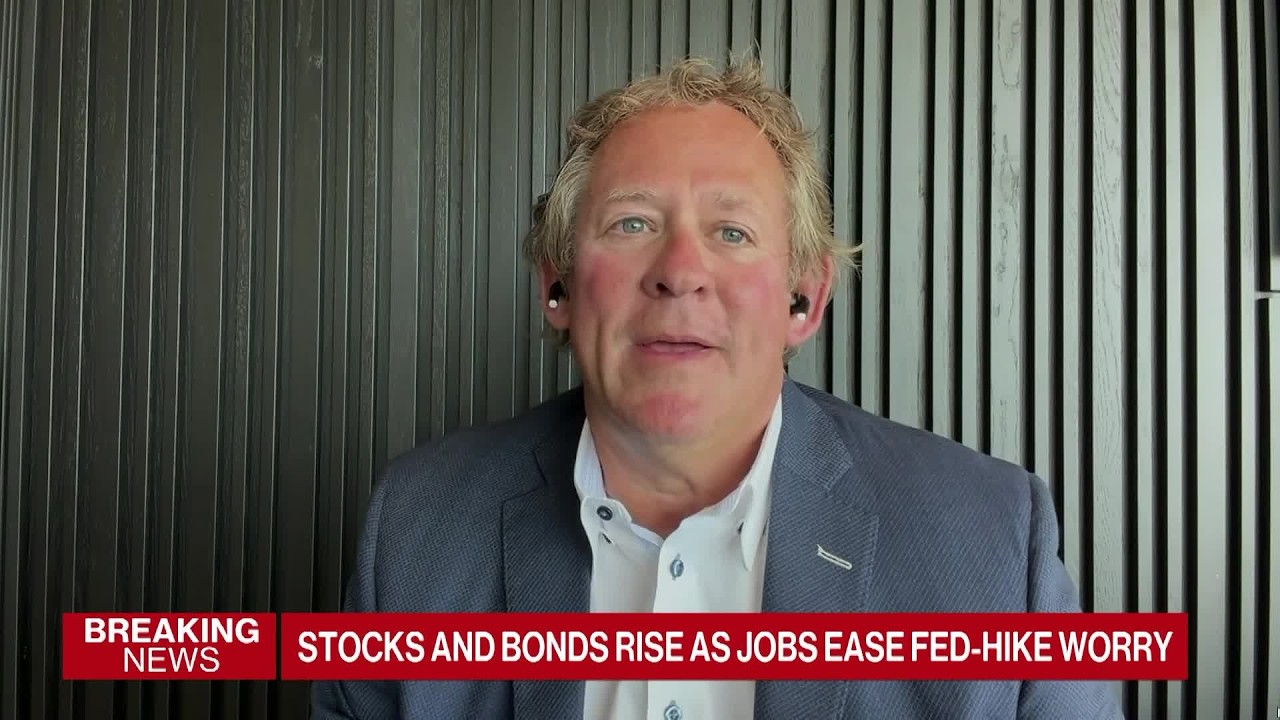
BlackRock's Rieder on Jobs Report, Fed Rates and Bonds
Bloomberg Television
28,721 views • 1 month ago Save 9 min 4 min read
Video Summary
The U.S. labor market is showing a surprising disconnect: unemployment is down, yet job growth has contracted, and wage growth is stagnant. This phenomenon, coupled with strong GDP and corporate earnings, suggests a significant productivity revolution is underway, potentially driven by AI and a new business ethos focused on operating with less employment. Despite the strong economic indicators, the Federal Reserve is advised against further interest rate hikes, as they may not effectively combat sticky inflation in sectors like healthcare and education. Instead, fiscal policies such as deregulation and addressing student loan debt are proposed as more impactful solutions.
The economy, however, is not seen as inertial but rather operating at a robust level, fueled by AI-driven capital expenditures and strong consumer spending, particularly in leisure and hospitality. This optimism extends to the bond market, where attractive yields are achievable without compromising credit quality, with a focus on European fixed income and securitized assets. The sheer volume of debt issuance, including from AI hyperscalers and governments, is supported by historic demographic demand for yield from institutional investors like pension funds.
Short Highlights
- Labor Market Paradox: Job growth contracts despite falling unemployment, with no significant wage growth.
- Productivity Revolution: Evidence suggests a major productivity surge, potentially driven by AI and new business efficiencies.
- Fed Policy Debate: Argument against further interest rate hikes, favoring fiscal policy for inflation control.
- Economic Strength: The economy is performing strongly, driven by AI investment and consumer spending.
- Bond Market Opportunities: Attractive yields available in fixed income without sacrificing credit quality.
- Debt Issuance: High volume of debt from corporations and governments is being absorbed by market demand.
Key Details
Labor Market Contraction Amidst Falling Unemployment [0:00]
- The unemployment rate has decreased, but job growth has unexpectedly contracted.
- Wage growth remains stagnant, indicating a lack of demand for labor despite economic strength.
-
"No, broadly not impressive, I think is the right terminology."
Productivity Revolution and AI's Role [1:13]
- Companies are experiencing strong revenue and earnings growth but are cutting staff, suggesting a productivity boom.
- This trend is attributed to a new business ethos focused on operating with less employment, possibly driven by AI.
-
"I mean, to have only 20,000 jobs on a three-month moving average, you strip out health care, you're having negative job growth in aggregate."
Inflation and Federal Reserve Policy [2:47]
- The Federal Reserve is advised against further interest rate hikes, as they may not effectively address inflation in sectors like healthcare and education.
- Fiscal policies, such as deregulation and student loan relief, are proposed as more effective solutions for inflation.
-
"Does you're moving the overnight funds rate up really do much?"
Economic Resilience and Consumer Spending [4:52]
- The economy is performing at a strong level, not inertial, with significant capital expenditures driven by AI.
- Consumer spending remains robust, particularly in leisure, hospitality, and transportation sectors.
-
"The economy is operating at an amazingly strong level."
Bond Market Strategy and Yield Opportunities [7:12]
- Attractive yields are achievable in the bond market without needing to lower credit quality or liquidity.
- Focus is on European fixed income and securitized assets, with investment-grade credit from hyperscalers being less appealing due to supply.
-
"You know, Danny, I'll say one thing about, you know, because you've had a backup in rates, you're able to hit your yield targets."
Demand for Debt and Demographic Support [9:48]
- Significant debt issuance from hyperscalers and governments is being absorbed by strong demand from institutional investors like pension funds.
- This demand is supported by historic demographic trends and the need for institutions to defease liabilities.
-
"So it's amazing if you price assets right on the debt side, you can place an awful lot of debt."