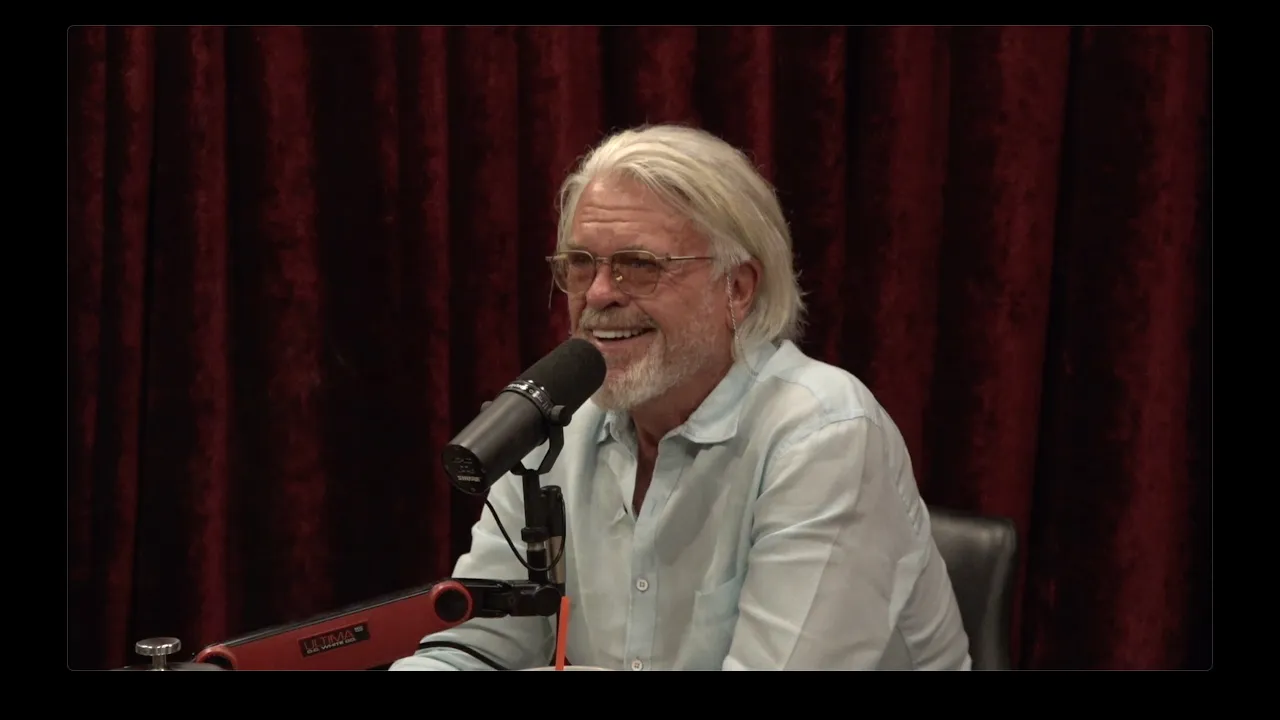
Joe Rogan Experience #2555 - Ron White
PowerfulJRE
10,270 views • 18 hours ago Save 135 min 13 min read
Video Summary
Comedian Ron White discusses the evolving landscape of stand-up comedy, touching on the effectiveness and pitfalls of crowd work, the rise of platforms like "Kill Tony," and the importance of genuine talent over fleeting exposure. He recounts the journey of emerging comedians like Brent Reif and Dedrick Flynn, highlighting how "Kill Tony" has become a crucial launchpad for those who have honed their craft.
The conversation then shifts to personal experiences, including travel in Europe, the nuances of cigar collecting, and the challenges of navigating international travel with differing laws and customs. White also delves into personal finance, the psychology of collecting, and the enduring appeal of classic cars, reflecting on his own financial journey and the importance of earning one's success. The latter half of the discussion explores political and social issues, from the impact of government regulations and the debate around marijuana legalization to the complexities of gender identity and the role of faith in society, all framed through White's candid and often humorous perspective.
Short Highlights
- Crowd work is a tough skill some comedians excel at, but White prefers not to use it in his own shows.
- "Kill Tony" has become a significant platform for launching comedians who have put in the work.
- White recounts a frustrating experience with Viking Cruises over smoking marijuana.
- The legality and enjoyment of cigars, particularly Cuban cigars, are discussed.
- White shares his experiences with luxury travel and the infrastructure of Switzerland.
- The conversation touches on the impact of government regulations and policies, including issues like marijuana legalization and political donations.
- White reflects on his career, personal finances, and the importance of hard work and earning success.
Key Details
The Art of Crowd Work [00:00:00]
- White expresses his personal aversion to crowd work, viewing it as a "time killer" rather than a core comedic skill.
- He acknowledges its difficulty and the improvisational talent required, noting that some comedians like Rick Ingram and Big J Oakerson are exceptionally skilled at it.
- White emphasizes that while he doesn't "knock it," he prevents his opening acts from doing crowd work to avoid setting a precedent for audience interaction with him.
"I don't get fucking crowd work. I mean, I... It's not my thing, but I get it."
"Kill Tony" as a Comedy Incubator [00:04:15]
- The discussion highlights the impact of the show "Kill Tony" in providing a platform for emerging comedians.
- Brent Reif, a young comedian from Alabama, is mentioned for his recent success on the show and for opening for Ron White.
- Reif's story of calling his dad in excitement after being asked to open for White underscores the significance of such opportunities.
"Holy fucking shit, man. He called his dad. Yeah. He's like, I'm fucking opening for Ron White."
The Power of Opportunity [00:07:30]
- The transcript emphasizes that "Kill Tony" is a great opportunity, but readiness is key.
- Comedians who are prepared can leverage the platform, while those who aren't may see it as a "passing moment."
- The consequence of bombing on the show can be dire, potentially leading to a career shift to less glamorous jobs.
"If you're ready for it. If you're not, it's just another passing moment and the crowds love it too."
The Unique Platform of "Kill Tony" [00:11:00]
- The show is described as a unique and genius platform that has become a "new Hollywood" for stand-up comedians.
- It provides a real career path for comedians who have dedicated years to honing their craft on the road.
- The success of comedians like William Montgomery and Cam Patterson is attributed to their exposure on the show.
"This is the new version of that. You're seeing guys, but now it's just stand-up. Like, you have a real career in stand-up from it."
The Unpredictability of Stand-Up Comedy [00:15:45]
- Stand-up comedy is characterized as a "weird career" due to the psychological fragility of its practitioners and the inherent ups and downs.
- The need for a "catalyst" for success is mentioned, with White citing the "Blue Collar Comedy Tour" as his.
- The difficulty of replicating the success of such tours is noted, with "Kill Tony" being seen as a modern parallel.
"Stand-up comedy is a weird career, period. Because, you know, everyone's like psychologically fragile, right?"
The Swiss Experience: Toilets and Infrastructure [00:24:00]
- White recounts his recent trip to Switzerland, describing it as beautiful but highlighting the inconvenience of pay toilets.
- He humorously details the struggle of needing to pay a dollar to use the restroom, the inability to use foreign currency, and the eventual reliance on credit cards.
- The country's impressive infrastructure, including high-speed trains and efficient transportation systems, is contrasted with the US's debt and lack of similar advancements.
"To take a shit? To take a shit. And I'm like, that's discrimination. It's like, why is it discrimination? Only people with a dollar can shit here?"
A Cruise Ship Confrontation [00:28:30]
- White shares a story about being confronted by the captain of a Viking cruise ship over smoking marijuana.
- He claims he was initially told he could smoke on his deck, but the captain later accused him of smoking in his room and being a liar.
- The incident highlights a misunderstanding and aggressive confrontation, with the captain eventually suggesting he could "look the other way" if White smoked on the top deck.
"And the fucking people came down on me so hard at Viking Cruises. And the captain of the ship confronted me in front of a bunch of people, really loud and aggressive, and called me a liar, and..."
The Cuban Cigar Conundrum [00:33:00]
- The discussion turns to Cuban cigars and the legality of possessing and importing them into the U.S.
- White explains that while one can smoke them abroad, bringing them back is generally prohibited.
- The practice of removing bands from cigars to circumvent detection is mentioned, along with the prevalence of counterfeit cigars.
"Current CBP guidance says people subject to U.S. jurisdiction may acquire Cuban goods while outside the United States in certain circumstances, but may not import Cuban-origin tobacco products into the country."
The Art of Cigar Making [00:38:00]
- The conversation delves into the origins of Davidoff cigars, with Zeno Davidoff moving production from Cuba to the Dominican Republic.
- The generational skill of Cuban rollers and their unique rolling rooms are described as contributing to the superior quality of Cuban cigars.
- Companies are noted to have bought out cigar companies solely to acquire their rollers, then discontinuing the lines.
"They just had generational rollers, and they have these big rolling rooms. Somebody would sit up in front of the thing and read them books, and they'd just sit there and roll these beautiful fucking classic cigars..."
Pre-Embargo Cuban Cigars and Collectibles [00:42:00]
- The possibility of buying pre-embargo Cuban cigars in the U.S. is discussed, with these being legal if rolled before the embargo.
- The high cost and rarity of these cigars are highlighted, with some selling for hundreds of dollars.
- The psychological aspect of collecting rare and hard-to-obtain items is explored.
"It's porn for cigar people. Yeah. Right? They just want to stare at them."
The Corvette and a Race Car Driver's Touch [00:48:00]
- White's custom Corvette is a topic of conversation, with its unique features and the involvement of Kurt Busch's race team in its setup.
- Busch's testing of the car at 170 mph and his suggestions for adjustments are recounted.
- The car's power, lightness, and the expertise required to handle it are emphasized.
"He's doing donuts in it. I'm like, God damn, I just had that fucking paint job."
Setting Up a Racetrack Studio [00:55:00]
- Plans to set up a podcast studio at a racetrack are discussed, with the goal of recording episodes with drivers and car companies.
- The idea is to allow guests to drive cars on the track and discuss them, creating engaging content.
- Formula One's arrival in town is seen as an opportune time to attract drivers for interviews.
"So sometime around like November-ish, we'll start doing podcasts out of there. Hope to get it done right around the time Formula One is in town."
The Golfing Conundrum [01:00:00]
- White expresses a desire to get into golf, comparing it to archery in its need for precision and adaptability.
- The challenge of generating power in golf, unlike in archery where power is pre-loaded, is noted.
- Jamie's impressive golf drives are mentioned, highlighting his ability to hit balls over 300 yards.
"It's a lot like shooting a bow. In that- Don't tell me that because then I can't do it."
The Science of Stretching and Strength [01:05:00]
- The benefits of stretching, particularly through services like Stretch Zone, are discussed for improving flexibility and performance, especially in golf.
- The importance of strength training, including kettlebell routines, is emphasized for overall health and athletic performance.
- White discusses his use of testosterone and human growth hormone to maintain muscle mass and vitality.
"Nothing frees up your lower back. You've got to be able to."
Political Disagreements and Ideological Divides [01:12:00]
- The conversation touches on political ideologies, with White identifying as left-leaning but critical of government overreach.
- The perceived "insanity" of issues like open borders, COVID mandates, and online censorship is expressed.
- The debate around abortion rights and late-term abortions is explored, with differing perspectives on government involvement and personal choice.
"The problem is, like, rational and insane."
The Texas Political Landscape [01:20:00]
- The role of Christian nationalism in Texas politics and the debate over the 10 Commandments in public schools are discussed.
- The separation of church and state is questioned, with concerns about forcing religious ideology on students.
- The corruption of Ken Paxton and the fight over marijuana legalization in Texas are highlighted.
"You can't decide that your way is the way that other people have to live."
Marijuana Legalization: A Missed Opportunity [01:25:00]
- The economic benefits of legalizing and taxing marijuana are emphasized, with California's $7.7 billion in tax revenue cited as an example.
- The current prohibition in Texas is seen as a result of corruption or ignorance, with the alcohol lobby potentially influencing the decision.
- The argument that marijuana should be regulated and taxed, rather than criminalized, is strongly made.
"Regulate it and tax it, you fucking idiots. You're missing out on so much money."
The Nature of Leadership and Corruption [01:32:00]
- The discussion shifts to the nature of leadership, contrasting the Chinese system of experienced, albeit authoritarian, leaders with the perceived flaws in American politics.
- The influence of money, corporations, and lobbyists on political decisions is criticized.
- The idea of a "benevolent dictator" is explored, with the conclusion that such a figure is unlikely to exist.
"We're being grifted, Joe. 100%. We're being grifted."
Gender Identity and Biological Realities [01:40:00]
- The complexities of gender identity are discussed, with a distinction made between personal feelings and biological realities.
- The potential for confusion and mistakes, particularly among young people undergoing medical transitions, is raised.
- The concept of gender dysphoria is acknowledged, but concerns are expressed about the medicalization and potential for irreversible procedures.
"Facts over feelings. Feelings are fine. Like you should be able to say what you call yourself Carol or Bob or whatever you want to do, man."
The Consequences of Political Rhetoric [01:48:00]
- Jelly Roll's controversial monologue on Jimmy Kimmel Live, where he joked about Donald Trump's weight, is analyzed.
- The backlash and criticism Jelly Roll received are discussed, with some arguing that his remarks were not inherently offensive.
- The power of social media and the mob mentality in canceling public figures are highlighted.
"From one fat pig to another, take it from me that physical fitness is very important."
The End Times and Religious Interpretations [01:55:00]
- J.D. Vance's speech about the possibility of living in the "end times" is discussed, with skepticism about prioritizing such an outcome.
- The nature of faith, the interpretation of religious texts, and the potential for forcing beliefs on others are explored.
- White shares personal experiences with religion, including his uncle's hypocrisy and his grandmother's speaking in tongues.
"If that leads to the end times, okay. Not great."
The Power of Oratory and Comedy [02:05:00]
- The connection between powerful preachers and comedians is drawn, with both relying on oratory skills to engage an audience.
- White acknowledges learning his stage presence from watching his uncle preach, aiming to deliver a similar impact without the religious message.
- The idea that many comedians, like Chris Rock and Larry the Cable Guy, have roots in religious backgrounds is noted.
"And I know that's where I learned. I want to be that guy on stage, but I just don't want to have a religious message."
The Sherp Vehicle: A Flood Response Tool [02:12:00]
- The donation of a Sherp vehicle, a highly capable off-road vehicle, for flood response in Texas is discussed.
- The vehicle's unique features, including its ability to navigate extreme terrain and store fuel in its tires, are highlighted.
- The successful use of the Sherp in a flood rescue operation is recounted, demonstrating its practical value.
"They used that one year later to save lives. One year later, that same storm system hit that same riverbed and they used that thing for days."
Natural Disasters and Earth's Vulnerability [02:20:00]
- The conversation touches on natural disasters, including a dam break in Nepal caused by an avalanche and the potential threat of asteroids.
- The overwhelming power and speed of natural forces are emphasized, leaving little chance for escape.
- The current inability of humanity to effectively defend against large asteroids is acknowledged.
"It's just the way it, like, this idea people have. Like, oh, the water's coming, you'd be able to run, like, uh-uh. No."
California's Regulations and Real Estate [02:25:00]
- The stringent regulations in California, particularly concerning new housing construction and tire sales, are criticized.
- The complexity and red tape involved in rebuilding after a fire are contrasted with the more straightforward process in Texas.
- The beauty of Southern California is acknowledged, but the desire of people to leave due to these regulations is noted.
"It's just so much red tape before you can begin construction again."
The Scale of Joe Rogan's Audience [02:30:00]
- White expresses awe at the massive audience of Joe Rogan's podcast, with millions of subscribers on YouTube and Spotify.
- He reflects on the pressure of speaking to such a large audience, even when feeling unprepared.
- The relatable nature of Rogan's audience is seen as a key factor in the podcast's success.
"I'm going to go talk to 20 million people and I really don't have anything to say."
Ron White's 40 Years in Comedy [02:35:00]
- White announces his upcoming 40th anniversary in stand-up comedy, with a show scheduled for September 17th.
- He mentions upcoming tour dates in Florida and Texas, including a significant anniversary show in Grand Prairie.
- The conversation ends with a sense of camaraderie and anticipation for their upcoming performances.
"September 17th, 1986 is when I first started telling jokes."