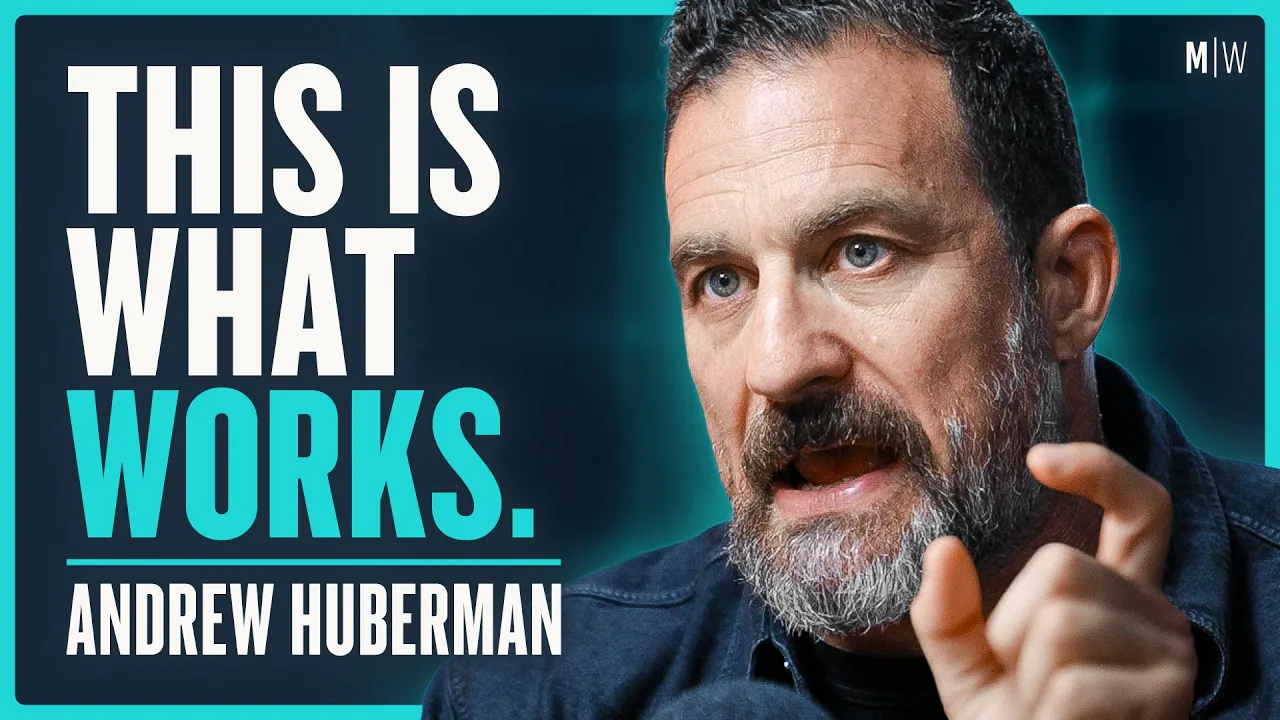
Google is killing authentic websites & I made it worse 😔
Louis Rossmann
161,600 views • 7 months ago Save 17 min 7 min read
Video Summary
The video expresses frustration with the modern internet's shift towards AI-generated content, which the speaker believes is devaluing human authenticity and original thought. The speaker, a business owner of 16 years, details how his own company's website ranking on Google plummeted after algorithm changes, forcing him to adapt his content to an AI-friendly, "sanitized" voice to maintain business viability and support his employees. This change is a source of embarrassment and regret, as it contradicts his long-standing commitment to transparency and honesty with his customer base. The video contrasts this with the early internet's emphasis on genuine interaction and the speaker's own history of building trust through open communication. A key takeaway is that the path to success taken by independent businesses in the past may no longer be viable due to these algorithmic shifts, with one particularly striking example being the speaker's company, Rossman Repair Group, being delisted from Google search results for many key terms.
Short Highlights
- The speaker expresses a disdain for AI being used to train on private personal data and for lazy, unoriginal AI-generated content.
- The internet is shifting towards valuing AI content over human-generated content, impacting search engine visibility.
- The speaker's business, Rossman Repair Group, was delisted from Google search results for many key terms, forcing a change in website content to an AI-friendly, "sanitized" voice.
- This forced change to his website's content, which was previously honest and transparent, is a source of embarrassment and goes against his core business principles.
- The speaker fears this trend will lead to a more homogenized and less authentic internet, potentially making the path to success for small businesses impossible.
Key Details
Authenticity and Business Philosophy [0:00]
- The speaker discusses the difficulty of creating this video because it involves discussing personal business failures and a shift in his approach.
- For 14 years, he has been open about his failures and learning process, believing authenticity was key to his brand, especially when starting from humble beginnings like working out of a park.
- His strategy was to compete on honesty and transparency, treating customers as humans rather than just revenue sources.
- This approach was maintained even as his channel grew to over 2.5 million subscribers and he built multiple businesses.
"What I could compete on was honesty, transparency, showing you exactly what my thought process is and treating you like a human being rather than somebody to be mind for as much revenue as possible based on you not having knowledge of what it was I was doing."
Disdain for AI Misconceptions and Ethical Use [02:01]
- The speaker clarifies he doesn't have a fundamental disdain for AI but for specific unethical uses.
- His primary concerns are AI training on private data without consent and lazy, unoriginal content generation.
- He differentiates between AI use for private data and public information, drawing a line at privacy invasion.
- Examples of misuse include Adobe training on private data and generic, copy-pasted AI emails.
- He advocates for AI usage that is not a direct copy-paste from a single prompt and respects user privacy.
- He shares positive uses of AI for personal email cataloging (via Thunderbird extension and Olama) and as a research assistant for legal defense.
"I have a disdain for two things and now three. The first is when an AI or some company tries to sneak in using AI uh training on your private personal data."
The Shift Towards AI-Valued Content [04:30]
- The speaker observes a trend where AI-generated content is becoming valued over human-generated content online.
- This is driven by algorithm changes, making the internet less authentic and useful.
- He cites Google's search results deterioration, initially from affiliate link spam and now from favoring less authentic AI content.
- His own website, rossmanrepairgroup.com, experienced a significant drop in Google search rankings, being delisted for many key search terms.
- This resulted in a massive decrease in potential customer reach, from 320 million to approximately 20,000 for hyper-specific searches.
"The internet is slowly starting to become a place where AI content seems to be valued over human generated content. And that I don't like at all and as algorithms shift this is going to be promoted more and more."
The Struggle for Online Visibility [06:02]
- The speaker details the significant negative impact of being delisted from Google, affecting employee salaries and hiring.
- He explains that the quality of repair jobs decreased as less reputable sources were prioritized by Google's algorithm.
- Despite trying various SEO strategies, website redesigns, and hiring professionals, he could not improve his ranking.
- He discovered that rewording his website content to be more "sterile" and less personal, as suggested by Google's AI (Gemini), significantly improved his search engine ranking.
- This forced him to adopt a voice that felt inauthentic and a departure from his established brand of transparency and honesty.
"And then I ask Gemini. Gemini is an AI made by Google. Maybe it knows what's wrong here. And I ask it and I get results that start to freak me out because it starts telling me that the very language that I use on my website is language that maybe I shouldn't be using."
The Compromise of Principles [10:46]
- The speaker reflects on his website's historical honesty, contrasting it with the current AI-influenced, "sterile" content that ranks.
- He expresses embarrassment at changing his website's voice to appease algorithms, especially when it contradicts his long-held values of transparency.
- The decision to modify his content was driven by the need to support his six to eight employees and their families, avoiding layoffs.
- He contrasts this with the laziness of simply using AI for content creation, highlighting that his situation is a forced compromise for business survival.
- He observes this trend extending to YouTube, with AI-generated scripts and voices dominating search results, making it difficult for authentic content to thrive.
"My website reads like the exact [ __ ] opposite of this and that is what's ranking."
The Evolving Internet Landscape [16:14]
- The speaker laments the erosion of the internet's authentic spaces, comparing it to the loss of old forums replaced by social media.
- He fears a future where AI-generated "garbage" content dominates, incentivizing sanitization over genuine expression.
- He makes a bet that within five years, much of the internet will be filled with AI-written content because it's necessary to perform well.
- The core dilemma is choosing between business survival and upholding principles, leading him to a decision he's ashamed of.
- He concludes that if sanitizing content through AI is necessary for business success, many others will follow suit, creating a less human internet.
"I'm watching one of the fundamental pillars. This doesn't even have to do with right to repair. It just has to do with like the right to express yourself being eroded."
A Bitter Pill of Necessity [19:52]
- The speaker presents a stark choice: maintain his authentic voice and risk financial ruin, or adapt to AI-driven algorithms for business survival.
- He admits to modifying his site's wording, a principle he feels he has compromised, causing him deep embarrassment.
- The decision to alter his content is framed as a difficult necessity to avoid laying off his employees, a consequence he finds more unbearable.
- He questions how many others will be forced into similar compromises, creating a sanitized internet where AI-generated content reigns supreme.
- The video ends with a plea for audience input, acknowledging his own potential flaws but emphasizing the broader systemic changes he's witnessing.
"I hate the idea of doing this. It makes me sick to my stomach to change my wording choices on my website to plate an algorithm. I want to have my voice come through with everything I'm doing."