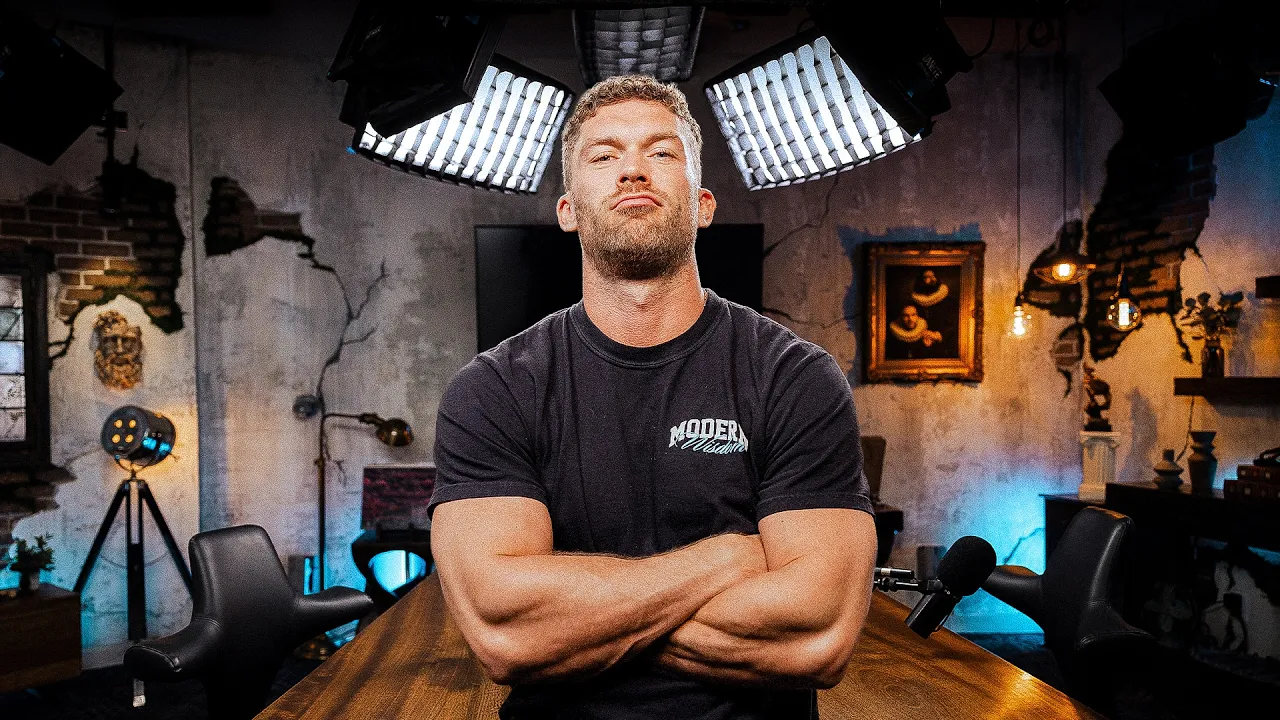
Trevor Kavanagh warns what Andy Burnham's '10-year plan' really means for your bank account
The Sun
2,132 views • 1 month ago Save 8 min 5 min read
Video Summary
The transcript discusses Andy Burnham's political proposals, likening his approach to a return to the 1970s economic policies of Britain, which led to a bailout from the International Monetary Fund. The speaker suggests that the middle classes will bear the brunt of these policies. While acknowledging Burnham's initially impressive debut and affable demeanor, the speaker questions the feasibility of his plans, particularly his promise to abolish rough sleeping and his 10-year plan for prosperity. The transcript also touches on the challenges of implementing large-scale reforms, the potential for increased national debt, and the impact of immigration on the labor market. The speaker expresses skepticism about Burnham's ability to make tough decisions and deliver on his promises, citing his predecessor's struggles and the current economic climate.
Short Highlights
- Andy Burnham's proposed policies are compared to 1970s economic strategies that led to an IMF bailout.
- The middle class is expected to bear a significant burden from these policies.
- Skepticism is raised about the feasibility and delivery of Burnham's 10-year plan and promises.
- The transcript questions Burnham's leadership style and ability to make difficult decisions.
Key Details
Burnham's Economic Vision [00:00]
- Andy Burnham's proposed path is seen as a return to 1970s economic policies.
- This era led to Britain seeking an IMF bailout due to financial shortfalls.
- The middle classes are anticipated to carry a disproportionate burden of the proposed policies.
Burnham's Debut and Promises [00:23]
- Burnham's initial presentation is described as impressive, with affability and dignity.
- He promised to reveal his plans in the coming days, but Parliament was rising for summer recess.
- His predecessor, Sir Karma, is characterized as wooden and poor in public speaking.
Key Policy Proposals [01:37]
- Burnham aims to abolish rough sleeping, a goal also promised in Manchester.
- A 10-year plan for universal prosperity was mentioned in broad terms.
- The speaker expresses doubt about how these ambitious goals will be achieved.
Economic Challenges and Debt [03:09]
- Britain faces a significant national debt of 3 trillion pounds.
- Servicing the interest on this debt costs approximately 110 billion pounds annually.
- This debt servicing cost exceeds the needs for essential public services like education and healthcare.
Predecessor's Performance [03:38]
- The previous leader was seen as making a "dog's dinner" of the job, with frequent U-turns.
- Promises regarding welfare spending, such as trimming the two-child benefit, were not fulfilled.
- This highlights a potential issue of facing pressure from within the party.
Net Zero Policies and Industry Impact [04:41]
- Burnham plans to repudiate some of Ed Miliband's net zero energy policies.
- These policies have resulted in the most expensive gas and electricity in Europe.
- Industries are struggling, and some are moving abroad due to high energy costs.
Labor's Challenges and Leftward Drift [05:24]
- Labor faces problems partly of its own making or inherited from the Conservative Party.
- The party is seen as drifting further left under Burnham's leadership.
- Experiments with devolving power and increasing taxes have historically ended in failure.
The Cost of Reform and Manchester's Success [06:32]
- Implementing significant reforms requires substantial financial investment and preparation.
- Burnham's success as Mayor of Manchester is attributed to groundwork laid by previous administrations.
- He is seen as wanting the benefits without undertaking the necessary difficult measures.
Burden on the Middle Class [07:35]
- The middle classes are expected to bear the brunt of future policies.
- Tax thresholds have not kept pace with inflation, pushing more people into higher tax brackets.
- High interest rates and the cost of living are already straining household finances.
Immigration and Labor Market Issues [08:21]
- Immigration is discussed not as a race or cultural issue, but in terms of numbers and cheap labor.
- Nine million people are on employment-related benefits, with a growing proportion being young people.
- Importing cheap labor is seen as displacing opportunities for homegrown labor.
Leadership Style and Decision-Making [09:48]
- Burnham's perceived weakness is a desire to be liked, similar to Boris Johnson.
- Effective leadership requires toughness and the ability to make and stick with difficult decisions.
- Cherishing friendships might hinder Burnham's ability to make unpopular but necessary choices.
Mandate and Momentum [10:54]
- Burnham is seen as having risen without a clear public mandate or general election support.
- The upcoming parliamentary recess could disrupt the momentum of a new leader.
- There is a need to maintain momentum rather than pausing for holidays.
Ed Miliband and Party Factions [11:33]
- Ed Miliband is viewed by some on the left as a more significant figure than Burnham.
- There is a desire for Miliband to be Chancellor, rather than Shabbana Mahmud.
- Mahmud's policies on immigration and potential welfare reforms are viewed with concern by some.
Delivering on Promises [13:09]
- Burnham's initial presentation was slick and well-delivered, but delivering results is the real challenge.
- He has a limited timeframe to demonstrate success and increase popularity.
- Failure to deliver could lead to struggles in the role, similar to previous leaders.