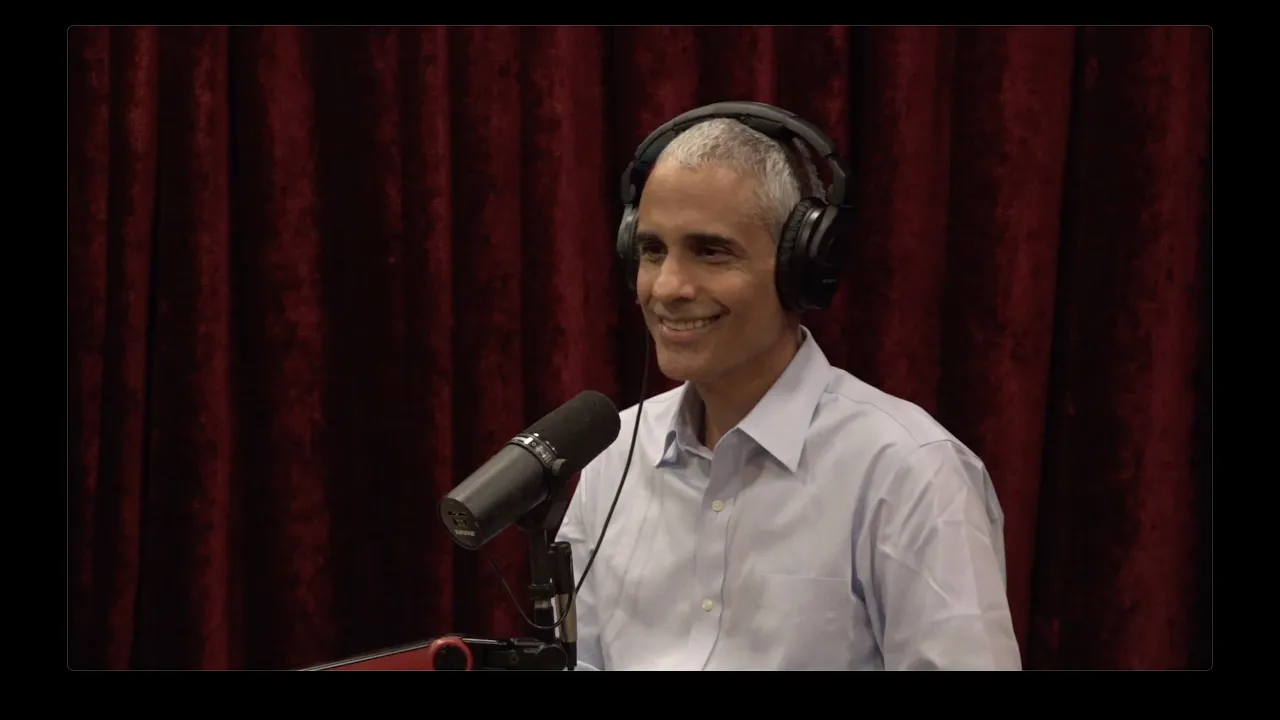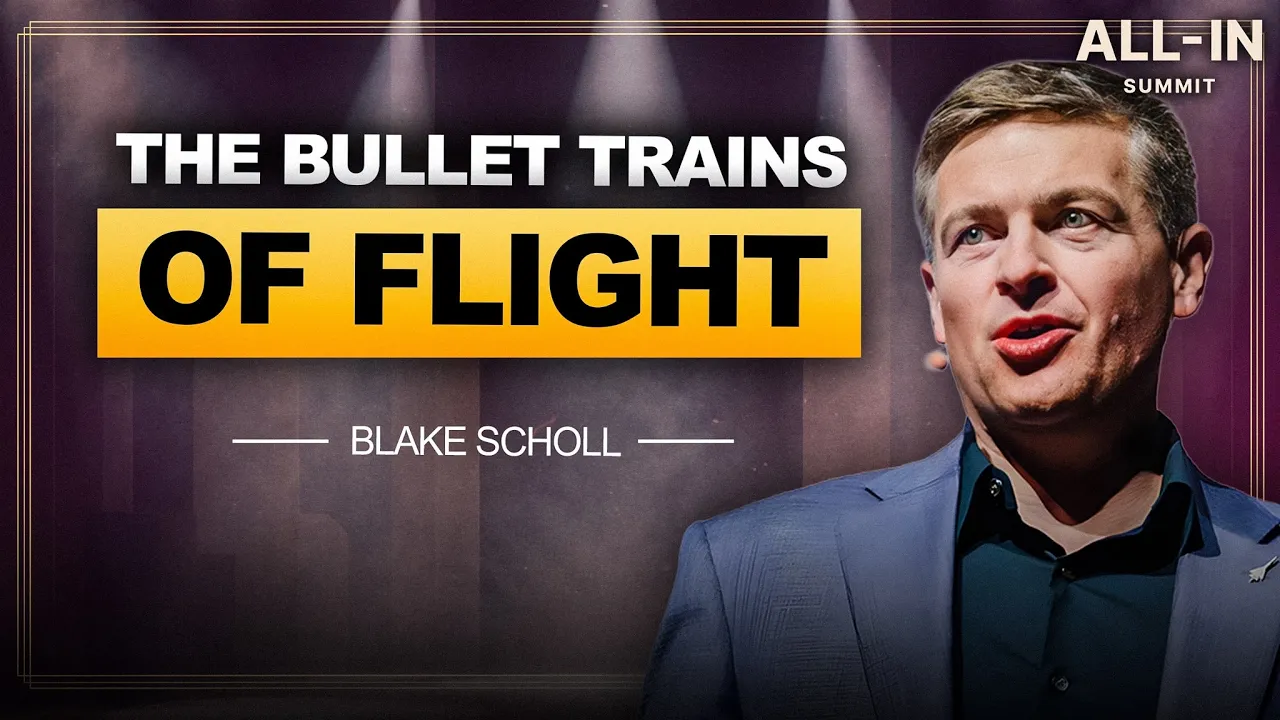
Blake Scholl: Why Plane Speed Stalled, Supersonic Commercial Flight, & Revolutionizing the Engine
All-In Podcast
19,272 views • 18 hours ago Save 12 min 5 min read
Video Summary
Boom Supersonic aims to revolutionize air travel by reviving supersonic passenger flights, a feat stalled for decades after the Concorde's retirement. CEO Blake Scholl, formerly of Amazon and Groupon, founded Boom with a vision to make the world more accessible through faster travel. Despite early skepticism and humble beginnings, Boom achieved a major milestone by becoming the first private company to build and fly a supersonic jet, the XB-1, in 2025. This success was bolstered by a breakthrough in "boomless cruise" technology, which redirects sonic booms upward, potentially lifting the ban on supersonic flight over land. The company is also developing its own jet engines and exploring applications in data center power generation, aiming for a financially viable and innovative future for aviation.
Short Highlights
- Boom Supersonic is set to bring back supersonic passenger travel, aiming to make global travel dramatically more accessible.
- The company successfully flew the XB-1, the first privately developed supersonic jet, in 2025, demonstrating "boomless cruise" technology.
- This "boomless cruise" innovation redirects sonic booms, potentially ending the ban on supersonic flight over land.
- Boom is developing its own advanced jet engines from scratch, a move that has proven crucial for financial viability.
- The company is also leveraging its engine technology for ground-based power generation for data centers.
- A round trip across the Atlantic is projected to take three and a half hours, with a break-even fare of approximately $3,500.
- The ultimate goal is to make supersonic travel available to all classes of passengers, akin to the accessibility of modern air travel.
Key Details
The Dream of Supersonic Travel Reborn [0:00]
- Boom Supersonic founder and CEO Blake Scholl aims to revive supersonic passenger travel, envisioning a future where the planet is dramatically more accessible.
- He contrasts this ambition with the stagnation in aviation, noting that Boeing has not built a new airplane in 20 years and that current airliners are similar to their first models.
-
"We're here to bring back supersonic passenger travel and ultimately to make the planet dramatically more accessible."
Overcoming Skepticism and Humble Beginnings [1:39]
- Scholl, a former software engineer, faced skepticism about his ability to achieve supersonic flight, even from former boss Jeff Bezos, who cited the difficulty of building an all-composite airliner.
- Boom's early mock-up was famously constructed from cardboard, plywood, and Office Depot seats, highlighting the company's humble origins.
-
"No matter how good an entrepreneur you are, you're not going to build an all-composite airliner in your garage startup."
Milestone Achievement: The XB-1 Takes Flight [3:20]
- Boom became the first private company to build and fly a supersonic jet, the XB-1, with a small team of 50 dedicated individuals.
- The XB-1's flight included the first supersonic installation of Starlink, allowing global viewers to tune in.
-
"And when we flew that airplane, we had the first supersonic installation of Starlink."
"Boomless Cruise" and Regulatory Hurdles [5:24]
- The XB-1 demonstrated "boomless cruise" technology, which uses atmospheric refraction to redirect sonic booms upward, making them inaudible on the ground.
- This innovation led to discussions with the president, resulting in the executive order lifting the ban on supersonic flight over the U.S. and the subsequent passage of the Supersonic Legalization Act in the House and Senate Commerce committees.
-
"The world needs supersonic flight. Passengers deserve it."
In-House Engine Development and Financial Viability [7:30]
- Boom faced significant challenges when its plan to outsource engine development to Rolls-Royce failed, leading to public declarations of doom.
- The company decided to develop its own engines from scratch, utilizing advanced digital design and manufacturing tools, a move that has unexpectedly become key to its financial viability.
-
"Turns out, turns out that effort's actually working."
Diversification and Future Outlook [10:11]
- Boom is adapting its supersonic engine technology for ground-based power generation for data centers, offering a high-capacity, water-free solution.
- The company is building a state-of-the-art jet turbine factory in an undisclosed location, aiming to produce multiple gigawatts per year and add 10+ gigawatts to the grid over five years.
-
"We are manufacturing our own engines at scale, starting from raw materials, then going to the parts, including the most difficult ones, like blades and vanes, and then assembling them, and then running on our own test stand."
The Passenger Experience: Speed and Cost [13:20]
- A round trip across the Atlantic is projected to take three and a half hours at Mach 1.7, with a break-even fare of approximately $3,500.
- While the break-even fare is $3,500, actual ticket prices are expected to be double or triple that amount.
-
"And the break-even fare is about $3,500."
The Vision for Accessible Supersonic Travel [16:00]
- Scholl envisions a future where supersonic travel is accessible to all classes of passengers, from the president on Air Force One to commercial flights.
- He aims to reach a point where future generations find it unimaginable to spend six hours crossing the country.
-
"We will have one when we've sped up flights for every passenger."
Political Support and Rapid Progress [18:00]
- Supersonic flight has become a non-partisan issue, with bipartisan support in Congress.
- The current administration has shown remarkable speed in embracing Boom's progress, with an airplane model reaching the Oval Office shortly after the XB-1 broke the sound barrier.
-
"Like, we broke, literally, we broke the sound barrier on Monday. I tweeted about it."