Good Morning America: News to start your day | August 16
ABC News
80,845 views • 2 months ago Save 12 min 4 min read
Video Summary
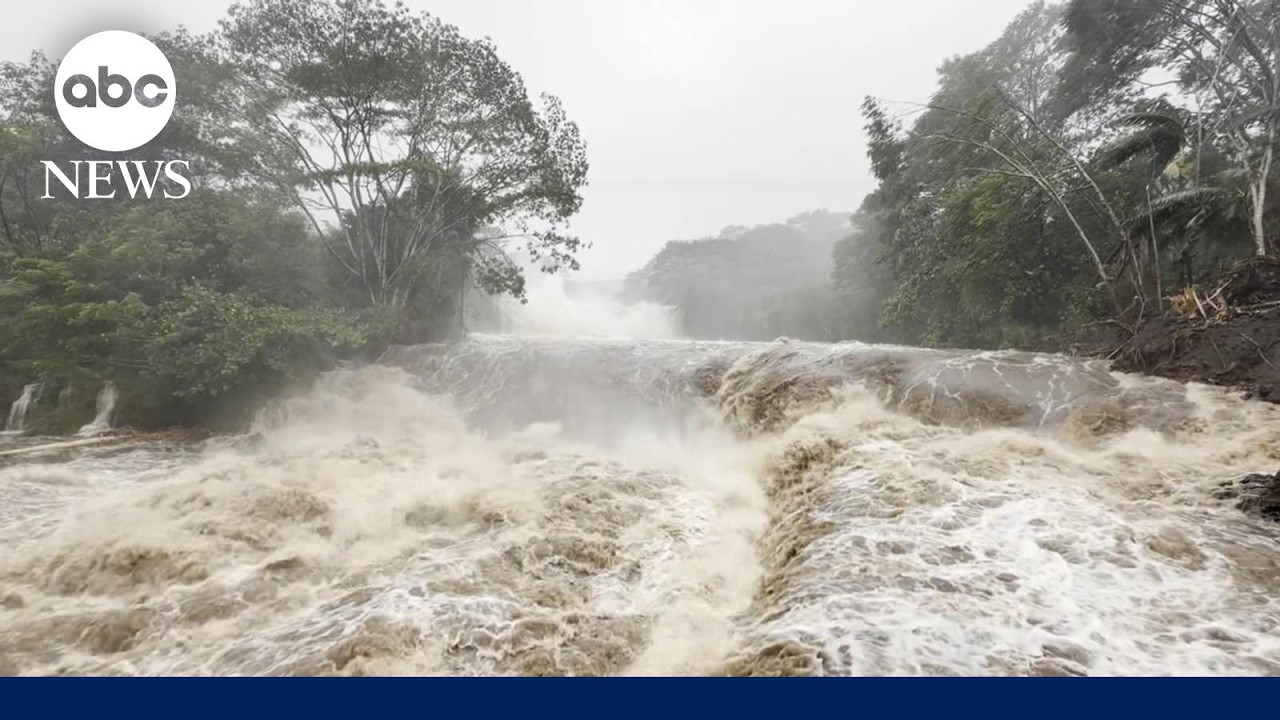
Hurricane LALA unleashed torrential downpours and fierce winds across the Hawaiian Islands, triggering widespread flooding and power outages for over 100,000 residents. The Wailuku River in Hilo transformed into a raging torrent, overflowing its banks and inundating critical bridges, while law enforcement reported two homes swept away by powerful floodwaters. The governor declared a state of emergency, deploying National Guardsmen as airports, ports, and schools shuttered. Meanwhile, on the mainland, Indianapolis grappled with its own flooding, with the White River inundating a road, and parts of West Virginia faced a severe flood risk.
Short Highlights
- Hurricane LALA caused widespread flooding and power outages across Hawaii.
- The Wailuku River overflowed, leading to significant damage.
- Over 100,000 homes and businesses lost power.
- The governor declared a state of emergency.
- Two homes were swept away by floodwaters.
- Airports, ports, and schools were closed.
- The storm also impacted Indianapolis with flooding.
Key Details
Hurricane LALA's Impact on Hawaii [00:00:00]
- Hurricane LALA battered the Hawaiian Islands with fierce winds and torrential downpours.
- The storm caused widespread flooding, particularly along the Wailuku River in Hilo.
- Law enforcement reported two homes were swept away by powerful floodwaters.
"Well, law enforcement here on the Big Island say it is because of powerful water like that that swept away two homes."
Widespread Power Outages and Emergency Measures [00:00:00]
- Over 100,000 homes and businesses lost power, with nearly 70% of the Big Island in the dark.
- The governor declared a state of emergency and deployed 180 National Guardsmen.
- Airports in Hilo and Kona, along with ports and schools, were shut down.
"The hurricane knocking out power for more than 100,000 homes and businesses overnight."
Storm's Path and Continued Threats [00:00:00]
- Hurricane LALA's eyewall brushed the Big Island's southern tip with wind gusts up to 85 mph, but did not make landfall.
- The storm strengthened to a Category 1 hurricane.
- The Big Island received three feet of rain, with half falling in 24 hours.
"The Big Island receiving three feet of rain from this storm, half of that falling in just 24 hours."
Flooding Concerns and Ocean's Threat [00:00:00]
- The heavy rain caused the Wailuku River to rage, with Rainbow Falls becoming unrecognizable.
- Residents expressed worry about the ocean potentially flooding their homes.
- The storm was moving westward, threatening the rest of the island chain with potential flooding.
"What I'm most worried about is I'm most worried about the ocean coming into my house, breaking my house down, and washing us out to the ocean."
Mainland Flooding and Severe Weather Warnings [00:00:00]
- Indianapolis, Indiana, experienced flooding as the White River inundated a road.
- Parts of West Virginia were under a Level 3 out of 4 flood risk.
- The storm continued to bring rain to other Hawaiian Islands like Maui and Oahu.
"Meanwhile, Indianapolis, Indiana, here on the mainland, dealing with flooding as well."
Other News: US Military Strain, Indonesia Quake, VSU Shooting, Israel-Lebanon Strikes, Flock Cameras, Health Study, NFL Preseason [00:00:00]
- The war in Iran approached six months, with reports of food shortages and mental health concerns on the USS Abraham Lincoln.
- A 7.7 magnitude earthquake in Indonesia killed at least 53 people and destroyed hundreds of homes.
- An arrest was made following a shooting at Virginia State University that wounded five people.
- Israel launched airstrikes against southern Lebanon, killing at least 11 people.
- Flock surveillance camera company announced changes to address misuse concerns, including stalking.
- New research suggests abdominal fat may be a better predictor of heart disease risk than BMI alone.
- The NFL preseason saw several games with notable rookie performances and player moments.
"Now to the strain on American forces. As the war in Iran approaches six months, the CENTCOM commander, Admiral Bradley Cooper, visiting the USS Abraham Lincoln in the region following reports of food shortages and concerns over the mental health of sailors on the ship."


