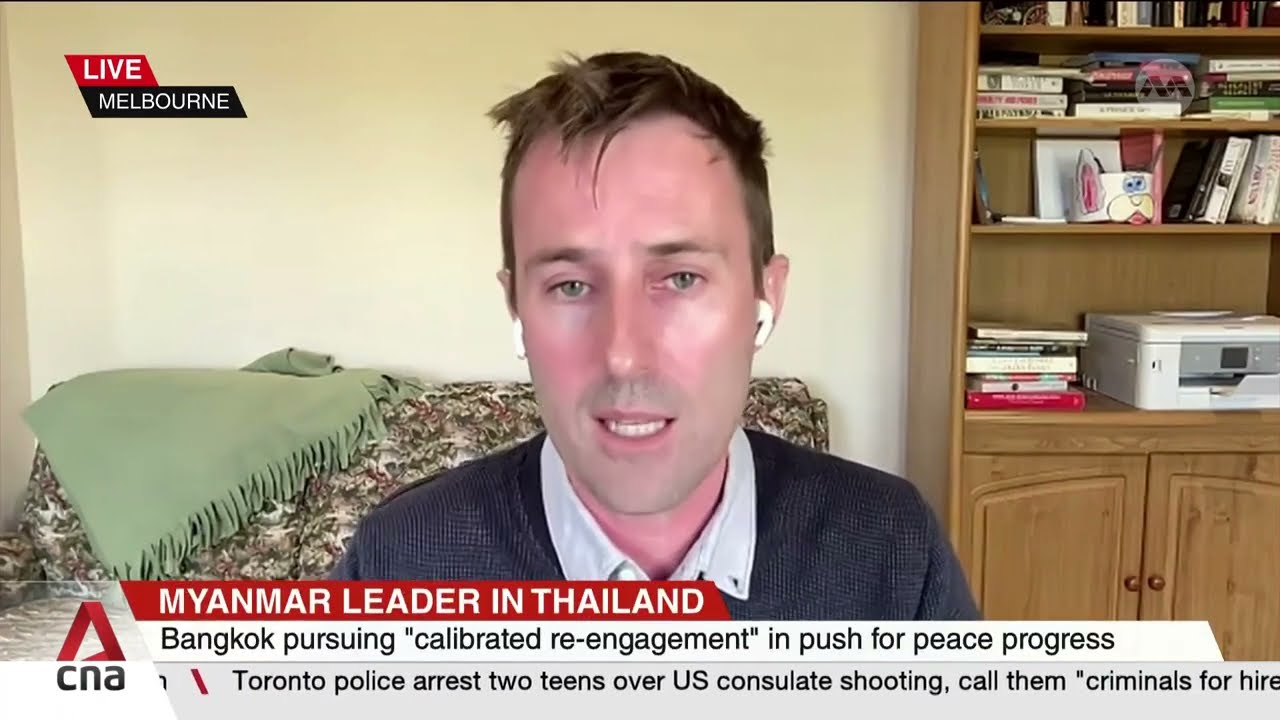
Thailand’s engagement with Myanmar: Can it help normalise ASEAN ties?
CNA
6,883 views • 1 month ago Save 7 min 4 min read
Video Summary
Thailand is spearheading a "calibrated re-engagement" with Myanmar's military regime, hosting leader Min Ong Lain for a high-profile visit aimed at boosting trade and energy collaboration. Despite international criticism of Min Ong Lain's legitimacy following a coup and a flawed election, Thai Prime Minister Anutin Chinvat rolled out the red carpet, signaling a desire to bring Myanmar back into the ASEAN fold. This move, however, has divided ASEAN, with nations like Singapore urging progress on a peace plan before normalization. Thailand's push is partly driven by energy security concerns, as Myanmar's gas output declines, and pressure from China and the US to address border issues like scam centers and drug trafficking.
Min Ong Lain claims his government is restoring peace, but his "peace process" excludes resistance forces and is seen by critics as an attempt to divide the opposition. Experts argue that ASEAN's leverage lies in its normalization process, and the bloc should set clear benchmarks for Myanmar to meet, including inclusive dialogue and humanitarian access, to genuinely end the civil war. Failure to do so risks further conflict and emboldens the military regime.
Short Highlights
- Thailand is leading efforts to re-engage Myanmar and bring it back into ASEAN.
- Prime Minister Anutin Chinvat hosted Myanmar leader Min Ong Lain in Bangkok.
- The visit aims to boost trade and energy collaboration between the two nations.
- Thailand's approach has created divisions within ASEAN.
- Concerns include energy supply, border security, and scam centers.
- Min Ong Lain claims his government is restoring peace and stability.
Key Details
Thailand's "Calibrated Re-engagement" with Myanmar [0:00]
- Thailand's Prime Minister Anutin Chinvat welcomed Myanmar leader Min Ong Lain to Bangkok, signaling a new chapter in economic ties and efforts to reintegrate Myanmar into ASEAN.
- Min Ong Lain's visit is his first official trip to Thailand since becoming president in April, following a disputed election.
"The Thailand has signaled readiness for a new chapter in economic ties with Myanmar as it leads efforts to bring its war-torn neighbor back into the ASEAN fold."
Driving Forces Behind Thailand's Approach [1:16]
- Thailand's re-engagement is driven by bilateral concerns including energy supply from Myanmar, border security, and combating scams.
- The Thai government is pushing for ASEAN to normalize ties with Myanmar, a move that has caused divisions within the bloc, particularly with countries like Singapore advocating for progress on the five-point consensus.
"I think for Thailand, there are a number of bilateral concerns that are driving this re-engagement, particularly energy supply from Myanmar, border security, and also the scams in border areas."
Economic and Energy Security Imperatives [6:24]
- Economic factors, particularly energy supply, are a significant driver for Thailand's closer engagement with Myanmar.
- Myanmar has historically been a major supplier of natural gas to Thailand, but output is declining, creating an energy security issue for Thailand, especially given the situation in the Middle East.
"Myanmar for decades has been a major supplier of natural gas to Thailand. But the output from the fields in Myanmar has been declining significantly and hasn't, you know, there haven't been new fields coming online to replace that."
ASEAN's Leverage and Future Options [10:28]
- ASEAN's primary leverage over Myanmar is the process of normalization, which should involve setting clear benchmarks for progress on inclusive dialogue, humanitarian access, and ending the civil war.
- Experts caution that Min Ong Lain's peace process is unlikely to achieve genuine peace and may instead divide the resistance, potentially leading to more conflict.
"And I think that is a really important step for ASEAN to take because, you know, the five-point consensus and normalization is really the one card that it has with Naypyidaw."