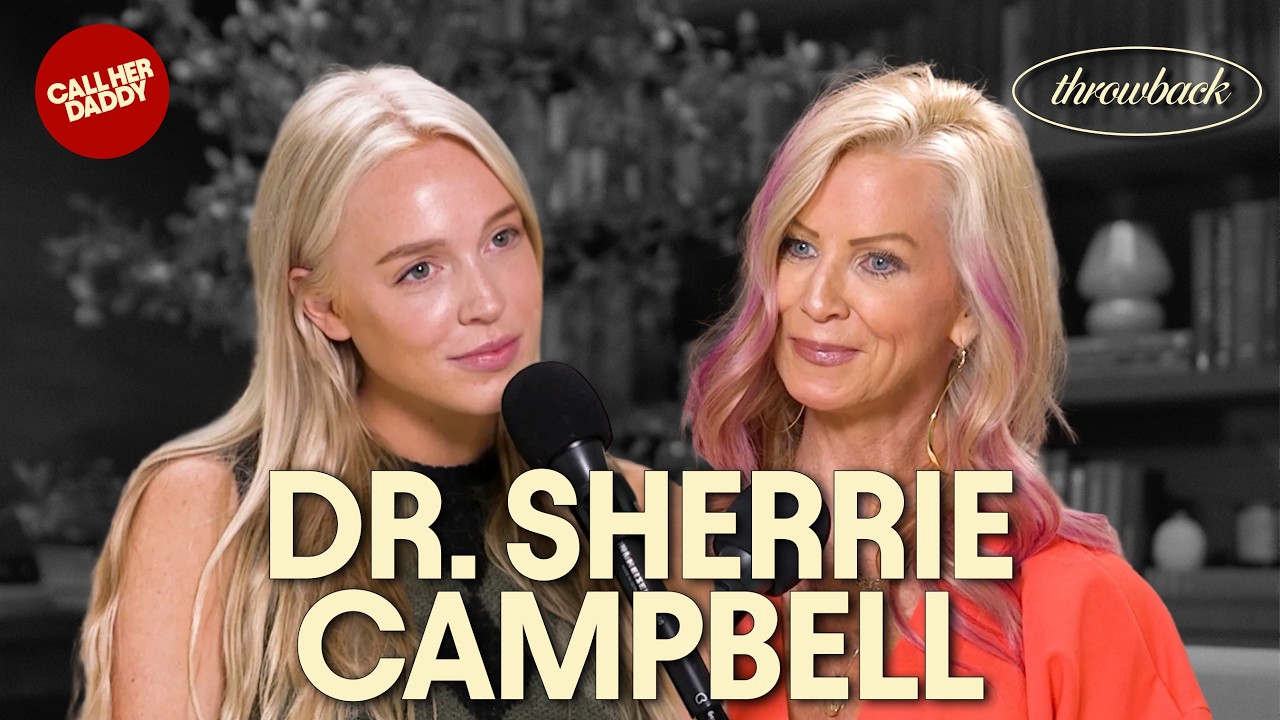
Is Your Parent a Narcissist?
Call Her Daddy
142,088 views • 2 days ago Save 37 min 7 min read
Video Summary
Clinical psychologist Dr. Sherry Campbell shares her expertise on toxic family dynamics and her personal journey as a survivor, revealing the profound impact of parental abuse and manipulation.
Campbell, author of "Adult Survivors of Toxic Family Members," details how toxic parents often wield moral superiority, treating children as property rather than individuals with feelings. She recounts her own experience as a scapegoated child, enduring emotional pain and confusion due to her mother's rejection and her father's unpredictable violence. The conversation delves into the insidious nature of gaslighting, the struggle for self-worth, and the development of people-pleasing tendencies as a survival mechanism. Campbell also explores the long-term effects on romantic relationships, the challenges of setting boundaries, and the difficult process of grieving familial loss while advocating for healing and self-preservation.
Short Highlights
- Toxic parents often exhibit moral superiority, treating children as property.
- Survivors may develop people-pleasing tendencies to avoid conflict and seek love.
- Gaslighting and emotional manipulation are common tactics used by toxic family members.
- Setting boundaries is crucial for healing, even if it means cutting ties.
- Survivors can develop unique strengths and emotional intelligence from their experiences.
- Grieving familial loss is a necessary part of the healing process.
- Healing is an ongoing journey, not a destination.
Related Video Summary
Key Details
Defining Toxic Family Members [00:01:04]
- Toxic parents often use moral superiority, asserting their authority because they are parents.
- Children are treated as property to be managed rather than as individuals with needs and feelings.
- These parents rarely apologize or engage in discussion, leaving children to navigate unpredictable behavior with a child's limited skillset.
"so like any narcissist their bag of tricks isn't really that vast but what a parent will do because seduction isn't necessary to create the bond the child is already present is there's a moral superiority"
The Scapegoated Child Experience [00:08:34]
- Dr. Campbell identifies as a scapegoated child, feeling unwanted and blamed for issues.
- This constant criticism and emotional pain led to confusion and acting out, creating a vicious cycle.
- Despite the pain, a sense of inner truth persisted, suggesting the problem wasn't solely internal.
"so i was the scapegoated child i was the bad one i don't couldn't list one thing my mother would like about me"
Navigating Unpredictable Violence [00:10:37]
- Campbell's father was inconsistently present and prone to unpredictable physical violence.
- Even seemingly minor interactions could escalate, leading to physical harm.
- While his physical abuse was easier to tolerate due to occasional remorse, her mother's passive-aggressive tactics were more damaging to her self-worth.
"he was very in and out he was married five times she's on her fourth so he was very in and out he was violent and unpredictably violent something like tickling can turn into me having a bloody face"
The Impact of Gaslighting [00:12:54]
- Toxic parents often gaslight their children, making them doubt their own reality and perception.
- When Campbell tried to express her truth, her mother accused her of abusing her, leading her to believe she was the abuser.
- This manipulation erodes a child's sense of self and trust in their own judgment.
"the gaslighting of the narcissist and i did yell and i was mad and i was telling her and then i believed i was an abuser"
Public Humiliation and Discrediting [00:15:05]
- Toxic parents may publicly humiliate their children, even to friends, by describing them negatively.
- Campbell's mother would make disparaging remarks, such as selling her for "25 cents or best offer."
- Any attempt to question the parent's words or tone was met with accusations of being "too sensitive."
"she was describing how hard i was to her friends and that she was haha she would sell me on the corner for 25 cents or best offer"
The Cycle of People-Pleasing [00:21:20]
- Survivors often learn that complying with their parents' demands can prevent conflict or escalation.
- This leads to a cycle of people-pleasing, driven by a fundamental need for love and belonging.
- The parent's responsibility is to be the leader, but toxic parents often avoid this, wanting children without the responsibility.
"you become this people pleaser because you just want to try to settle everything and not have it get to that level you have that need for love and belonging right"
Generational Trauma and Healing [00:27:46]
- Campbell aims to stop generational trauma by providing resources for survivors.
- She acknowledges the pain of not having a family and missing out on typical family experiences.
- The choice to cut ties is often a last resort for self-preservation, not a casual decision.
"i am not breaking families up i'm saving families below the generations that are going to heal i'm stopping generational trauma from continuing to spin out the family's already broken"
The Pain of Cutting Ties [00:34:03]
- Cutting ties with toxic family members can lead to secondary abuse from others who don't understand.
- Well-meaning individuals may question the decision, projecting their own values onto the survivor.
- Survivors must trust their own judgment and the difficult process of separation for their well-being.
"i just so appreciate your interest in me like it's so sweet and but i'm a unique one and i'm gonna actually have to start lying i don't want to"
Strategies for Managing Toxic Relationships [00:44:35]
- "Gray rocking" involves becoming boring and deflecting conversations back to the toxic person.
- Cordial contact means maintaining a distance, like interacting only at a metaphorical fence.
- These strategies aim to preserve a remnant of the relationship while protecting oneself from further abuse.
"gray rocking is like becoming the most boring rock in the pile deflecting the conversation back on the toxic person who loves an audience got it"
The Breaking Point: Cutting Ties [00:52:27]
- Campbell describes a final incident where her mother's actions, including involving her ex-husband and involving her daughter, led her to cut ties.
- This betrayal, stemming from a minor incident, was the catalyst for ending the relationship permanently.
- The act of cutting ties was a decision to save her life and protect her daughter.
"she then reached out to my ex-husband she hadn't spoken to in 10 years and decided she was going to form a relationship with him to see my daughter behind my back and without my permission"
The Aftermath of Cutting Ties [00:56:40]
- Following the decision to cut ties, Campbell's daughter asked to block her grandmother, showing her own protective instincts.
- Her mother continued attempts to contact them, even using her father's death as leverage.
- Finding out about her father's death via Google highlighted the callousness and manipulation involved.
"she she would show up twice a year with dew stained apples for me to bite into and my father's death was used in the same manner"
Navigating Relationships as a Survivor [01:08:30]
- Survivors may attract partners who mirror their past experiences of being picked on.
- Intermittent reinforcement, a pattern of inconsistent kindness, can lead to addiction and anxiety.
- However, survivors often possess a deep capacity for intimacy and emotional intelligence due to their experiences.
"abuse doesn't work without intermittent doses of kindness so you get addicted right and so i learned to be addicted to intermittent reinforcement"
The Role of a Supportive Partner [01:17:35]
- Partners of survivors should not question or minimize their experiences.
- Believing and validating the survivor's feelings is crucial for their healing process.
- Patience and understanding are essential, as survivors may exhibit paranoia or fear due to past trauma.
"don't question and don't minimize believe what you hear what does it serve me how does it serve me to tell this story really it doesn't make my life better"
Healthy Grieving and Self-Love [01:21:58]
- Healthy grieving is a lifelong process, acknowledging that complete healing may not be possible.
- Practicing self-compassion, composure, and discernment is vital.
- Survivors are encouraged to embrace their strength and self-love, recognizing their resilience.
"a well-lived life should be a well-grieved life i will be sad about this for the remainder of my life"
Final Advice for Survivors [01:24:40]
- Campbell urges survivors to acknowledge their reality and take action.
- She emphasizes that healing is an ongoing practice, not a final destination.
- Survivors are powerful for choosing self-love and freedom despite their past.
"it's real it's happening do something about it dr sherry campbell yes thank you so much for coming on call her daddy"