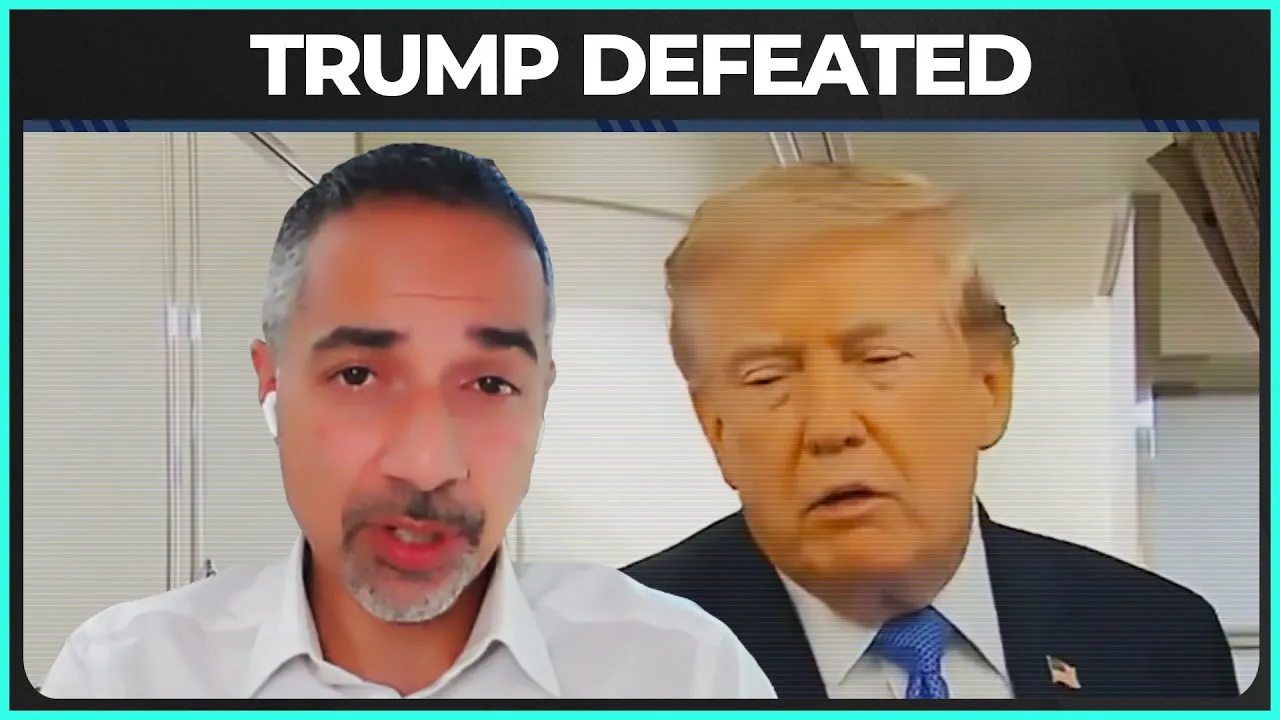
TACO Trump Caves As Iran Reality Undeniable
The Young Turks
96,125 views • 1 month ago Save 18 min 5 min read
Video Summary
Donald Trump’s recent claims that Iran is "pleading" for a deal to avoid a massive U.S. attack appear to be a strategic fabrication designed to mask a deteriorating military reality. While Trump presents himself as a negotiator holding all the cards, evidence suggests the U.S. is facing a severe shortage of defensive interceptors, forcing a shift in priorities that favors the American homeland over regional allies like Israel.
Behind the scenes, Iran is pursuing a calculated strategy of deterrence, signaling that any U.S. escalation will be met with horizontal retaliation against oil and gas infrastructure across the region. As the U.S. military's leverage wanes, a potential deal regarding the Strait of Hormuz is taking shape—one that would likely grant Iran a co-management role with Oman, effectively forcing the U.S. to accept a regional reality it previously sought to dismantle.
Short Highlights
- The U.S. is facing a critical shortage of Patriot and THAAD interceptors, limiting its ability to sustain major combat operations.
- Iran is successfully deterring U.S. escalation by demonstrating its capacity to strike regional oil and gas assets.
- Negotiations regarding the Strait of Hormuz are reportedly nearing completion, focusing on a co-managed system between Iran and Oman.
- Trump's narrative of Iran "pleading" for a deal is contradicted by experts who view it as a bluff to maintain a position of strength.
- Arab states, fearing the economic fallout of a war that leads nowhere, have pressured the U.S. to avoid a full-scale confrontation.
- The U.S. may be forced to accept an unfavorable regional arrangement to secure oil flow before shifting focus to the nuclear issue.
- Attempts to merge the Ukraine and Iran conflict theaters have been resisted, avoiding a direct confrontation with a nuclear-armed power.
Related Video Summary
Key Details
Iran's Calculated Deterrence Strategy [01:14]
- Iran is signaling that it is prepared for a major escalation, deliberately showcasing its ability to strike distant assets.
- The strategy aims to deter Trump from using his "escalatory card" by proving that any U.S. strike will be met with horizontal retaliation.
It doesn't mean that they want to be attacked, but essentially their calculation is if Trump still believes he has a major escalatory card that he hasn't played yet and he's contemplating playing it. Well, then the Iranians are signaling that they're ready for it.
The Reality of Diplomatic Pressure [04:02]
- Arab states like Saudi Arabia, the UAE, and Qatar have actively intervened to stop U.S. attacks, fearing their own infrastructure would be destroyed in retaliation.
- These nations have lost faith in the U.S. military's ability to achieve a decisive victory without causing regional economic disaster.
From the Arab perspective, they're gonna pay a heavy price for a war that leads nowhere. So it's not surprising that they pleaded with him not to attack.
Distinguishing Talks from Negotiations [06:40]
- While communication between the U.S. and Iran continues, it is distinct from formal negotiations, a nuance Trump may not fully grasp.
- Iran is pushing to establish a framework where only nations bordering the Strait of Hormuz—Iran and Oman—determine its future.
The Iranians are trying to essentially establish a reality in which they say, the future of the strait will only be determined formally by the two countries that have territorial waters in the strait, which is Iran and Oman.
The Goal of Co-management [08:35]
- Iran seeks to retain the ability to close the Strait of Hormuz if the U.S. restarts the war, rather than seeking total control.
- A potential deal involves a co-managed system that ensures oil flow while acknowledging Iranian influence in the region.
If the core interest is to make sure that the oil flows, that the oil prices come down, etc. There is a pathway towards a co-managed system in which the Iranians definitely keep it open.
The Military Interceptor Crisis [13:17]
- General Dan Kane warned that resuming major combat would dangerously deplete U.S. interceptor stocks, which have fallen from over 4,000 to 827.
- Commanders are now forced to prioritize the protection of the American homeland over regional allies like Israel.
Resuming major combat operations against Iran was doable. But that it would dangerously deplete interceptors available to the military's Central Command.
The State of Strait Negotiations [14:48]
- Iranian Foreign Minister Abbas Araki confirmed that talks with Oman regarding the Strait of Hormuz are in their final stages.
- The proposal involves coordinated inbound and outbound traffic corridors that require agreement from both Iran and Oman.
Iranian Foreign Minister Abbas Araki said talks with Oman about a mechanism for ships to traverse the Strait of Hormuz was, quote, nearing completion and in their final stages.
Trump's Unwillingness to Accept Reality [16:04]
- Trump is reportedly struggling to accept that he lacks a "knockout blow" against Iran, leading to desperate rhetoric.
- The administration faces a choice between further futile escalation or accepting a deal that favors Iranian interests to secure oil flow.
I think it comes down to the fact that Trump is unwilling to accept that he's essentially doesn't have any escalatory options and that this kind of knockout blow that he's looking for simply doesn't exist.
The Threat of Theater Merging [17:15]
- Attempts to merge the Ukraine and Iran conflict theaters have been proposed to open new fronts against Iran.
- Avoiding this path is critical to preventing a direct U.S. confrontation with a nuclear-armed power.
Zelensky has been trying to put forward his narrative that these two wars are at the end of the day the same because Russia and Iran are on the same side and we should then treat the two of them the same.