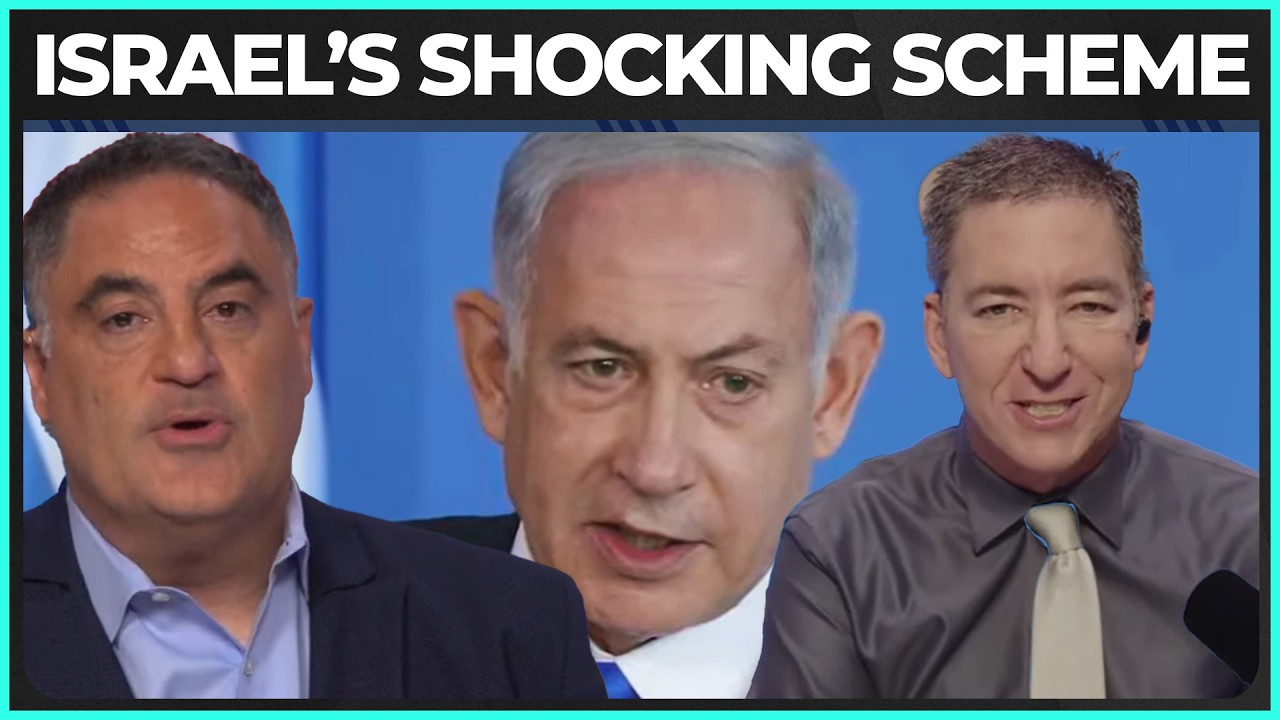
Israel's SHOCKING Scheme REVEALED
The Young Turks
131,308 views • 2 months ago Save 14 min 5 min read
Video Summary
Israel is actively leveraging regional conflict to transform itself into an indispensable global energy hub, effectively bypassing traditional maritime choke points like the Strait of Hormuz. By positioning itself as the primary transit point for Gulf oil and gas via a proposed pipeline network, Israel aims to neutralize regional threats and secure long-term economic and geopolitical dominance. This strategy relies on deepening ties with Gulf states and pressuring them into normalization agreements, even as the United States bears the mounting financial and strategic costs of these regional tensions.
While the American public and military absorb the consequences of these conflicts—including depleted strategic reserves and significant loss of life—Israeli officials openly celebrate the strategic gains. The narrative of a mutually beneficial alliance is increasingly challenged by the reality that U.S. foreign policy appears to be serving Israeli interests at the expense of American stability. This disconnect remains a profound taboo within mainstream media, which continues to obscure the extent to which U.S. actions are driven by the strategic goals of a foreign power.
Short Highlights
- Israel is pursuing a pipeline project to bypass the Strait of Hormuz and Bab al-Mandab, positioning itself as the central transit point for Gulf energy exports.
- The strategy involves four primary objectives for Israel:
- Achieving regime change or destabilization in Iran to eliminate regional threats.
- Monetizing the Leviathan gas field and securing energy dependency from neighboring states like Egypt and Jordan.
- Forcing Saudi Arabia into a normalization agreement that sidelines the Palestinian cause.
- Establishing Israel as a regional and global energy superpower through control of critical infrastructure.
- The U.S. has incurred significant costs from these regional conflicts, including the depletion of strategic petroleum reserves and sophisticated munitions.
- Mainstream American media largely avoids reporting on the disproportionate influence of Israeli interests on U.S. foreign policy.
- Regional dictatorships face internal pressure from populations that largely oppose normalizing relations with Israel while the Palestinian crisis remains unresolved.
Key Details
The Strategic Bypass of Maritime Choke Points [0:01:21]
- Israel is actively promoting a pipeline scheme to transport Gulf oil and gas across the Arabian Peninsula to Mediterranean ports, bypassing dangerous maritime routes.
- This plan would render the Strait of Hormuz and Bab al-Mandab less critical for global energy exports, directly benefiting Israel's strategic position.
The scheme would see a pipeline built across the Saudi desert to the Israeli border where a second pipeline built through Israel in the late 1960s would carry it north to ports on the Mediterranean.
Official Israeli Acknowledgement of the Plan [0:02:40]
- Energy Minister Eli Cohen and Prime Minister Benjamin Netanyahu have openly discussed the pipeline as a means to break Iran's grip on global energy.
- Officials view this as a permanent solution to remove reliance on volatile regional checkpoints.
Instead of going through the checkpoints of the Hormuz Strait and the Babel-Mondeb Strait, we just have oil pipelines, gas pipelines going through the west, through the Arabian Peninsula, right up to Israel, right up to our Mediterranean ports.
The Goal of Regional Hegemony [0:04:45]
- The broader Israeli objective is to neutralize the Iranian state, either through regime change or sustained chaos, to ensure full control over regional assets.
- This mirrors historical patterns where U.S. foreign policy decisions consistently align with Israeli strategic gains, such as the shift in relations with Venezuela.
I do think that when we started the war, the Israeli goal, which is really the only goal that mattered, the United States has no identifiable goal in starting this war outside of what the Israelis wanted, was to smash the Iranian state to basically keep it into chaos.
Pressuring Saudi Normalization [0:06:25]
- The pipeline project serves as a lever to force Saudi Arabia into a formal peace agreement with Israel, bypassing traditional requirements for a two-state solution.
- There is significant tension between the desires of regional dictatorships and the popular sentiment of their citizens regarding the Palestinian cause.
This is one case where popular opinion, even in the dictatorship can be real constraints on the dictators who rule the country.
Economic Entrenchment via Gas Fields [0:08:35]
- Israel has successfully integrated its energy infrastructure with regional neighbors, including a $1 billion investment from the UAE into the Tamer gas field.
- Reliance on Israeli gas has effectively neutralized potential hostility from countries like Egypt and Jordan.
Egypt and Jordan are now reliant on Israeli gas, making future hostilities from them also unlikely.
The Media Taboo on Israeli Influence [0:10:05]
- Mainstream media outlets maintain a strict taboo against analyzing the extent of Israeli influence on U.S. foreign policy, framing the alliance as inherently beneficial.
- Critics argue that media ownership and management structures prevent objective reporting on the costs incurred by the United States.
Talking about Israel in any fundamentally critical way or talking about the influence that it wields is still a huge taboo inside American media.
The High Cost of Proxy Conflicts [0:12:00]
- The U.S. has suffered immense financial and material losses, including the depletion of defensive missiles and petroleum reserves, while supporting regional wars.
- The global consensus increasingly views these conflicts as an unmitigated disaster, with only Israel realizing significant strategic gains.
There's only one country that has gained, and that's Israel.