The World's Biggest Markets Are BREAKING
Coin Bureau
166,339 views • 4 days ago Save 13 min 4 min read
Video Summary
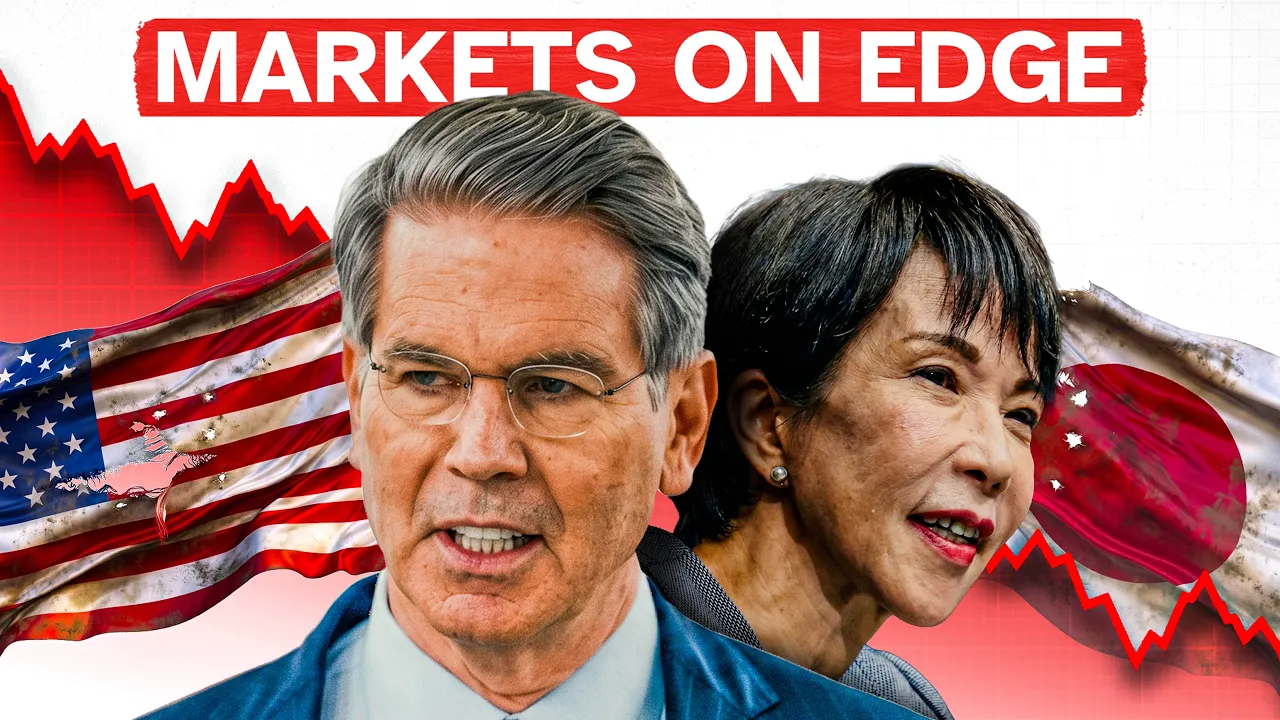
Governments worldwide are increasingly using extraordinary measures to prop up major financial markets, blurring the lines between emergency interventions and standard practice. Japan is directing its massive $2 trillion pension fund, the GPIF, to invest more in domestic assets to support its bond market and currency. South Korea is leveraging its National Pension Service (NPS) for currency defense, using hedging strategies to stabilize the won. In the U.S., regulatory rules like the Supplementary Leverage Ratio have been loosened to encourage banks to hold more Treasuries, while the Federal Reserve and Treasury Department are actively buying government debt. China's approach is the most direct, with state-linked investors and the central bank actively buying ETFs and shares to control market prices.
These interventions, while temporarily effective, create a dangerous dependency where markets anticipate state support, reducing private risk-taking. The core issue is that these supports rely on confidence in the state's ability to continue intervening. When this confidence erodes, as seen in past market events, the same entities providing support can become the source of failure. Critically, this support often comes at the expense of ordinary citizens, with pension funds and savings being used to stabilize markets, raising concerns about the long-term security of retirement funds and the fundamental purpose of markets to price risk.
Short Highlights
- Governments are increasingly intervening in major financial markets to stabilize prices.
- Japan is directing its $2 trillion pension fund (GPIF) to invest domestically to support bonds and the yen.
- South Korea is using its National Pension Service (NPS) for currency defense through hedging.
- The U.S. has loosened bank leverage rules and is actively buying government debt.
- China's state-linked investors directly buy stocks and ETFs to control prices.
- These interventions create market dependency on state support and erode private risk-taking.
- The risk is often borne by ordinary citizens' pensions and savings, not government funds.
Key Details
Market Intervention Becomes the Norm [0:00]
- Major global markets like those in Japan, South Korea, the U.S., and China are employing artificial support measures.
- These interventions, once considered emergency actions, are now becoming consistent features of the financial system.
- The use of ordinary people's money is central to maintaining these market supports.
"And the strangest part is that these would be categorized as emergency measures if we were living in normal times."
Japan's Pension Fund Intervention [1:45]
- The Bank of Japan is scaling back its bond purchases as government debt issuance increases, leading to rising yields.
- To address falling bond prices and a sliding yen, Japan directed its Government Pension Investment Fund (GPIF) to increase investment in domestic assets.
- The GPIF manages approximately $2.1 trillion and a shift towards domestic assets supports the yen and bond market.
"Which means, retirement savings are now being discussed as a tool for steadying both the bond market and the currency."
South Korea's Currency Defense [5:30]
- South Korea used its National Pension Service (NPS), managing $1 trillion, to defend the won when it weakened significantly.
- The NPS engaged in currency swaps with the Bank of Korea and sold dollars forward to stabilize the exchange rate.
- These actions, while effective in strengthening the won, compromised the fund's primary goal of earning returns for pensioners.
"It was switched on in December 2025, again in March 2026, and then again in June, and policymakers made it less predictable so traders couldn't see it coming."
U.S. Regulatory Adjustments and Fed Actions [8:30]
- The U.S. rewrote the Supplementary Leverage Ratio rule, which previously capped banks' holdings of Treasuries.
- The Federal Reserve stopped shrinking its balance sheet and began reserve management purchases of Treasury bills.
- The Treasury Department increased buybacks of long-dated bonds, leading critics to label it as fiscal dominance.
"So, the rule written to stop the last crisis was rewritten to make room for more Treasury buying."
China's Direct Market Control [11:45]
- China's state-linked investors, like the National Team, directly intervene by buying ETFs and shares when prices fall.
- The People's Bank of China provides facilities for institutions to borrow money specifically for stock purchases.
- Regulators have also encouraged domestic shareholdings and restricted short-selling and large shareholder sales.
"So, the state sets both the floor and the ceiling for prices."
The Peril of Market Dependency [14:00]
- Each intervention works just long enough to necessitate the next, creating a cycle of dependency.
- Markets begin to price in state support, reducing private risk-taking as buyers expect the state to step in.
- This reliance on confidence in the state's ability to sustain interventions is the system's critical vulnerability.
"Emergency measures now become standard features."